|
|
Well C - Passage, belongs with II - Brick Shaft. All dumped fills. No objects catalogued from Well C of section ΟΑ. One object (I 5422) catalogued from modern fill in shaft, one from dump (I 5545). Coins: ... 2nd c. A.D.- Byzantine |
Trial cut at 26/ΙΣΤ-ΙΖ, Layer I; Circular Building, 22m south of Eleusinion. P 30171, P 30172, L 5818 added on 7 May 1973 ... 4th c. B.C. |
Pit at 48/ΚΕ; circular cutting in bedrock (diameter ca. 1m) ... Ca. 500-470 B.C. (?) |
Cistern with two fills. Lower fill in cone on floor, with dumped upper fill above. Coins:
27 April 1940 #3-#5
14 May 1940 #5-#6
15 May 1940 #3-#7
17 May 1940 #11-#13
20 May 1940 # 8-#9
21 May 1940 #1 ... Late Hellenistic |
Unfinished cistern at 31/ΚΑ ... Ca. 360-325 B.C. |
A great shaft 2.65m in diameter and over 10m deep cut out in the mid 1st c. to serve in some connection with the Brick Shaft system (U 22:1). Filled in to top (layer 2) in late 1st- early 2nd c. A.D. with ... 18 March 1937,
1-13 April 1937,
24 May-14 June 1937 |
Well at the southeast corner, almost on the line of the east-west street. Upper Fill: Late Roman dumped fill.
Lower Fill: Dark Age: ca. 7th c. A.D.
Coin
30 March 1939 #34 ... 7th-Late 6th century |
Kernos Pit #2 at 33/ΛΑ. P 30175-P 30186 (ΙΙ 635-ΙΙ 646) added on 7 May 1973 ... Early 4th c. B.C. |
Well at 37/Α, on the lower Acropolis slopes, west of the Panathenaic Way ... 600-550 B.C. |
| Located in Tholos Trench E, beneath floor, beneath layer III.
Diameter 1m. Cf. P 4952 with fragment from this deposit and E-F 12-14.2.
Similar the well filling, H 6:5 Originally called H 12:5
Ann Steiner ... Ca. 470-460 B.C. |
Sacrificial Pit VI in notebook = RSY Grave 18 See also B 21:23 ... Ca. 525-500 B.C. |
| Burned deposit: Middle Terrace, south of Archaic cemetery.
RSY: Pyre 10.
Pottery, burnt bone, charred logs, and heavy burning, recovered by tunneling under the cement floor of a Late Hellenistic workshop, ... Ca. 325-300 B.C. |
Grave XXVII in notebook = RSY Grave 8.
Possibly a child's grave ... Ca. middle of the 6th. c. B.C. |
RSY Fido's Grave ... Hellenistic |
Well 22: Neolithic ... Neolithic |
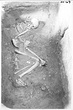
| Grave in cella of Hephaisteion. Grave XLV in notebook.
One skeleton. Pottery discarded? Coin
8 March 1939 #22 Neg. XV-69 ... 7 March 1939 |
Dumped fill in shaft. Estimated Grid ... Byzantine |
Scanty filling on floor of lower chamber and from mud in north passage. Estimated Grid ... 2nd c. A.D. |
| Well cut into bedrock, associated with late Roman building G in ΕΛ 1.2m in diameter, narrows to 0.5m at bottom. Disturbed by later pits at top. Excavated from 85.77-79.25m (6.52m), but bedrock at 85.91m ... Late 4th/early 5th AD |
Lower fill in shaft; upper and lower drain filling; shaft, in upper chambers. Coins:
31 March 1938 #1
9 May 1939 #1-#2
20 June 1939 #1 Estimated Grid ... Late 2nd-earliest 3rd c. A.D. |
| Kernos Pit #1 under Valerian Wall. P 30173-P 30174 added on May 7, 1973 ... 4th c. B.C. |
Fill in shaft; upper fill in lower chamber; fill in vaulted chamber. Coins:
29 April 1937 #1-#8
5 May 1937 #1-#27
26 May 1937 #1-#12
27 May 1937 #1-#10
28 May 1937 #1-#6
24 March 1938 #3-#7
12 June 1939 ... Late 4th c. A.D. |
Well East of Circular Building, at 25/ΙΗ.
Well dug originally in 5th c. B.C. and probably had POU fill. In 2nd c. A.D. the shaft was intersected by a horizontal vaulted brick tunnel belonging to the Brick ... 5th c. B.C.(?) |
Kernos Deposit (?): below floor of Building A, over and in cutting at 33/ΚΗ P 30162-P 30172 added on 4 May 1973 ... 4th c. B.C. |
Sullan destruction debris. Coins:
27 April 1940 #3-#5
14 May 1940 #5-#6
15 May 1940 #3-#7
17 May 1940 #11-#13 ... 3rd. to 1st. c. B.C. |
In use up to the time of Sulla? Coins:
20 May 1940 # 8-#9
21 May 1940 #1 ... 1st. c. B.C. |
Pit in east Terrace.
Cf. container ΝΝ 109 ... 1st. c. B.C. |
Filling under North-South Road surface, apparently to raise the level of the road as thickness of fill varies depending on height of road. Fill sits on earliest, cobbled road layer. The road surface set ... Mid-6th c. B.C. |
| Mycenaean Chamber Tomb occupies a considerable part of the western half of section ΕΕ; lies about half way up the north slope of the Areopagus towards its eastern end, just below the highest point of the ... Myc. III A:1 ... Agora VIII, p. 130 ... Agora XIII, pp. 158-169, 274, pls. 29-33, 65, 67, 75, 77, 80 ... ILN, July 22, 1939. |
West Terrace, South End, Layers IV and V. Heavy dumped filling associated with terrace walls at the extreme south end of the excavations in the Areopagus industrial area. The proportion of figured and ... Ca. 420-390 B.C. |
Byzantine Well at 22/ΜΕ ... 24 February 1936
16 June 1951 |
Coins:
22 March 1933 #1-#44 ... Late Roman- Mid 5th c. |
See also H 12:1. Coins:
22 February 1938 #2-#37 ... 3rd-2nd c. B.C. |
Well at 22/ΚΓ. Diameter 1.05m Coins:
7 June 1938 #7-#10 ... Early Byzantine |
| Dorothy Burr Thompson ... Grave 22 in notebook. No offerings. Disturbed grave of baby ... LH IIIC/EPG (date uncertain) |
| Coins:
22 May 1937 #1 ... 425-400 B.C. |
Stratified well. Coins:
22 July 1947 #1 Subdivisions:
.1=top to -5.20m.
.2=5.20-7.80m.
.3=7.80-10.30m ... Second half 1st-early 3rd c. A.D. |
(now G 12:22) Asterisk: H 12:5* |
Coins:
22 April 1937 #1-#5 Containers 7-5 ... Second half of 1st. c. A.D. POU |
Pocket in bedrock, 50/Λ (= Trench, 50-54/Λ), measuring 4.00x0.60m, 0.60-0.90m deep; possibly cutting for wall foundation Coins:
22 April 1932 #1 ... 330-300 B.C. |
Containers 17-22. Coins:
5 April 1937 #1-#2 (disintegrated) ... 2nd half 5th c. A.D. |
Coins:
4 June 1936 #12
22 June 1936 #1-#3 ... 4th. c. B.C. |
| Homer A. Thompson ... Cremation burial (trench-and-hole) under S. edge of E-W Street, northern burial. In some records as Grave XLVII.
The western part of the offering trench of the tomb was lost to a Turkish cess pit, and ... Middle Geometric I ... Agora XXXVI, Tomb 22, pp. 217-220, figs. 2.23, 2.24, 2.129, 2.130. |
Soft Trench behind Stoa Stylobate, opposite Piers 21 and 22, along W face of Shop front wall. Herulian destruction debris at the north end of the Stoa of Attalos. Coins:
20 February 1954 #1-#2
22 February ... Late 3rd c. A.D ... Soft Trench behind Stoa Stylobate, opposite Piers 21 and 22, along W face of Shop front wall. ... Coins:
20 February 1954 #1-#2
22 February 1954 #1-#5 ... Crosby, Agora X, pp. 119-120, no. |
Well cut through the floor of a cistern. Apparently a dumped fill in an unused well. Coins:
16 March 1934 #15 (illegible)
17 March 1934 #2
19 March 1934 #1-#4
20 March 1934 #1-#3
22 March 1934 #1
23 March ... 1st-early 2nd c. A.D. |
| Pit with burned debris north of the ancient road leading from the Agora to the Dipylon Gate, probably to be associated with the Persian sack [deposit notebook]. Also includes a similar filling lying over ... Ca. 500-470 B.C ... Pit with burned debris north of the ancient road leading from the Agora to the Dipylon Gate, probably to be associated with the Persian sack [deposit notebook]. ... Coins:
22 February 1939 #1 |
| Well on lower northwest slope of Areopagus. Dug to 6.60m. and abandoned because of danger. Single dumped deposit.
Perhaps this context: P 528, P 1223 (JWH). Coins:
22 April 1932 #1 ... Second half 1st c. B.C.-early 1st c. A.D. |
Cistern at 27/ΚΔ Coins:
22 April 1937 #9
23 April 1937 #1 ... 10th or 11th c. |
Well with overflow into cistern system. Probably Hellenistic in origin. POU late 1st. c. to early 3rd. c. Dumped filling of 4th. (and 5th.?) c.
Abandoned at 22.50m. because of water. Coins:
21 May 1937 ... Late 1st. c.-4th. c. A.D. (and 5th c. A.D.?) |
Well G: Archaic (lower fill) on the northwest slope of the Acropolis. Diameter top to bottom ca 1.0. Coins
22 April 1937 #1-#2 Top fill, to 3.50m; dark Age: nothing catalogued ... 500 - 490 B.C. |
Cistern System #1f: Shaft at 1/ΝΘ = Well A. Scanty dumped filling. Coins:
19 February 1936 #2-#3
20 February 1936 #16-#20
21 February 1936 #5-#7
22 February 1936 #1 ... Mid-4th to 3rd c. B.C. |
Stratified well; very late Roman verging on Byzantine. Coins
19 April 1939 #1-#8
22 April 1939 #1-#2
25 April 1939 #1
15 May 1939 #1 Subdivisions:
.1=0.00-15.25m.
.2=15.25-21.00m.
.3=21.00-22.00m ... 3rd-5th c. A.D.
9th c A.D. |
Pit at 18/ΚΔ-ΚΕ Coins:
22 April 1936 #67-#73
24 April 1936 #2-#3 ... 22-24 April 1936 |
Coins:
30 May 1933 #19 ... Turkish |
42-50/Ζ-ΙΑ: below uppermost Byz. Floor at level of top of railroad retaining wall (cf. also 50/Ι: from packing of floor). Coins:
24 March 1936 #18-#22
26 March 1936 #9-#10 ... Early Byzantine |
Containers 43-47. Coins:
22 April 1939 #1-#2
25 April 1939 #1
15 May 1939 #1 ... 3rd c. A.D. |
Small compact deposit. Cutting. High proportion of good black glaze; 21 loom weights (19 pyramidal, 2 lentoid); a very large red-figured skyphos somewhat recalls the style of earlier work of the Dinos ... Ca. 430-420 B.C. |
Grave in cella of Hephaisteion. Grave XXI in notebook. Disintegrated bones. Coins:
22 February 1939 #2-#3 ... 22 February 1939 |
Martyr at Δ6. Top strosis (Byzantine-Turkish) discarded.
Strosis 2, late Hellenistic (Lot ΔΕ 21)
Strosis 3, early Hellenistic (Lot ΔΕ 22)
Strosis 4, to mid-4th c. B.C. (Lot ΔΕ 23)
Nothing catalogued from ... To mid-4th c. B.C. |
Water channel in north part of Section: Channel Mouth 4. Coins:
22 February 1936 #16-#18
24 February 1936 #1-#2
Twenty stamped amphora handles; type 38 lamp; type 56 A lamp; over half of bowls long-petal ... 120-86 B.C. |
Accumulated debris on the west side of the market square.
Related layers added 1999/2000 (JWH), e.g. "Gravelly layer above burning", "Clearing Classical floor", "Lowest level above bedrock", "Below burning", ... First half of 5th c. A.D. |
A well with POU 7th-8th c. A.D. and 10th c. dump. Coins:
19 May 1933 #14
20 May 1933 #3
22 May 1933 #1-#2
23 May 1933 #2
24 May 1933 #1
30 May 1933 #1 Subdivisions:
.1=Upper fill
.2=Lower fill ... 19 May-7 June 1933 |
| Pit (6x10) in the valley between the Areopagus and the Hill of the Nymphs. Large cutting in bedrock with 540 ostraka, mainly of the late eighties of the 5th. c. B. C. Much pottery, principally of the early ... Ca. 500-450 B.C ... Agora IV, p. 234 ... Agora XII, p. 383 ... Agora XXV, pp. 20-22, 163. |
| Artifacts, burnt bone, ash, cinders and charcoal in pit in bedrock. The pyre lay directly under mosaic floor A. the deposit is not badly disturbed, however, and it is possible that it was laid immediately ... Early second quarter of 4th c. B.C ... Hesperia Suppl. 47 (2013), no. 22, p. 125, fig. 52 ... Agora XII, p. 386. |
Coins:
22 February 1936 #4-#13
26 February 1935 #1-#2
27 February 1936 #1-#4
28 February 1936 #3-#5 |
Well with 4th. c. fill, no well deposit at the bottom. Coins:
2 April 1936 #1
3 April 1936 #8-#19
4 April 1936 #11
8 April 1936 #3-#4
22 May 1936 #5
25 May 1936 #2
27 May 1936 #2
28 May 1936 #2-#5
29 May ... Second half A.D. 4th. c. |
Dimensions 2.86x1.50x0.70m in depth; stratified fill in rockcut pit (three rockcut steps leading down at one end) which apparently served as a rubbish dump (pottery fragments with carbon and ash). Coins: ... Ca. 410-250 B.C. |
Pits at 95/ΚΑ and 97/ΚΑ, in bottom of Post Sullan drain. Sandy filling in two pits in the bedrock, about 2.00m. apart, at the bottom of the so-called Post-Sullan drain, which replaced the abandoned section ... To ca. 86 B.C ... Hesperia 45 (1976), pp. 19-22, pls. 1-4 ... Agora X, pp. 135-136 ... Agora XXVI, p. 304. |
Well dug through bedrock-settling basin of cistern at 69/ΜΗ. Coins:
21 May 1936 #24-#26
22 May 1936 #14
29 May 1936 #2-#4
2 June 1936 #1-#3
3 June 1936 #2-#4
4 June 1936 #4-#6 Cf. also container ΚΚ 336 ... 3rd c. A.D. |
| Eugene Vanderpool ... Grave. Bones discarded.
Burial lies over dromos of Mycenaean chamber tomb N 21-22:1. The roots of a tree had upturned the bones, but the head probably lay at the northeast ... Middle Geometric II |
| Mycenaean Double Grave (Graves A and B).
Grave A was in Layer II. We laid a skull and a few other bones, three vases and a stone bead. We have dug to a maximum of about 0.06m below the top of Layer II ... Myc. IIIA/B ... Hesperia 22 (1953), p. 41 ... Agora XIII, pp. 195-196, 274, pls. 42, 65, 84 (Grave XI). |
Shaft fill, not mouth fill, of drawshaft at 42/Θ. This is part of the cistern system 44/ΙΓ - 46/ΙΑ - 42/Θ.
Thirteen stamped amphora handles; fragments of Arretine pottery; over half of bowls long-petal ... 1st c. B.C.-early 1st c. A.D. |
A well on the lower south slope of Kolonos Agoraios. Last quarter of the 5th. c. B.C. But upper fill dated to 3rd. to mid-2nd. century B.C. and lower fill dated to ca. 425-400 B.C. in Agora XXX. Coins: ... 425-400 B.C ... But upper fill dated to 3rd. to mid-2nd. century B.C. and lower fill dated to ca. 425-400 B.C. in Agora XXX ... Coins:
22 May 1937 #1 |
Cistern System #1b: Shaft/manhole and gallery at 18-19/ΞΑ-ΞΓ.
Objects divided between the two features, shaft and gallery, according to deposit notebook list, not according to remarks on cards. 22 February ... Late 1st c. B.C.-early 1st c. A.D. |
Grave in south peristyle of Hephaisteion. Grave LXV in notebook. Coins:
13 March 1939 #24
14 March 1939 #8 (Vandal, not kept?) Notebook says: wall of LXIV rests on bones.
Neg. KK 396 ... 13-14 March 1939
16 March 1939 |
| Rebecca Wood Robinson ... Mycenaean Grave C. Lisa's list mentions also Grave D ... Myc. IIIA 1:2 ... Hesperia 22 (1953), p. 41 ... Agora XIII, pp. 193-194, 274, pls. 41, 84 (Tomb IX). |
| Evelyn L. Smithson ... Submycenaean grave (E.L. Smithson: Grave XXXIV). The skeleton of a 30 year's old female ... Submycenaean ... Hesperia 22 (1953), pp. 41-42 ... Agora XXXVI, Tomb 68, pp. 438-441, figs. 2.324-2.327. |
A small flask-shaped cistern on the lower southeast slope of Kolonos Agoraios. Lined with hydraulic cement and containing a large quantity of glazed table ware and a fair amount of coarse ware; a homogeneous ... 350-325 B.C. |
First trial east Stoa colonnade, N. of S. wall III, layer 12.
Note quantities of cattle bones, the knuckles sawn off and many worked bits. Evidently a bone implement factory near by. [nbp. 2139] Coins: ... Late 3rd c.-earliest 4th c. A.D. |
| Mycenaean Grave F.
It seemed to be more as a collection of bones and offerings, presumably swept aside to make room for later burials; they are east of and slightly higher than children's graves A and ... Myc. IIIA ... Hesperia 22 (1953), p. 41 ... Agora XIII, pp. 194-195, 274, pls. 42, 67, 84 (Tomb X). |
| Although separated by a sterile rocky fill the two use fillings are apparently one continuous accumulation (GRE).
Packing around well includes SS 14261, P 25943-P 25953. These are not given a subdivision ... 350-300 B.C. to ca. 225 B.C. |
| Handler ... Found in an area of disturbed fill north of a floor surface in Room 4 of the Classical Commercial Building. The floor surface (n. 3 on the west side of Room 4) was preserved at 52.503-52.544 masl., and ... 2nd half 4th c. B.C. |
Classical commercial building, room 3, against south wall. Small fragments of pottery dispersed in fill overlying two floor levels (at 51.897 and 51.941 masl). Five objects of pyre type: ribbon-handled ... 4th c. B.C. |
| The remains of a pyre disturbed by the construction of Wall 106. The compact, light brown soil contained some ash and bone and 5 nearly complete pots or saucers ... First half 3rd. c. B.C. |
A dumped filling including red figured fragments of the second quarter of the 4th c. B.C. Coins:
25 June 1931 #12 (in strosis above pottery deposit) 15 November 1952, going through the containers Tin 59-Box ... Ca. 375-350 B.C. |
Cistern connected by tunnel to another chamber filled in Byzantine period. Small Hellenistic deposit on floor. somewhat contaminated by Byzantine fill above
No stamped amphora handles later than 3rd c.; ... 250-190 B.C. |
Coins:
19 May 1933 #14
20 May 1933 #3
22 May 1933 #1-#2
23 May 1933 #2
24 May 1933 #1
30 May 1933 #1 ... 10th c. A.D. |
| Sacrificial Pyre II, Classical Building II.
Found right beneath the stuccoed channel built for sluicing in the 1st c. A.D., and must have been partly disturbed when the channel was constructed. It may ... Ca. 250 B.C ... Hesperia Suppl. 47 (2013), no. 5, pp. 107, 108, figs. 22, 23, 27, 28 ... Agora XXIX, p. 458. |
Cistern at 65/ΚΗ (and Channel). Cistern in the northwest room of the annex to the Poros Building west of the Areopagus. Part of the same system as D 17:4 and D 17:5, the chambers connected by long tunnels ... 300-250 B.C ... Two fills of distinctly different earth but with no apparent difference in date. [Agora XXIX] ... Coins:
22 June 1950 #4
23 June 1950 #1-#3, #5-#6
24 June 1950 #1 |
Late Roman mixed destruction fill.
The fill in both the staircase and the cistern chamber was the same mixed destruction fill containing a large quantity of Hellenistic pottery mixed in with late 3rd-early ... 4th. c. A.D. |
| Marcie Handler ... The remnants of a disturbed pyre in a layer of dumped Hellenistic fill. The fill was found in the area on top of and east of the eastern wall of the Classical Commercial Building at its north end. Fragmentary ... Ca. 225 B.C. |
| Marcie Handler ... The Pyre was revealed in a layer of 4th c. fill in the north end of Room 6, just south of Wall 8. Room 6 is defined by the street wall (Wall A) on the west, Wall 7 on the east, Wall 9 on the south (preserved ... 4th c. B.C. |
| Hellenistic Pyre below packed clay floors of Room 2; west of Late Roman wall extension, below tile platform terracotta drain installation, bordered on the north by bedding foundation stones of crosswall ... Ca. 300 B.C. |
| Matt McCallum ... The pyre was uncovered in a small, triangular area between the BZ Building foundations (but at a lower level) and the northern scarp of the current excavation area. It rested in a patch of orange-brown ... 1-7 August 2006 |
| Marcie Handler ... It was situated in the NW corner of Room 3 in the Classical Commercial Building, just S of Wall 11, the cross-wall that divides Room 3 from Room 4 to the north. The pyre pots were found surrounded by ... Late 4th c. B.C. |
Burned filling over area of NW Temple (apparently Herulian destruction debris) = Trench I, 18-22/ΛΑ-ΜΣΤ and northwest trench, center at 15-19/ΛΣΤ-Μ Coins:
28 March 1933 #25-#28
29 March 1933 #16-#21
30 ... 28-30 March 1933
5-6 April 1933 |
| Report on sorting of pottery, August 1951, by H.S. Robinson [nb p. 3666].
Cistern discovered and dug to 1.60m., vi/10/36; dug to bottom iv/22/37-v/6/37. Diam. At mouth 0.26m.; neck begins to widen out ... 1st. c. B.C. to post-Herulian |
| Rodney S. Young ... Grave 13 in notebook.
Two skeletons of small children lay in a pithos which had been put on its side; its mouth was stopped by a stone slab.
Most offerings were inside the pithos, but two kantharoi and ... Late Geometric ... Hesperia Suppl. 2 (1939), pp. 36-41, figs. 1, 22-25, 73 (Grave IX) ... Agora VIII, pp. 127-128. |
Near the SW corner of the market square beneath the north part of the Heliaia (?).
No clear distinction in the filling, either of date or of character, could be observed but the presence of a number of ... Ca. 625-570 B.C ... Hesperia 4 (1935), p. 365, fig. 22 ... Agora IV, p. 242 ... Agora VIII, p. 129. |
"Red Fill" (extending to bedrock or near, over most of area). Mainly first century after Christ with later disturbance. Coins:
17 April 1936 #10-#13
18 April 1936 #1
20 April 1936 #13-#17
21 April 1936 ... 1st-2nd c. A.D ... Hesperia 22 (1953), p. 42 ... Agora VI, p. 99 ... Agora VII, p. 226. |
|
|