|
|
| Byzantine Graves; Filling. Burial ... ΚΚ-11 2117, 2118 E 7:8 E 7:26 ... Byzantine Graves; Filling |
| Byzantine Graves within the Temple, continued. Burial. Hephaisteion Grave LV ... ΚΚ-11 2107, 2108 ΚΚ 1195 P 14537 Lot ΚΚ 412 Lot ΚΚ 413 Lot ΚΚ 414 Lot ΚΚ 415 Lot ΚΚ 416 Lot ΚΚ 417 Lot ΚΚ 418 Lot ΚΚ 419 Lot ΚΚ 420 Lot ΚΚ 421 Lot ΚΚ 422 Lot ΚΚ 423 Lot ΚΚ 424 Lot ΚΚ 425 Lot ΚΚ 426 D-E ... Byzantine Graves within the Temple, continued |
| Byzantine Graves within the Temple, continued. Burial. Hephaisteion Grave LXVIII ... ΚΚ-11 2109, 2110 Lot ΚΚ 427 E 7:8 ... Byzantine Graves within the Temple, continued |
| Byzantine Graves. Burial. Hephaisteion Grave 1. Hephaisteion Grave 2. Filling ... ΚΚ-11 2115, 2116 ΚΚ 1192 P 14535 ΚΚ 1193 P 14536 E 7:17 E 7:24 E 7:20 E 7:16 ... Byzantine Graves |
| Byzantine Graves within the Temple; Summary. Plan in Pocket of Volume IX and on Section Plan. Burial ... ΚΚ-11 2111, 2112 E 7:28 E 7:29 E 7:27 ... 19 April 1939 ... Byzantine Graves within the Temple; Summary |
| Byzantine Graves within the Temple. Burial. Hephaisteion Grave XL. Hephaisteion Grave XLII. Hephaisteion Grave XLIV. Hephaisteion Grave XLVIII ... ΚΚ-11 2105, 2106 Lot ΚΚ 384 Lot ΚΚ 386 Lot ΚΚ 387 Lot ΚΚ 388 Lot ΚΚ 389 Lot ΚΚ 390 Lot ΚΚ 391 Lot ΚΚ 392 Lot ΚΚ 393 Lot ΚΚ 394 Lot ΚΚ 395 Lot ΚΚ 396 Lot ΚΚ 397 Lot ΚΚ 398 Lot ΚΚ 399 Lot ΚΚ 400 Lot ΚΚ 401 ... Byzantine Graves within the Temple |
Byzantine coarse; Turkish glazed ... Byzantine-Turkish |
Miscellaneous: Classical and 1 ribbed Byzantine. Entirely non-communal. Discarded ... Turkish
Late Roman |
Early Byzantine ... 39-42/ΙΓ; Byzantine Wall along East of Graves 8, 19 & 20 |
| Graves in the Temple; Grave XXXIII. Burial. Graves in the Temple; Grave XXXVI. Graves in the Temple; Grave XXXVII. Graves in the Temple; Grave XXXIX. Graves in the Temple; Grave XLI. Graves in the Temple; ... ΚΚ-11 2181, 2182 Lot ΚΚ 404 Lot ΚΚ 405 Lot ΚΚ 406 Lot ΚΚ 407 Lot ΚΚ 408 Lot ΚΚ 409 Lot ΚΚ 410 Lot ΚΚ 411 Lot ΚΚ 412 Lot ΚΚ 413 Lot ΚΚ 414 Lot ΚΚ 415 Lot ΚΚ 416 Lot ΚΚ 417 Lot ΚΚ 418 Lot ΚΚ 419 D-E 7:5 ... Turkish |
| Graves in the Temple; Grave XXI. Burial. Graves in the Temple; Grave XXII; With Bones. Graves in the Temple; Grave XXIII; Contents. Graves in the Temple; Grave XXIII; Behind Walls. Graves in the Temple; ... ΚΚ-11 2179, 2180 Lot ΚΚ 389 Lot ΚΚ 390 Lot ΚΚ 391 Lot ΚΚ 392 Lot ΚΚ 393 Lot ΚΚ 394 Lot ΚΚ 395 Lot ΚΚ 396 Lot ΚΚ 397 Lot ΚΚ 398 Lot ΚΚ 399 Lot ΚΚ 400 Lot ΚΚ 401 Lot ΚΚ 402 Lot ΚΚ 403 E 7:14 E 7:21 E 7:23 ... Late Roman-Turkish |
Late sgraffito ... Late Byzantine |
Coarse ... Late Byzantine |
Late Roman-Late Byzantine |
Late Roman-Late Byzantine |
| Graves. Byzantine and Turkish Graves. Byzantine Infant in Pot. Skeleton; Byzantine or Turkish. Geometric Graves. Geometric Grave XV. Infant in Pot. Hellenistic Graves. Fido's Grave. Pyre; Between Lekanes ... ΝΝ-45 ... Graves ... Byzantine and Turkish Graves ... Byzantine Infant in Pot |
Nails ... Late Byzantine-Turkish |
12th A.D.
Geometric-Byzantine |
Many nails ... Byzantine-Turkish |
| Sherd Containers. Graves in the Temple. Graves in the Temple; Grave XVII; Lower Earth. Burial. Graves in the Temple; Grave XVIII; Below Bones. Graves in the Temple; Grave XIX; in Wall. Graves in the Temple; ... ΚΚ-11 2177, 2178 Lot ΚΚ 384 Lot ΚΚ 385 Lot ΚΚ 386 Lot ΚΚ 387 Lot ΚΚ 388 E 7:15 E 7:12 E 7:17 E 7:13 ... 12th A.D. |
Byzantine-Turkish
4th-5th A.D. |
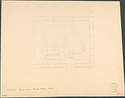
| Church of the Holy Apostles: plan showing graves in modern part of church ... John Travlos ... Fragile Faint Cartridge Paper Pencil ... 1955 |
Grave in north peristyle of Hephaisteion. Grave LIX in notebook.
No mention of bones. Containers 473 and 474 represent filling between graves. Coins:
11 March 1939 #16 Neg. KK 391 ... Byzantine |
| Graves in the Temple. Graves in the Temple; Grave LX. Burial. Graves in the Temple; Grave LXI. Graves in the Temple; Grave LXII. Graves in the Temple; Grave LXIII. Graves in the Temple; Grave LXIV. Graves ... ΚΚ-11 2183, 2184 Lot ΚΚ 420 Lot ΚΚ 421 Lot ΚΚ 422 Lot ΚΚ 423 Lot ΚΚ 424 Lot ΚΚ 425 Lot ΚΚ 426 Lot ΚΚ 427 Lot ΚΚ 428 Lot ΚΚ 429 Lot ΚΚ 430 Lot ΚΚ 431 Lot ΚΚ 432 Lot ΚΚ 433 Lot ΚΚ 434 Lot ΚΚ 435 E 7:11 E ... Late Byzantine |
| Index VII. Wells. Modern Fillings. Graves. Grave VII. Grave VIII. Rooms. Byzantine Building 6; Room 29. Byzantine Building 6; Room 29B. Room 30. Room 31. East-West Road and Stroseis ... ΛΛ-7 1392 ... Graves ... Byzantine Building 6; Room 29 ... Byzantine Building 6; Room 29B |
| 35/Δ; Test Cut outside Northeast Corner of Grave Area Wall; Road Fill; Mixed. Grave 8; Sherds Found Loose in Earth inside the Grave. Graves 10, 11, 12; Ash Fill in Bottom of Turkish Bothros. 39-42/ΙΓ; ... Β-9 1699, 1700 B 1630 B 1631 P 4658 Lot Β 292 Lot Β 272 Lot Β 274 Lot Β 293 Lot Β 294 Lot Β 295 Lot Β 296 Lot Β 297 ... Geometric-6th B.C ... Graves 10, 11, 12; Ash Fill in Bottom of Turkish Bothros ... 39-42/ΙΓ; Byzantine Wall along East of Graves 8, 19 20 ... Red Fill between Graves 4 9 to Wall C; Upper Level |
| Temple of Ares. Mycenaean Grave Foundation; 1933. To Ares Temple from North Edge of Grave. Byzantine House B; Room 1. Byzantine House C; Room 1. Grave E. Graves C-D. Mycenaean Grave. Graves A and B. North ... Ε-8 1374, 1375 ... 24 Apr 1951 ... Byzantine House B; Room 1 ... Graves C-D ... Graves A and B |
| Graves. Infant in Pit. Byzantine or Turkish Skeleton. Burial. Grave III. Grave IV. Grave VIII. Grave I. Grave XI. Grave XIII. Grave XVIII. Grave XIX. Grave XXII. Grave XXIV. Grave XXVIII ... ΝΝ-43 B 21:2 B 21:3 B 21:4 B 21:5 B 21:6 B 21:7 B 21:8 B 21:9 B 21:10 B 21:11 B 21:12 B 20:3 B 20:4 B 21:13 B 20:5 B 21:14 B 22:1 B 22:2 ... Byzantine ... Graves ... Byzantine or Turkish Skeleton |
| Excavation and Cleaning along the East side of the Great Drain. Section E; Byzantine Houses Levels and Monument Bases; Mycenaean and Protogeometric Graves. Section Z; Northwest Corner of Middle Stoa. Section ... 1951 Ε ... 1951 ... Section E; Byzantine Houses Levels and Monument Bases; Mycenaean and Protogeometric Graves |
| Table of Contents. Bedrock (Early Deposits Over). Bothros (Byzantine). Byzantine Buildings; General. Byzantine Building 1; Rooms 5, 5A, E. Byzantine Building 3. Byzantine Building 4; Rooms 15-17. Byzantine ... ΛΛ-1 4, 5 ... Bothros (Byzantine) ... Byzantine Buildings; General ... Byzantine Building 3 |
| Section Χ 1937 ... Margaret Crosby ... The area signified as Section Χ lays outside the Agora proper and no signs of any public buildings were found. The area seems to have been used for private houses from the end of the 6th c. B.C. Apart ... 25 Jan-18 May 1937 ... Apart from few scattered sherd from the Geometric period, the earliest remains indicating habitation were two graves of the late 6th or early 5th c. ... Close by the graves was a garbage pit from about 480 B.C., one well from ca. 420 B.C, and another well from ca. 375 B.C.
... All traces of post classical habitation had been destroyed by the Turkish and modern houses, except for a Byzantine well. |
| Theseion Summary Volume XI. Pronaos. Pronaos; Wall. Pronaos; Foundations. Foundations. Foundations; East Peristyle. Foundations; North Peristyle. Foundations; West Peristyle. Foundations; South Peristyle ... ΚΚ-10 2097, 2098 E 7:16 D 7:14 D 7:13 D 7:12 D 7:11 D 7:10 D 7:9 E 7:22 E 7:5 D-E 7:3 E 7:4 D-E 7:2 D-E 7:1 D 7:15 D-E 7:4 E 7:6 E 7:1 E 7:10 E 7:11 E 7:7 E-F 8:1 E 8:2 E 8:1 E 7-8:1 E 7:8 ... Byzantine Graves ... Summary of Graves in Volume XI |
| Section X
Miscellaneous Notes Compiled in Summer of 1946 ... Margaret Crosby ... This report is a summary of the excavations taken place in 1937 as well as in 1946.
Some pottery indicate habitation in the area from the Geometric period. Two shallow graves of the 6th and 5th centuries ... 27 May-21 Jun 1946 ... Two shallow graves of the 6th and 5th centuries B.C. were found, probably children's graves set under the house floor. ... No traces of the latest Romans period were found, and the only Byzantine fill dug was an early Byzantine well. |
| Section ΝΝ
Season of 1939 ... Rodney S. Young ... Section ΝΝ lies at the mouth of the valley between Pnyx and Areopagus, which was the important thoroughfare from the Agora to the Pnyx and to the southern parts of the city, as well as to the Piraeus Gate, ... 26 Sep 1938-24 Jun 1939 ... The whole section was cleared down to ancient or Byzantine levels. Extensive remains of private houses and a bath of the Roman period were discovered, as well as walls of houses from earlier periods. ... Twenty-two graves were opened. ... The most important group of finds is the pottery from the archaic graves. |
| Well South of Soft Yellow Poros Foundation. Dumped filling of a collapsed well, that, due to hazardous conditions, could not be cleared below- 2.50m. The well was partly cut on the east side by a Byzantine ... Protogeometric-Early Geometric II, ca. 850 B.C ... The well was partly cut on the east side by a Byzantine storage pithos, and on the south side it was disturbed by another, tile-lined, well of the Roman period (U 19:4), which had been used for water and then as a cesspool inn the early 20th century.
Filling almost entirely later Protogeometric, with a few sherds of Earliest Protogeometric, all apparently drawn from disturbed graves.
At -1.50m a complete and ordered skeleton (man of 45-50 years old), doubled up so that its thighbones were parallel to and to the backbone, lay on a rough stone slab. |
| Section ΛΛ 193
Excavation Summary ... Dorothy Burr Thompson ... Excavations in Section ΛΛ revealed that the original contour of Kolonos Agoraios had been much sharper than in modern times. No traces of early graves were found in the area; first sign of habitation is ... 1 Feb-23 Jun 1937 ... No traces of early graves were found in the area; first sign of habitation is pottery from the last half of the 5th century B.C. found in metal working pits in connection with a drain and a road. ... In the Byzantine period blocks of houses were set over the whole area, and this settlement, when combined with those of ΜΜ and ΚΚ, present interesting material for the study of medieval Athens. |
| Bedrock; Filling Over; Plan A; Ostrakon Pit. Byzantine Remains. Monastery. Building 1. Building 2. Pithoi; Discussion. Pithos A. Pithos B. Pithos C. Pithos D. Pithos E. Pithos F. Pithos G. Pithos H. Pithos ... ΚΚ-1 2, 3 ... Byzantine Remains ... Graves |
| Graves; Continuation. Grave 24. Grave 25; Protogeometric. Grave 26. Grave 27. Grave 28; Protogeometric. Chian. Grave I and IA. Grave II. Grave III. Grave IV. Grave V. Grave VI. Grave VII. Grave VIII. Grave ... ΚΚ-1 4, 5 Lot ΚΚ 40 Lot ΚΚ 41 Lot ΚΚ 42 Lot ΚΚ 43 Lot ΚΚ 44 Lot ΚΚ 45 Lot ΚΚ 46 Lot ΚΚ 47 Lot ΚΚ 48 Lot ΚΚ 49 Lot ΚΚ 50 Lot ΚΚ 51 Lot ΚΚ 52 Lot ΚΚ 53 Lot ΚΚ 54 Lot ΚΚ 55 Lot ΚΚ 56 Lot ΚΚ 57 Lot ΚΚ 58 Lot ... 1936 ... Graves; Continuation ... Early Byzantine Well |
| Late Levels in Cella and Pronaos. Late Levels in Cella and Pronaos; North and East Peristyle; Northeast Corner; Upper Earth. Late Levels in Cella and Pronaos; North Peristyle; Lower Earth Above Mosaic ... ΚΚ-11 2185, 2186 Lot ΚΚ 436 Lot ΚΚ 437 Lot ΚΚ 438 Lot ΚΚ 439 Lot ΚΚ 440 Lot ΚΚ 441 Lot ΚΚ 442 Lot ΚΚ 443 Lot ΚΚ 444 Lot ΚΚ 445 Lot ΚΚ 446 Lot ΚΚ 447 ... Late Turkish |
| Section Φ Season of 1937 ... Eugene Vanderpool ... In antiquity the area included in Section Φ lay outside the Agora proper and were apparently occupied only by houses and small buildings. The earliest period of which any considerable remains were found ... 25 Jan-17 Jun 1937 ... The earliest period of which any considerable remains were found was the Geometric: three Protogeometic graves and one well, as well as one Geometric grave and one disturbed well, were discovered and excavated.
... Numerous traces of dark age habitation were found, but few from the Byzantine period, and some from the Turkish period. |
| Eugene Vanderpool ... Rectangular pit, oriented east-west, cut party into filling of Early Protogeometric pit-well (I 18:4), to a preserved depth of about 0.30m. A late Byzantine wall founded below the floor of the grave destroyed ... Middle Geometric I ... A late Byzantine wall founded below the floor of the grave destroyed the entire eastern half of the earlier burial. ... Although half of the tomb was entirely destroyed by later building activity, what survived constitutes one of the richest graves on the slopes of Areopagos and in Early Iron Age Athens. |
| Voza, G. 1985. L'attivita della Soprintendenza alle Antichità di Siracusa nel quadriennio 1980-1984, Kokalos 30-31 [1984-1985], pp. 657-678. Walker, S., and A. Cameron, eds. 1989. The Greek Renaissance ... Agora 31 xix ... Late Geometric Graves and a Seventh Century Well in the Agora [Hesperia Suppl. 2], Athens ... Greek, Roman, and Byzantine Studies |
| Table of Contents; Early and Middle Helladic; Catalogue. Table of Contents; Early and Middle Helladic; Catalogue; Pottery. Table of Contents; Early and Middle Helladic; Catalogue; Early Burial in Metroon ... Agora 13 xii ... Table of Contents; The Mycenaean Period; Introduction; The Mycenaean Cemetery; Pits and Cist Graves ... Table of Contents; Appendix; Plant Remains from the Athenian Agora; Neolithic to Byzantine by Maria Hopf |
http://agathe.gr/publications/picture_books.html Picture Books The Athenian Agora Picture Book series, started in 1951, aims to make information about life in the ancient commercial and political center of Athens available to a wide audience. Each booklet ... This booklet presents a representative sample of these carvings, ranging from elegant ivory figures of Apollo to small toy horses recovered from children’s graves. Illustrated with almost 80 black and white photographs. ... This booklet presents Byzantine, Frankish, Venetian, Turkish, and modern Greek coins, with many pieces illustrated with clear black and white photos of both obverse and reverse. ... Bridles and other horse trappings are often found in graves, alongside vases depicting horses grazing, racing, and parading. |
http://agathe.gr/publications/monographs.html Monographs Excavations in the civic and cultural center of classical Athens began in 1931 and have continued almost without interruption to the present day. The first Athenian Agora volumes presenting ... S.Publication Date: 1959ISBN: 978-0-87661-205-7Volume: 5 A group of closed deposits, ranging in date from the 1st century B.C. to the early 7th century A.D., provide evidence for the relative and absolute chronology of pottery used during many centuries of Roman domination—from the sack of Athens by Sulla in 86 B.C. to the Byzantine period. A descriptive catalogue divides the pottery into eight groups, arranged into chronologically differentiated layers. ... The major part of the volume is devoted to the Mycenaean period, the bulk of it to the cemetery of forty-odd tombs and graves with detailed discussions of architectural forms; of funeral rites; of offerings of pottery, bronze, ivory, and jewelry; and of chronology. |
|
|
.jpg.icon.jpg)
.jpg.icon.jpg)
.jpg.icon.jpg)
.jpg.icon.jpg)
.jpg.icon.jpg)
.jpg.icon.jpg)
.jpg.icon.jpg)
.jpg.icon.jpg)
.jpg.icon.jpg)
.jpg.icon.jpg)
.jpg.icon.jpg)
.jpg.icon.jpg)
.jpg.icon.jpg)
.jpg.icon.jpg)

.jpg.icon.jpg)

.jpg.icon.jpg)
.jpg.icon.jpg)
.jpg.icon.jpg)

.png.icon.jpg)
.png.icon.jpg)