|
|
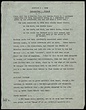
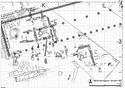
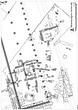
| Section ΟΟ 1948 ... Margaret Crosby ... Work in Section ΟΟ was concentrated on the east and west ends of the north side of the section: parts of the ancient east-west street were explored; ca 20 meters of the Great Drain was clearly exposed; ... 8 Mar-26 Apr 1948 ... Work in Section ΟΟ was concentrated on the east and west ends of the north side of the section: parts of the ancient east-west street were explored; ca 20 meters of the Great Drain was clearly exposed; remains of a house (House E) from the 4th century and Hellenistic period, with cistern (Cistern A), water storage tank and a well (Well I) were found; the Roman Bath (Building A and Hypocaust area) was further explored, and a well in the central court (Well II) dug out; a trial cut was dug in a long, narrow poros building with a large open yard and a series of small rooms; and an early Geometric grave was found and excavated. |
| Section ΜΜ
Summaries for 1936 ... Homer A. Thompson ... Three main ancient features were excavated within Section ΜΜ: the North Stoa, the South Building and the ancient East-West Street passing between the two buildings. After the destruction of the buildings, ... 10 Feb-25 May 1936 ... Three main ancient features were excavated within Section ΜΜ: the North Stoa, the South Building and the ancient East-West Street passing between the two buildings. |
| Section Ζ, 1954 Excavation Report ... Dorothy Burr Thompson ... The area excavated in 1954 fn Section Ζ φell within the Middle Stoa to the east, the Great Drain to the north and west, and the terrace walls to the south. Various parts had been previously excavated under ... 16 Apr-6 Jul 1954 ... The area excavated in 1954 fn Section Ζ φell within the Middle Stoa to the east, the Great Drain to the north and west, and the terrace walls to the south. Various parts had been previously excavated under other section names.
The excavation started at the 3rd century A.D. level and was brought down to the level of ca. 300 B.C., in some places deeper. |
| Section ΠΠ 1948 ... Mabel Lang ... The western and northern parts of Section ΠΠ were brought down to Roman level. Revealed were Roman houses (North House and South House), drains and roads (East-West Road with two drains underneath it, ... 16 Mar-29 Apr 1948 ... The western and northern parts of Section ΠΠ were brought down to Roman level. Revealed were Roman houses (North House and South House), drains and roads (East-West Road with two drains underneath it, and the Great Drain Bridge). |
| Section ΜΜ
Season of 1939 ... Homer A. Thompson ... Section Μ was to be refilled this year and supplementary explorations took place to resolve some remaining obscurities. The most significant discovery was a road running northwest-southeast, probably the ... 20 Feb-8 Apr 1939 ... Section Μ was to be refilled this year and supplementary explorations took place to resolve some remaining obscurities. ... This report has three parts: The Augustan Street; Note on Early East-West Road; Section ΜΜ Season of 1939 |
| Section ΟΟ: Excavation Summary February, 1950
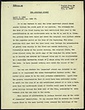
The Poros Building ... Margaret Crosby ... A report on the excavation of the Poros Building in Section ΟΟ. As a result of the investigation, the plan of the building, as suggested in 1948, was considerably modified. Revealed is a building with ... 21-26 Jun 1950 ... A report on the excavation of the Poros Building in Section ΟΟ. As a result of the investigation, the plan of the building, as suggested in 1948, was considerably modified. Revealed is a building with a large open court, a central corridor and five rooms at the west side and three southern rooms at the east side. |
| Excavation and Cleaning along the East Side of the Great Drain, 1951 ... R. C. Wood ... There had been four major Byzantine dwelling units in the northern part of section Ε. Two of them had been removed during earlier campaigns. Excavations manage to establish the outline of the four houses, ... 9 Apr-7 Jul 1951 |
| Preliminary Report on the 2003 Excavation Season ... John McK. Camp II ... Excavations in 2003 were carried out largely in the northwest corner of the Agora known as Section BZ. The area was divided into two parts: the north-south road and areas to the west, and east of the road ... 13 Jun-25 Jul 2003 ... Excavations in 2003 were carried out largely in the northwest corner of the Agora known as Section BZ. The area was divided into two parts: the north-south road and areas to the west, and east of the road.
... East of the road, further evidence of occupation in the area were discovered, as well as of activity by coroplasts.
A new area of excavation was opened up to the east (north part of Section ΒΗ) and medieval walls were revealed.
|
| Agora 2019 - Summary Report ... John McK. Camp II ... Excavations were carried out in four sections: in Section ΝΝ in the southwest corner of the archaeological site, and in the northwest corner of the Agora in Sections ΒΖ, ΒΘ East and ΒΘ West.
Section ΝΝ ... 10 Jun-2 Aug 2019 ... Excavations were carried out in four sections: in Section ΝΝ in the southwest corner of the archaeological site, and in the northwest corner of the Agora in Sections ΒΖ, ΒΘ East and ΒΘ West.
... It was determined that the buildings in the area were not workshops.
In section ΒΘ West, work continued in the Byzantine levels above the Painted Stoa. ... In some parts of the area the bottom of the Byzantine house walls were reached to just a few centimetres above the floor level of the stoa.
In section ΒΘ East excavations continued in front of the Painted Stoa. |
| Summary Report - Agora 2018 ... John McK. Camp II ... Excavations were carried out in Sections ΒΘ, ΒΖ and Ω.
In Section ΒΘ the investigations continued in the area in front of and above the Stoa Poikile. In ΒΘ East, built into a late structure, a large inscribed ... 11 Jun-3 Aug 2018 ... Excavations were carried out in Sections ΒΘ, ΒΖ and Ω.
In Section ΒΘ the investigations continued in the area in front of and above the Stoa Poikile. In ΒΘ East, built into a late structure, a large inscribed block was uncovered just south of the Eridanos river. In ΒΘ West the exploration of the Byzantine settlement continued. |
| Preliminary Report on the 2005 Excavation Season ... John McK. Camp II ... Excavations were carried out in three sections in the summer of 2005: BZ, BH and Γ.
In section BZ, mostly Roman levels were excavated, dating from the 1st to the 5th centuries A.D. Much more of the north-south ... 13 Jun-5 Aug 2005 ... Excavations were carried out in three sections in the summer of 2005: BZ, BH and Γ.
In section BZ, mostly Roman levels were excavated, dating from the 1st to the 5th centuries A.D. Much more of the north-south street was excavated, revealing a series of hydraulic installations, and the large drain along its east side was further exposed. West of the street evidence of a Roman bath was found. |
| Preliminary Report on the 2013 Excavation Season ... John McK. Camp II ... Excavations were carried out in several areas, spanning Mycenaean to Byzantine times.
Full exploration in Section ΒΘ East was prevented since the Byzantine walls could not yet be removed, but a trial trench ... 10 Jun-2 Aug 2013 ... Full exploration in Section ΒΘ East was prevented since the Byzantine walls could not yet be removed, but a trial trench was opened in front of the Poikile Stoa. ... A camera put inside the channel made it clear that is was made up in part by reused blocks.
In Section ΒΘ West, the Middle Byzantine levels continued to be explored revealing more of the settlement found throughout the entire area north of Hadrian Street.
In Section ΒΓ, the investigation in the Panathenaic Way and around the perischoinisma continued. |
| Preliminary Report on the 2007 Excavation Season ... John McK. Camp II ... Excavation continued this year in the sections ΒΖ, ΒΗ and Γ.
In Section ΒΖ South, two areas were investigated: the north-south road and the areas west of the road. In the road, hard-packed gravel surfaces ... 13 Jun-3 Aug 2007 ... Excavation continued this year in the sections ΒΖ, ΒΗ and Γ.
In Section ΒΖ South, two areas were investigated: the north-south road and the areas west of the road. ... More of the deep street drain and another subsidiary channel entering it from the west, were cleared. ... Further east, the exploration of a series of small irregular buildings started.
|
| Athenian Agora
Excavation Summary for 2021 ... John McK. Camp II ... Excavations continued in sections ΒΖ and ΒΘ in and under the Classical Commercial Building, the Painted Stoa, and the orthostate enclosure suggested to be the Leokoreion.
In section ΒΖ the goal was to ... 14 Jun-6 Aug 2021 ... A number of ostraka were found in Persian destruction fills, and a fragment of a small gravestone of the 4th century, probably of a slave, was discovered.
In Section ΒΘ West, two trenches were opened to examine part of the floor of the Stoa Poikile beneath the late Byzantine houses. ... In the area further east, rubble walls of the late Roman period and other disturbances have destroyed most of the original stoa floor.
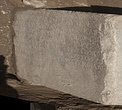
In Section ΒΘ East, three new inscriptions were revealed on the sides of the large statue base built into the Roman tank. |
| Agora Volunteer Report 2017 ... John McK. Camp II ... Excavations took place in three sections, ΒΘ, ΒΖ and ΟΟ, covering a time span from the 14th century B.C. to the 12th century A.D.
In Section ΒΘ work continued in later layers over and in front of the Stoa ... 12 Jun-4 Aug 2017 ... Excavations took place in three sections, ΒΘ, ΒΖ and ΟΟ, covering a time span from the 14th century B.C. to the 12th century A.D.
In Section ΒΘ work continued in later layers over and in front of the Stoa Poikile. In ΒΘ West, more of the remains of the Middle Byzantine settlement were explored; in ΒΘ East, deeper fills were excavated. ... In Section ΟΟ the investigation of the architectural remains of houses and/or industrial establishments continued. |
| AGORA 2022 - Preliminary Report ... John McK. Camp II ... The initial plan to excavate under the modern building at 14 St. Philip Street had to be postponed due to delayed demolition. Instead, excavations were carried out around and inside the Stoa Poikile.
In ... 14 Jun-5 Aug 2022 ... Instead, excavations were carried out around and inside the Stoa Poikile.
In ΒΘ East, Byzantine levels were excavated and more of several rooms were explored.
In ΒΘ West, Byzantine and Roman levels inside the western part of Stoa Poikoile were removed. ... A small excavation was carried out in Section ΒΓ to clarify certain issues at the Crossroads Enclosure.
|
| Preliminary Report on the 2006 Excavation Season ... John McK. Camp II ... This summer the 75th anniversary of the beginning of the excavations and the 50th anniversary of the reconstruction of the Stoa of Attalos were celebrated.
Excavation were concentrated on two areas: northwest ... 13 Jun-4 Aug 2006 ... Excavation were concentrated on two areas: northwest of the Agora (sections ΒΖ and ΒΗ) and in the old excavations at the southwest corner of the square (section Γ).
In section Γ work continued in the building identified as the Strategeion. ... The 5th century B.C. as a construction date was confirmed.
In Section ΒΖ excavation continued in the north-south road and in the buildings to the east and west of it. ... A remarkable find was a small cooking-pot buried near the Classical commercial building, with the remains of the head and feet of a chicken inside, and lines of lightly-incised letters on the outside.
Section ΒΗ was expanded to the east, following the demolition of modern buildings. |
| Preliminary Report on the 2010 Excavation Season ... John McK. Camp II ... Excavations took place in five sections: ΒΗ, ΒΘ, ΒΖ, Γ and Δ.
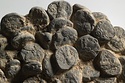
In Section ΒΗ, excavation continued and late fills overlying the Stoa Poikile were cleared. A good cross-section of the stoa foundations was ... 15 Jun-6 Aug 2010 ... A good cross-section of the stoa foundations was exposed. ... Below the floor in one of the rooms, several dozen ostraka were found.
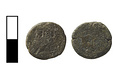
In Section ΒΘ West, excavations continued and numerous animal bones from a pit were recovered. ... Lower down, numerous Frankish bronze coins were found.
In Section ΒΘ East, more walls of the Byzantine settlement were recovered. |
|
|