|
|
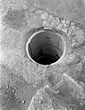
Well at 16/ΚΗ, in SW corner of Gymnasium complex. Lowest Roman deposit. 9th-10th century Byzantine and Turkish
Coins:
24 April 1935 #3
Envelope 4 in Tin 14 ... 5th c. A.D. - 10th c. A.D ... Well in Π Late Roman to Turkish |
Coins:
5 April 1937 #1
8 April 1937 #3 (disintegrated)
9 April 1937 #1
10 April 1937 #9-#67
12 April 1937 #3-#6
13 April 1937 #1, (found 7 April 1937), # 24
14 April 1937 #1-#2 (found 8 April 1937)
16 ... Late Roman, 4th-early 5th. c. A.D. |
Upper fill (top to around 4.50m.) was in a pit of large dimensions above the preserved well shaft. From the bottom and shaft proper no catalogued pottery. No tiling in place in well but fragments of tiles ... 3rd-4th c. A.D. |
Well at SE corner of Court of Late Roman Building (Trench C). Estimated Grid ... 12th c. A.D ... Well at Southeast Corner of Court of Late Roman Building |
Well at 56/ΚΖ, just south of the south wall of the northern Late Roman Building ... Second half of 2nd c. - early 3rd c. A.D ... Well at 56/ΚΖ, just south of the south wall of the northern Late Roman Building |
Well at 69/ΚΗ (diameter 1m).
The well forms the south apse of the apsidal cutting south of the late Roman entrance porch ... Late 8th c. B.C ... Well at 69/ΚΗ (diameter 1m).
The well forms the south apse of the apsidal cutting south of the late Roman entrance porch. |
Stratified well; very late Roman verging on Byzantine. Coins
19 April 1939 #1-#8
22 April 1939 #1-#2
25 April 1939 #1
15 May 1939 #1 Subdivisions:
.1=0.00-15.25m.
.2=15.25-21.00m.
.3=21.00-22.00m ... 3rd-5th c. A.D.
9th c A.D ... Stratified well; very late Roman verging on Byzantine. |
It seems possible that the well ... was originally associated with the late Roman reconstruction of the Stoa, being later carried up to serve the Byz. houses. [Nbp. 364] Coins:
6 March 1939 #1-#9 ... Late 4th-early 5th century ... It seems possible that the well ... was originally associated with the late Roman reconstruction of the Stoa, being later carried up to serve the Byz. houses. |
| Well at 52/Ι, on the lower northeast slopes of the Areopagus. It was cut down and re-used in the late Roman period, in connection with the water channel. Use fill of 1st to early 2nd c.
Dump fill 5th to ... Early to Late Roman ... Well at 52/Ι, on the lower northeast slopes of the Areopagus. It was cut down and re-used in the late Roman period, in connection with the water channel. |
Primarily late Roman material but some scrappy early Roman. Coins:
5 March 1934 #1-#4
6 March 1934 #1-#3
7 March 1934 #1-#2
8 March 1934 #1-#4
9 March 1934 #1-#4
10 March 1934 #1 ... Ca. A.D. 350 dumped fill |
Well at 5/ΚΘ. Digging abandoned at -7.20m for fear of collapse.
Upper 50cm, fill in broken in mouth, very late Roman (4th-7th. c. A.D.)
Fill below 50cm to 6.50mL late roman with some earlier material (from ... 4th-7th century A.D ... Well at 5/ΚΘ. Digging abandoned at -7.20m for fear of collapse.
Upper 50cm, fill in broken in mouth, very late Roman (4th-7th. c. ... Fill below 50cm to 6.50mL late roman with some earlier material (from earth from digging this well). |
| A tiled well with two periods of use, Byzantine and Late Roman.
Some coarse Byzantine pottery from the upper part. from the lower part, pre-Herulian pottery, lamps and figurines. Also ΑΡ 221 (A 1202) the ... 3rd c. A.D. (before 267 A.D.)
11th-12th c. A.D ... A tiled well with two periods of use, Byzantine and Late Roman.
... Also ΑΡ 221 (A 1202) the block from a raking cornice used to cover one side of the well (re-use period unknown).
... Subdivisions:
.1=Byz. fill
.2=Late Roman fill
Estimated Grid |
Well at 73/ΜΓ.
The upper walls were of small stones but changed to tiles at a depth of ca. 12m which suggests that it perhaps was originally built in Late Roman times ... Byzantine ... Well at 73/ΜΓ.
The upper walls were of small stones but changed to tiles at a depth of ca. 12m which suggests that it perhaps was originally built in Late Roman times. |
| Extract from notebook ΠΘ XIX, pp. 3644-3646. Well at 105/ΝΗ (report on sorting of pottery, July 19, 1951 - H.S. Robinson).
"Not a useful well" HSR.
Well dug to 1.50m., vi/9/36; dug from 1.50m. to bottom ... Early Roman; use fillings of 2nd. c. B.C. and 1st. and 4th. c. A.D.; dumped filling of late 4th. c. (HSR)
Fill I: 2nd. c. B.C.
Fill II-V: to second half of 4th. c. A.D.
Fill VI: mixed to Byzantine. |
The pottery of the first six meters (containers 1-3 of 117 containers total) contains a good deal of unglazed early Byzantine along with very late Roman. Below this begins a great mass of Roman pottery ... 4th-6th c. A.D. POU |
Dumped fill. Well lining collapsed at ca. 0.60m. from bottom, apparently at start of POU, forcing abandonment. Pottery described as mixed to "latest Roman", including combed and gouged; all very fragmentary; ... Late Roman ... Dumped fill. Well lining collapsed at ca. 0.60m. from bottom, apparently at start of POU, forcing abandonment. Pottery described as mixed to "latest Roman", including combed and gouged; all very fragmentary; discarded.
... Lot Υ 13 for pottery from fill in channel leading to well 39/ΞΔ (late 4th c. |
Late Roman, perhaps as late as 7th c., but excavator noted small amount of material made close dating impossible throughout. Nbpp. 2448-2449: The fill of this well throughout is mixed and there are numerous ... Early to Late Roman ... Late Roman, perhaps as late as 7th c., but excavator noted small amount of material made close dating impossible throughout. Nbpp. 2448-2449: The fill of this well throughout is mixed and there are numerous Late Hellenistic sherds even at the top ... Because of the very small quantity of sherds ... and the mixed character of the entire fill more accurate dating is impossible. |
Well at the southeast corner, almost on the line of the east-west street. Upper Fill: Late Roman dumped fill.
Lower Fill: Dark Age: ca. 7th c. A.D.
Coin
30 March 1939 #34 ... 7th-Late 6th century ... Well at the southeast corner, almost on the line of the east-west street ... Upper Fill: Late Roman dumped fill.
|
Digging abandoned at 17.10m.
Nbp. 2863: The fill in the mouth to -6.50 was a dump of mixed hellenistic and late roman sherds. From -6.50 to -11.00m. small stones with a few late roman sherds 4th-5th c ... 4th-5th c. A.D ... Nbp. 2863: The fill in the mouth to -6.50 was a dump of mixed hellenistic and late roman sherds. From -6.50 to -11.00m. small stones with a few late roman sherds 4th-5th c. From -11m. the well deposit started and was very heavy and continuous to abandonment depth, 4th-5th c. |
Upper fill early Roman. Lower fill latest Hellenistic.
No house walls clearly associated with it, and apparently no attempt made to assign it to any particular house. Subdivisions:
.1=Upper fill
.2=Lower ... Late Hellenistic-Early Roman |
| Well in Room 7 of Roman House H, partially covered by caldarium of added bath complex (Room 6). Stone well-head; 0.85m in diameter. Stpped because of danger of collapse. Cut through bedrock, water from ... 6th c. A.D ... Well in Room 7 of Roman House H, partially covered by caldarium of added bath complex (Room 6). Stone well-head; 0.85m in diameter. ... Nondescript Late Roman. |
Abandoned digging at 6.25m. due to water level. Tile well could be associated with a bit of late Roman wall to the south, with floor level about one meter above that of pebble floor. Well tiles were not ... 14-22 April 1948 ... Abandoned digging at 6.25m. due to water level. Tile well could be associated with a bit of late Roman wall to the south, with floor level about one meter above that of pebble floor. Well tiles were not in place for the last meter and a half. |
POU = 10.00-11.30m.
"The well is important because it gives us a terminus post quem for Building D." (nbp. 3346)
Shallow well, producing little water or trouble, but a great quantity of coarse late Roman ... Ca. A.D. 300-370 and Ca. A.D. 400 ... POU = 10.00-11.30m.
"The well is important because it gives us a terminus post quem for Building D." (nbp. 3346)
Shallow well, producing little water or trouble, but a great quantity of coarse late Roman pottery, with Type XXVIII lamps. |
Nbp. 3104: When dug, the fill of the well divided itself into 3 deposits.
Objects catalogued from the "earth" are: L 4838, P 21602, P 21603, P 21604. Dumped filling of Turkish times. Coins:
17 May 1937 ... Late 6th-7th c. A.D ... Nbp. 3104: When dug, the fill of the well divided itself into 3 deposits.
... Coins:
17 May 1937 #1
A little very coarse very Late Roman pottery. |
| Kevin Daly ... Grave in north room of Roman temple, west of well J 2:4; adult inhumation ... Late Helladic IIIC Late-Final Mycenaean/Submycenaean |
Roman well re-used in Byzantine times. Subdivisions:
.1=0.00-13.80m.
.2=13.80-23.50m.
.3=23.50-25.00m ... Late 1st-early 2nd, 4th-5th, 11th centuries. |
| Well in East Colonnade of Roman House H. Diameter 0.80m, lined with field stones set in mortar. used as a cistern as well.
No useful pottery dates. Capital from colonnade A 3866 and part of shaft found ... 29 July 1970 ... Well in East Colonnade of Roman House H. Diameter 0.80m, lined with field stones set in mortar. used as a cistern as well.
No useful pottery dates. Capital from colonnade A 3866 and part of shaft found at 2.50m-3.00m, indicating destruction of house (late 6th, 580's by Slavs). |
Tiled well, ca. 30m south of the Tholos. Associated with Building D. Hellenistic Group A with Late Roman fill in upper 3.00m. Objects A 245 and P 4597 are from fill on floor around well-head, contemporary ... 325-260 B.C ... Tiled well, ca. 30m south of the Tholos. ... Hellenistic Group A with Late Roman fill in upper 3.00m. ... Coins:
13 March 1933 #1 at well head (#2-#3)
21 March 1933 #1 (dump) (not a coin) |
Well-shaft abandoned before use because of crumbling of rock.
From top to 15.00m. a dumped fill predominantly early Roman but containing material of late 1st c. B.C. to mid-1st c. A.D. A rock filled shaft ... 1st c. B.C. to mid-1st c. A.D ... Well-shaft abandoned before use because of crumbling of rock.
From top to 15.00m. a dumped fill predominantly early Roman but containing material of late 1st c. |
Diameter 0.95m; water level -9.10m.
Plais shaft cut in stereo from bottom of slender flask-shaped cistern. Scanty fill from house destruction in 5th c. A.D.; Christian lamps; unfinished statuette of Castor ... Late Roman |
Well at 115/ΣΤ (all the 5th c. fills of 116/ΣΤ). The lower part of the shaft contained a heavy deposit of pottery and other objects of the late archaic period, both coarse and finer wares; probably a post-Persian ... Ca. 500-480 B.C.-Roman ... Well at 115/ΣΤ (all the 5th c. fills of 116/ΣΤ). ... A Roman well at 116/ΣΤ (D 15:2) was subsequently dug beside it, and later the party wall between the two broke at two points, allowing some of the filling from D 15:1 to fall into the deeper shaft of D 15:2; there is thus no stratification.
Top to -6.50m, 4th c. dump, with coins as late as Valens 364-378. |
| Well cut into bedrock under late Roman building in ΕΛ. 1.2m in diameter with small cutting of unclear function at south edge about 0.2m wide. Walls cut straight down, tapering near bottom to 0.8m. Footholds ... Late Archaic ... Well cut into bedrock under late Roman building in ΕΛ. 1.2m in diameter with small cutting of unclear function at south edge about 0.2m wide. ... There were 14 layers of fill from two periods-the Roman resurfacing of the area using Hellenistic fill (possibly associated with Deposit T-U 21:1, but not kept as such since floors were damaged in area directly above) and dumped fill from the late 6th/early 5th c. ... Layers:
Hellenistic fill under Roman floors
I.(86.34-85.93m) rubble
II.(85.93-85.58m) dark brown rubble
III.(85.57-85.30m) more stony rubble
IV.(85.30-84.80m) very rocky, almost sterile, increase of clay and sand
V.(84.80-84.03m) less rocks, almost sterile, increase of clay and sand
Late 6th/early 5th B.C dumped fills
VI.(84.03-82.64m) mix of clay and sand deposits, dog skulls
VII.(82.64-81.79m) mostly sand
VIII.(81.79-81.39m) light brownish-grey clay, almost sterile
IX.(80.39-80.99m) mix of grey clay, brown clay and sand, much ceramic
X.(80.99-80.24m) sandy, more ceramic
XI.(80.19-77.74m) sandy, enormous stones (some 100kg+). |
Well at 63/ΙΒ (in House H, Room 15). Upper fill mixed Hellenistic to 2nd c. or later. Probably thrown in in Early Roman times when House H was built. Contained many figurines; probably part of Koukla factory ... 12 August 1947 ... Well at 63/ΙΒ (in House H, Room 15). ... Probably thrown in in Early Roman times when House H was built. ... Lower fill with much 4th c. and as late as upper fill into 2nd c. |
Dumped filling above well, 4th-5th c. A.D., container 699.
A tiled well. Instead of the usual three sections in each ring, there were four. The fourth was extra, making the well larger, more elliptical ... Late Hellenistic-Early Roman |
No period of use. Below the upper (Early Roman) dump extending down to ca. 6.10m. was a dumped fill of broken pottery in great quantity, including a high proportion of red-figured fragments. Masses of ... Ca. 430-400 B.C.
Late 1st c. B.C.-mid 1st c. A.D. |
A well outside the market square to the southeast, 20m west of the Panathenaic Way; Modern fill in upper 1.65m. with Early Roman dumped fillings below. Coins:
9 May 1939 #37 (dirt pile)
10 May 1939 #53 ... Late 1st c. B.C.-early 1st c. A.D. |
Coins:
16 April 1934 #2
17 April 1934 #1 ... Late Roman- Ca. A.D. 400 |
| Well cut into bedrock, associated with late Roman building G in ΕΛ 1.2m in diameter, narrows to 0.5m at bottom. Disturbed by later pits at top. Excavated from 85.77-79.25m (6.52m), but bedrock at 85.91m ... Late 4th/early 5th AD ... Well cut into bedrock, associated with late Roman building G in ΕΛ 1.2m in diameter, narrows to 0.5m at bottom. |
Well 15: Mycenaean. It was situated about 35 meters down the slope northwest of the exit of the Mycenaean Fountain.
Well circular or roughly oval in section.
Diameter max. width to -4.0: ca. 1.50, below ... Late Mycenaean ... Well 15: Mycenaean. It was situated about 35 meters down the slope northwest of the exit of the Mycenaean Fountain.
Well circular or roughly oval in section.
... About 0.30m below, a late Roman pit which cut into the north side sherds occurred in fair quantity and the fill seemed to be pure.
|
| Use filling of middle of 1st to late 6th c. (Roman Group M); dumped filling of 9th and 10th c. Down to a depth of about 21.00m. the fill of the well contained very few objects, the latest of them being ... 1st-6th c. A.D ... Use filling of middle of 1st to late 6th c. (Roman Group M); dumped filling of 9th and 10th c. ... At 21.00m. there was a sudden change and very late Roman objects began to appear in great numbers.
See nbp. 786 for a note on the disposition of some uncatalogued material into a modern well. |
Well south of the apse of Room 3, Roman House H. Cut through bedrock, diameter ca. 1.15m, stopped at ca. -10.80m because of danger of collapse. Water at very top, up to bottom of parapet between well and ... 2nd-4th c. A.D ... Well south of the apse of Room 3, Roman House H. ... Water at very top, up to bottom of parapet between well and Room 3. Secondary access from well-head outside apse, at a higher level ... A.D. The well apparently went out of use as such with the construction of Roman House H. |
From the mouth to 10.50m. a fill of earth with mixed sherds, Roman 4th. c. to geometric. Probably dumped in to fill the well. From 10.50-17.75m. the fill was of broken bedrock, with a few sherds scattered ... 5th. c ... From the mouth to 10.50m. a fill of earth with mixed sherds, Roman 4th. c. to geometric. Probably dumped in to fill the well. From 10.50-17.75m. the fill was of broken bedrock, with a few sherds scattered through it. These were late Roman probably of the 4th. c. |
A small concentration of pottery in lowest 1.80m., possibly a use fill. Three fills above, with little pottery, ranging from Hellenistic to late Roman in date. Coins:
26 February 1934 #4-#6
27 February ... 325-200 B.C ... Three fills above, with little pottery, ranging from Hellenistic to late Roman in date ... We should check the grid reference of this well, a note (Section Γ, nb. |
(Roman Group J). The upper fill to a depth of ca. 16.00m. was of earth scooped up elsewhere and thrown in ... The latest piece noted from this fill was a TC fragment dated late 4th to 5th(?) c. BC. From ... 2nd.-3rd. c. A.D ... (Roman Group J). The upper fill to a depth of ca. 16.00m. was of earth scooped up elsewhere and thrown in ... The latest piece noted from this fill was a TC fragment dated late 4th to 5th(?) ... Subdivisions:
.1=upper fill
.2=lower fill, well deposit |
"Oinophorus Well".Tiled well in House H (diameter 0.80m, water level -4.70m). Height of tiles 0.64m Heavy well deposit; lamps,, type XXVII; many basket-handled water jars; oinophoros with labors of Herakles ... Use filling of early 2nd-mid.-3rd c. A.D ... "Oinophorus Well".Tiled well in House H (diameter 0.80m, water level -4.70m). ... Heavy well deposit; lamps,, type XXVII; many basket-handled water jars; oinophoros with labors of Herakles.
... Subdivisions:
.1=top-2.95m. Late Roman dump.
.2=2.95-7.00m. |
Tile well at 52/ΛΣΤ, in the northern late Roman building in the room with the apse. The top was covered by a large stone, and the well had never been filled after the last period of use. water stood to ... Late 1st (?) cent.-early 3rd to 6th cent ... Tile well at 52/ΛΣΤ, in the northern late Roman building in the room with the apse. The top was covered by a large stone, and the well had never been filled after the last period of use. water stood to within two meters of the top and the first fill was at 23m. From 23 to 25m, the well was filled with pottery, mainly water jars of varying sizes, dating from the 5th or perhaps sixth centuries. |
Note of 20-III-52 (deposit nb): Have looked up notebook pp. 1101 ff. The fill of this well was certainly Roman, also some part of the fill behind the tiles - but is that only a part tunneled as a passage ... 2nd-3rd c. A.D ... The fill of this well was certainly Roman, also some part of the fill behind the tiles - but is that only a part tunneled as a passage from another cistern, which was stopped up by late jars when the late people found the shaft of 86/ΞΕ? ... Note that there are pairs, and apparently there were large parts of the bodies of the jars saved which were thrown out or disappeared during the war. Well dug at some expense, due to water; abandoned [at 13.00m.] without being finished because of difficulty of digging ... Nb. p. 1110: Apparently all the pottery from the well lost its tickets during the war, was not recognized and was thrown out - or otherwise disappeared. |
Well at 15/ΙΕ = Pocket in side of Turkish Pit at 15/ΙΔ.
Shallow well on the lower slopes of the Acropolis, east of the Panathenaic Way, in the area later occupied by the Archaic Building.
Located 3.5m ... 700-675 B.C. with intrusions ... Well at 15/ΙΕ = Pocket in side of Turkish Pit at 15/ΙΔ.
Shallow well on the lower slopes of the Acropolis, east of the Panathenaic Way, in the area later occupied by the Archaic Building.
... Intrusions: Archaic ware; terra cotta figurine; blac figure; black glaze; lamp; Roman ware; Late wares: green glaze; yellow glaze; orange/brown glaze; green/white ware; grooved ware, white slip; incised wavy ware; white slip ware, amphora; globular jug; lamp; jug; unglazed plate; micaceous coarse ware; other coarse ware. |
Geometric Well on the west side, in the line of the Roman Panathenaic way; 3.70m below paving block of street that overhangs well. It was neatly cut, 1.05m. in diameter, but it was dug only to a depth ... Late Geometric, end of 8th century B.C. |
Large pit in the bedrock over Wells H and I. Fill of the pit thrown in after filling of Well H, containing almost entirely coarse ware. First 4m of Well I, filling the same. Below that Well I fill similar ... Late Roman- 1st c. A.D. (mainly early ?) |
| Tiled Well at S edge of E-W Road, 73/ΜΗ. Contemporary upper and lower fills separated by layer of sterile mud.
Latest coin dates ca. 200. Koan amphora handle with stamped handle dates slightly after 200 ... 210-160 ... Tiled Well at S edge of E-W Road, 73/ΜΗ. ... Fragment of Roman terracotta plaque of late 3rd c. |
Pit (= collapsed cistern). Fill mixed, late Hellenistic to early Roman. The cistern floor has an E-W channel, no doubt running from the pit at 107/Ζ to the well at 107/ΙΓ (B 21:24). Coins:
10 June 1939 ... 150-100 B.C ... Fill mixed, late Hellenistic to early Roman. The cistern floor has an E-W channel, no doubt running from the pit at 107/Ζ to the well at 107/ΙΓ (B 21:24) ... Also from cistern passage north, leading to well B 21:24 (107/ΙΓ: ΝΝ 1694 (SS 9510), ΝΝ 701 ( SS9512), ΝΝ 1863 (B 760), ΝΝ 2316 (P 17408), ΝΝ 2317 (P 17409), ΝΝ 2318 (P 17410). |
Containers 1-52. Top to 20.00m. = modern fill.
Note a strong presence of W. Asia Minor (non-export-type) closed vessels here - did owner perhaps come from there? [JWH] Coins:
25 May 1938 #1-#2 ... Late Roman 5th-7th c. A.D. |
| Julia Shear ... Burial. Roman Temple south half, in fill south of temple crosswall and norh of polygonal wall, layer 37a.
Small, roughly circular pit. The diameter of the pit appeared to be only slightly greater than ... Late Helladic IIIC Late-Final Mycenaean/Submycenaean |
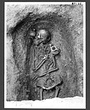
| John Camp ... Protogeometric grave (female inhumation) located about 0.60m northwest of T 15:1. It consisted of a roughly rectangular pit, with the corners slightly rounded, oriented approximately north-south. The pit ... "Submycenaean"/Early Protogeometric ... The original depth of the tomb would have been at least slightly greater, since the bedrock around it was leveled in Late Roman times, if not earlier. ... Within the pit, the well-preserved skeleton of a woman aged about 40-44 years at death was found laid out in a fully extended position on her back, head to the south. ... A substantial Late Roman wall ran across the tomb, covering but not disturbing the skeleton from mid-thigh to instep; the bones were recovered by tunneling. |
| Eugene Vanderpool ... Grave (adult female). (In some records as Grave XXXI).
The tomb was partly destroyed in antiquity; there are sherds of all periods down to Late Roman (and later) note din the fill immediately above it ... Middle Geometric I ... The tomb was partly destroyed in antiquity; there are sherds of all periods down to Late Roman (and later) note din the fill immediately above it. A modern well was partly cut into the northeast portion of the tomb as preserved, and an ancient block, reused in a modern wall, was founded directly on bedrock just to the southwest of the tomb.
... The cinerary urn, probably once stood in a shallow sinking a little in from the northwest end (cf. trench-and-hole). the cutting itself proved to be an enlargement of the mouth of the filled in Protogeometric well M 17:5. As encountered, the cinerary urn, largely destroyed in antiquity, was bedded in the disturbed upper filling of the well. |
Cistern with two tunnels, the one entering its neck cut off by an early Roman well, the other, at the bottom not excavated.
Chamber conical in shape, with a depressed draw basin in the center of the floor ... Early Roman-3rd c. B.C ... Cistern with two tunnels, the one entering its neck cut off by an early Roman well, the other, at the bottom not excavated.
... Middle fill: Only stamped amphora handle comes from Late Corinthian jar of second half of 3rd c. |
Debris, Room I of Street Stoa (R/16,20-13/10,15).
The lack of any rooftiles and similar architectural debris suggests that perhaps it was brought in from an adjacent area and dumped in the room. This is ... 6-8 May 1975 ... This is further suggested by the fact that the debris rested not on the floor but on bedrock dressed down to ca. 65.80m, well below the level of the threshold block. ... Another possible explanation is that the room was quarried for clean bedrock fill (perhaps by the builders of the Late Roman Building to the east), with the resultant filling of the room with destruction debris from Alaric's attack on the city, perhaps taken from the same area where the bedrock fill was to be used (cf. east, in Room 1 and the south half of Room 2. |
| Mycenaean Chamber Tomb occupies a considerable part of the western half of section ΕΕ; lies about half way up the north slope of the Areopagus towards its eastern end, just below the highest point of the ... Myc. III A:1 ... It was originally several meters longer but its northern end was cut off by a late Roman retaining wall. ... High above the chamber to the south, about five meters above its floor, is the remains of a wall of a late Roman house, part of which passed over the southwest corner of the chamber and had to be removed. About a meter below this, and again over the southwest quarter of the chamber, was a corner of light rubble wall of late hellenistic times. |
| James Artz Pirisino Daniele Kylindreas Miltiades ... Excavation in Room 3 of ΒΘ West revealed 5 ceramic vessels in a row against the eastern face of Wall 12. 3 complete vessels (ΒΘ 122, 124, and 125) were catalogued, along with the base of a plain glazed ... 9th-11th c. A.D ... In addition to the vessels along the face of Wall 12, 5 coins were found within the fill, as well as a bronze ring and fragments of painted plaster (ΒΘ 134) from a wall.
... A plaster layer was exposed and removed over the course of several baskets in the southern half of the eastern portion at an average elevation of 53.883m, and ceramic material from these layers date from the late 11th-early 13th century AD. ... Plain glaze ware; Constantinople white ware; monochrome glaze; green and brown painted ware; combed ware; ridged ware; gouged ware; amphora toe; incised coarse ware; Roman lamp fragment and red wares; classical red and black glaze (including geometric, archaic, and classical); coarse base with strange shape, handle and neck close to base; coarse handles, bases, rims, and body sherds; micaceous body; cooking ware, including joining lid fragments; painted and unpainted plaster; roof and floor tile fragments; pithos lid, rim and body fragments; worked stone; stone revetment; bone; metal; glass |
|
|