|
|
Dumped fill in mouth of well. Coins:
16 May 1937 #1 ... Early 5th c ... Dumped fill in mouth of well. |
Water channel in north part of section. Hellenistic and Early Roman pottery. No inventoried finds ... 13-14 March 1936 ... Channel Mouth 5 |
Water channel in north part of section. Pottery late 2nd.-1st. c. B.C. Coins:
14 March 1936 #8 ... Late 2nd.-1st. c. B.C ... Channel Mouth 6 |
Water channel on south slope of Kolonos Agoraios. Coins:
20 February 1936 #1 ... 3rd-2nd c. B.C ... Channel Mouth 2 |
Water channel in north part of section. Coins:
20 February 1936 #2-#3
Five stamped amphora handles; Type 48 A lamp; one-third of bowls long-petal; one long-petal mold ... Second half of 3rd c.-Early third quarter of 2nd c ... Channel Mouth 3 |
Water channel in north part of section, giving access to water system. Channel Mouth 1. Six stamped amphora handles; two-thirds of bowls long-petal ... Late 2nd century-Early 1st c. B.C ... Manhole, Channel Mouth 1 |
Water channel in north part of Section: Channel Mouth 4. Coins:
22 February 1936 #16-#18
24 February 1936 #1-#2
Twenty stamped amphora handles; type 38 lamp; type 56 A lamp; over half of bowls long-petal ... 120-86 B.C ... Manhole, Channel Mouth 4 |
Mycenaean well and grave.
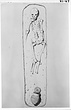
Single burial, that of a middle-aged man, had been made in the mouth of an unproductive well near the southeast corner of the South Square ... Myc. IIIB-C:1 ... Burial in mouth of well |
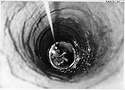
From mouth to water level ... 1-18 April 1936 ... From mouth to water level. |
Water channel in scarp above Bouleuterion Plateia; north passage, from mouth ... Latest 2nd or early 1st c. B.C ... Water channel in scarp above Bouleuterion Plateia; north passage, from mouth. |
'Mouth and upper passage' on deposit list. Containers 1 and 2. Pottery in mouth of cistern in upper tunnel. Coins:
5 May 1939 #1
9 May 1939 #10-#11
12 May 1939 #4 ... 1st c. with earlier material ... 'Mouth and upper passage' on deposit list. ... Pottery in mouth of cistern in upper tunnel. |
Grave 3 in notebook. Grave partly destroyed by well B. Skeleton and offerings lost. The amphora mouth was doubly stopped by the bases of two other amphoras, one in its neck, the other in its mouth ... 750-725 B.C ... The amphora mouth was doubly stopped by the bases of two other amphoras, one in its neck, the other in its mouth. |
Cistern chamber in the area of the southeast Temple, the mouth cut back in antiquity ... Late 4th - early 3rd c. B.C ... Cistern chamber in the area of the southeast Temple, the mouth cut back in antiquity. |
'Lower fill' on deposit list. Containers 8-33, (34 mouth of lower passage). Coins:
9 May 1939 #1-#3, #5, #7, #9
10 May 1939 #1
11 May 1939 #1-#2
12 May 1939 #1-#2
13 May 1939 #2-#3(?)
15 May 1939 #1-#6 ... Ca. 250-215 B.C ... Containers 8-33, (34 mouth of lower passage) ... 15 May 1939 #1-#6
16 May 1939 #1(mouth of lower passage)-#4 |
Well J: EG, ELS. Early Geometric with later (Roman) intrusions.
Cf. P 1063 from mixed context at mouth. Also noted as grid 53/ΙΔ ... Early Geometric ... P 1063 from mixed context at mouth. |
Byzantine Well at 66/ΛΑ.
Semi-curbed well at the west wall of the Byzantine room.
From the mouth of the well, a few brown glazed sherds ... Byzantine ... From the mouth of the well, a few brown glazed sherds. |
Well 8 (in Tholos), put out of use by a fall of the rock walls and replaced by well G 11:3. Scanty use filling at and near the bottom, separated by a mass of fallen rock from a debris filling in the upper ... Ca. 550-500 B.C. and 480 B.C ... Scanty use filling at and near the bottom, separated by a mass of fallen rock from a debris filling in the upper part of the well and around its mouth ... Cf. from fill over well mouth: P 5278, P 5279. |
Well at 5/ΚΘ. Digging abandoned at -7.20m for fear of collapse.
Upper 50cm, fill in broken in mouth, very late Roman (4th-7th. c. A.D.)
Fill below 50cm to 6.50mL late roman with some earlier material (from ... 4th-7th century A.D ... Upper 50cm, fill in broken in mouth, very late Roman (4th-7th. c. ... Coins
1 February 1938 #1-#6 (mouth)
9 May 1938 #1-#4
12 May 1938 #1
21 March 1939 #1-#2 |
Rodney S. Young ... Grave 15 in notebook.
Skeleton of infant inside the hydria which lay on its side, its mouth stopped by cup; a pitcher stood by the neck of the hydria ... 750-725 B.C ... Skeleton of infant inside the hydria which lay on its side, its mouth stopped by cup; a pitcher stood by the neck of the hydria. |
Tins 1-5.
"D" ware; a medallion plate; the jar with flaring mouth and purplish glaze and gouged decoration, a 28 lamp fragment and one fragment of combed ware ... 4th. c. A.D ... "D" ware; a medallion plate; the jar with flaring mouth and purplish glaze and gouged decoration, a 28 lamp fragment and one fragment of combed ware. |
| Rodney S. Young ... Grave 13 in notebook.
Two skeletons of small children lay in a pithos which had been put on its side; its mouth was stopped by a stone slab.
Most offerings were inside the pithos, but two kantharoi and ... Late Geometric ... Two skeletons of small children lay in a pithos which had been put on its side; its mouth was stopped by a stone slab.
... An animal bone was found under a coarse pitcher left outside the pithos at its mouth; carbonized matter, perhaps from a food offering, was found in one of the kantharoi.
|
Use filling of first half of 1st c.; dumped filling of late 1st c.(?). This well, near its mouth, cuts off the end of the upper passage of the cistern at 53/Ε. Subdivisions:
.1=Dumped filling
.2=POU ... First half of 1st c. A.D. POU ... This well, near its mouth, cuts off the end of the upper passage of the cistern at 53/Ε. |
Lower levels of cistern to N. of House of Greek Mosaic.
Connected by tunnel to another chamber that was apparently cleared by Wilhelm Dorpefeld in the 19th c. Roman fill in mouth. Coins:
6 July 1964 # ... Ca. 325-290 B.C ... Roman fill in mouth. |
Located in road west of Middle Stoa. It was 4.80m deep. Owing to its shallowness, it was probably kept clean. The southernmost block of the N-S peribolos (?) wall west of the Middle Stoa partly covered ... 200-165 B.C ... wall west of the Middle Stoa partly covered the mouth of the well. |
Cistern at 6/ΛΓ.
Hellenistic lower fill, with mixed Hellenistic and late Roman fill above, and Byzantine fill in mouth. Coins
1 June 1938 #1-#8
2 June 1938 #1-#6
3 June 1938 #1-#3
4 June 1938 #1-#2
6 June ... 2nd century, with Byzantine disturbance ... Hellenistic lower fill, with mixed Hellenistic and late Roman fill above, and Byzantine fill in mouth. |
Shaft fill, not mouth fill, of drawshaft at 42/Θ. This is part of the cistern system 44/ΙΓ - 46/ΙΑ - 42/Θ.
Thirteen stamped amphora handles; fragments of Arretine pottery; over half of bowls long-petal ... 1st c. B.C.-early 1st c. A.D ... Shaft fill, not mouth fill, of drawshaft at 42/Θ. |
Fillings in a stone-curbed well in the industrial area west of the Areopagus. Diameter (shaft)1.45m. Water level -5.20m. Drain at mouth 0.58m., increasing to a regular 74m. Coin:
24 July 1947 #5 Subdivisions: ... 350-325 B.C./3rd c. B.C ... Drain at mouth 0.58m., increasing to a regular 74m. |
| Well I: PG, ELS. The collapsed well north of the Middle Stoa Terrace. This pit, or shallow well, into which a Turkish storage pit lined with stones was set, produced purely Proto-Geometric pottery and ... Protogeometric ... From the disturbed filling overlying mouth of well, P 26312. |
Well at 29/ΛΕ, to the SE of the market square, west of the Panathenaic Way.
Circular shaft, caved in at mouth. Diameter 1.20m. Diameter narrows to 0.50m at bottom of shaft, which is slightly concave. No ... Late 8th century B.C ... Circular shaft, caved in at mouth. Diameter 1.20m. |
A well lined with a very well built stone wall, carefully made and fitted to the curve of the well cutting, with footholds running down its N and S faces. This wall, of small stones, runs to 7.30m. from ... 23-29 March 1937 ... This wall, of small stones, runs to 7.30m. from the well mouth. Below that the well is lines with drums of tiles. At the east side at the surface, a beam cutting was made to hold a beam to support a brick vault over the mouth of the well. |
A deep pit in bedrock over mouth of well. Context archaic, 6th c.
B.C., but with some traces of later disturbance. Found a circle for a well at the bottom, much water, no sherds.
Lay 2.20m south of Well ... 6th c. B.C ... A deep pit in bedrock over mouth of well. Context archaic, 6th c.
|
| Grave 3 in notebook. Outside Archaic cemetery, inhumation burial. Deposit list says black glaze pithos (P 8922) containing the bones of a child and four small vases. The pithos lay on its side with the ... Last quarter of 6th century B.C ... The pithos lay on its side with the open mouth to northeast. |
| Grave 2 in notebook. Child of about two (or 10?) months, body placed in plain pithos, which rested on its side at the bottom of a pit; the mouth closed with a stone slab.
The burial forms a group with ... 750-725 B.C ... months, body placed in plain pithos, which rested on its side at the bottom of a pit; the mouth closed with a stone slab.
|
Rodney S. Young ... Grave 1 in notebook. Slightly disturbed by the digging of Pit A.
A large oil jar/amphora lay on its side with a flat stone stopping its mouth. The three small vases offered at the burial were found, together ... Ca. 600 B.C ... A large oil jar/amphora lay on its side with a flat stone stopping its mouth. The three small vases offered at the burial were found, together with a few of the bones of a small child, inside the amphora. |
| Grave 14 in notebook.
Length of shaft 2.12m; width 0.46m; depth from cover 0.60m. Man's skeleton stretched NE-SW with head at NE. Offering at foot of shaft, with the skyphos in the mouth of the pitcher ... 750-725 B.C ... Offering at foot of shaft, with the skyphos in the mouth of the pitcher.
|
Mouth and upper part of chamber cut away in modern times; two short passages, one to SW, encroaching on Mycenaean chamber tomb; here the builders apparently found the fill too soft for tunneling, so they ... Early third quarter of 3rd c. B.C ... Mouth and upper part of chamber cut away in modern times; two short passages, one to SW, encroaching on Mycenaean chamber tomb; here the builders apparently found the fill too soft for tunneling, so they walled up the end of the passage with stones, including the inscription I5986, then stuccoed the inside of the passage; the other to E. |
| A flask-shaped storage pit or cellar, cut in the rock at the south edge of the levelled top of Kolonos Agoraios. Filled late in first quarter of 6th. c. B.C. (2.95m from east to west by 2.70m from north ... First quarter 6th. c. B.C ... Original mouth probably cut away. |
| Homer A. Thompson ... Child's grave, Geometric.
The bones of a child about one month old had been placed into P. 25787, which was lying on its side. The upper side of the pot was cut away in later times. The mouth was closed ... Late 8th c. B.C ... The upper side of the pot was cut away in later times. The mouth was closed with the base P 25788. |
May be of Hellenistic origin when cistern system went out of use.
For a general note on the cistern see Nb. ΟΕ III, pp. 246 ff.
Objects from B 586 various depths (no subdivision): S 2324-S 2330,
P 34894, ... Late 2nd-early 6th c. A.D ... Nb.p. 2331: We shall measure depths from the mouth of the cistern, remembering that the floor of the cistern ... lies 3.55m. below the mouth.
|
The filling from top to bottom uniform, yielding small bits of ancient worked marbles and pottery of the fifth and fourth centuries B.C. mixed with undecorated coarse ware, probably of Byzantine times ... 5th c. A.D.-Byz ... A sherd from the mouth of the well (P 2223, red figure) removed from contents list by E.V.
|
Pit in Tholos Trench V (below Layer e).
In plan it would seem to have been oval, though its east end is c/../ by the south wall of the North Archaic Home. Its N-S width is 1.25m, its E-W length is 1.40m ... 7th-early 6th c. B.C ... Its bottom was rounded, 0.70m below its mouth. No trace of lining. |
| Well in Stoa Shop 3. Diameter at top 1.20m. The mouth o the well was overlaid by a large conglomerate block placed by the Stoa builders to seal it. Masses of pottery including many water-jars filled the ... Ca 520-480 B.C ... Diameter at top 1.20m. The mouth o the well was overlaid by a large conglomerate block placed by the Stoa builders to seal it. |
From the mouth to 10.50m. a fill of earth with mixed sherds, Roman 4th. c. to geometric. Probably dumped in to fill the well. From 10.50-17.75m. the fill was of broken bedrock, with a few sherds scattered ... 5th. c ... From the mouth to 10.50m. a fill of earth with mixed sherds, Roman 4th. c. to geometric. |
| Second century B.C. fill with early 13th c. A.D. fill in mouth.
The Byzantine objects from the mouth are P 13713-P 13718, L 3585.
Lower fill contained bones of many infants and dogs.
The bones from this ... Mid-2nd c. B.C ... A.D. fill in mouth.
The Byzantine objects from the mouth are P 13713-P 13718, L 3585.
|
| RSY Grave 51.
The grave lay on the slope of the Areopagus in Roman house O, just east of the line where the hillside is scarped for the foundation of the west wall of the house.
Cutting:the pit cut in ... Archaic period/6th or 7th c ... The burial urn, a pithos, was laid in the pit on its side, the mouth toward the south. A foundation wall of the Roman house passed close to the mouth of the pithos, for which we found no cover; one may have been removed when the foundation was laid. ... Skeleton: On the bottom of the pithos were found the skull and some of the leg-bones of a small child who had seemingly been buried in a doubled-up position with the head toward the mouth of the pithos (south). |
Well of Christian Lamp; west of Stoa terrace wall near north end. Pottery spread out June 1952. A big amphora was made up (ΣΑ 1780), but nothing else went together. Fill appeared o be all of one period ... Late 5th-early 6th century A.D ... Mouth of well discovered in 1950. |
Well cut through cistern at 6/ΝΕ (C 9:7).
The stele I 3244 in position in the cistern over the mouth of the well is listed with the cistern deposit C 9:7. Coins:
26 February 1936 #2-#4
27 February 1936 ... A.D. 1st ... The stele I 3244 in position in the cistern over the mouth of the well is listed with the cistern deposit C 9:7. |
Digging terminated at 14.50m. due to falling bedrock. Scanty pottery remains at 10.00m. In the mouth and upper part of the shaft was a heavy dumped filling of much shattered fragments, for the most part ... Last quarter of 5th c. B.C ... In the mouth and upper part of the shaft was a heavy dumped filling of much shattered fragments, for the most part of the last quarter of the 5th c. but with a few pieces (uninventoried) of the second quarter of the 4th c. |
7th c. well below east part of Odeion Cavea Trench K). Use filling negligible; dumped filling of the second half of the 7th c. B.C.
Brann Well H. Diameter 1.10m. Cut into bedrock. During excavation seepage ... 650-600 B.C ... The bedrock around the mouth of the well had collapsed, forming a crater with a fill of filed stones about two meters thick. |
| Listed in notebook as at 6/ΛΗ but later found to be at 12/ΛΗ.
Originally B 16:1.
Large cistern distinguished by a short (1.75m) blind tunnel running SW from its floor, and a shallow (ca. 0.80m originally) ... Ca. 150 B.C ... Large cistern distinguished by a short (1.75m) blind tunnel running SW from its floor, and a shallow (ca. 0.80m originally) settling basin just south of the cistern mouth. The lowest part of the cistern as well as the tunnel had been packed with amphoras. |
Part of the cistern system 44/ΙΓ - 46/ΙΑ - 42/Θ.
Objects with context as "cistern 44ΙΓ, mouth of 46/ΙΑ" are listed with D 12:2.
The following objects are from "earth", i.e. no context layer:
SS 5334, ... Late Hellenistic-Early Roman ... Objects with context as "cistern 44ΙΓ, mouth of 46/ΙΑ" are listed with D 12:2.
... Coins
29 February 1936 #3 (from mouth)
2 March 1936 #1
3 March 1936 #7
5 March 1936 #4-#5
6 March 1936 #1-#3
7 March 1936 #1-#4
9 March 1936 #1-#3
10 March 1936 #1-#2
11 March 1936 #1
From "earth":
12 March 1936 #6
13 March 1936 #1-#2
14 March 1936 #1-#7
16 March 1936 #1
17 March 1936 #1-#3
18 March 1936 #1-#2 |
| Cistern in the valley between the Areopagus and the Hill of the Nymphs. Simple, flask-shaped chamber withdraw-shaft; no tunnels. Mouth cut away in Byzantine times. Lower filling, 3rd c. B.C. Coins:
25 ... 25-30 April 1947 ... Simple, flask-shaped chamber withdraw-shaft; no tunnels. Mouth cut away in Byzantine times. |
Continuous filling over its mouth and in it to a depth of -7.30m. Clearly the fill thrown in at the time of Archaic Building, to raise the ground level. The last few centimeters of the well represented ... 550-500 B.C ... Continuous filling over its mouth and in it to a depth of -7.30m. |
Well at 18/ΜΓ, on the lower north slope of the Acropolis, under the course of the later Panathenaic Way, west of the Archaic Building.
Diameter 0.97m. Water level 8m.
At the mouth of the well and to a ... Late 8th to 675 B.C ... At the mouth of the well and to a depth of 4m, the soft bedrock had collapsed leaving a large irregular pit. |
| Not completely excavated due to instability of chamber walls and water. Sherds of all periods - Greek, Roman and Byzantine - were found in it [nbp. 424].
Re-examined in 2010. Photos and notes on NB pages ... 10th c. A.D ... Around its mouth is the remains of a square platform of tile, stone and mortar, with a segment of a square ceramic drain running along the northeast. |
| Well at 89-90/ΙΗ-ΙΘ (diameter at top 1.10m), between the southeast corner over the mouth of of the Odeion and the Panathenaic Way. The well lay a thin layer of dug bedrock containing a few Hellenistic ... 650-625 B.C ... Well at 89-90/ΙΗ-ΙΘ (diameter at top 1.10m), between the southeast corner over the mouth of of the Odeion and the Panathenaic Way. |
Digging abandoned at 17.10m.
Nbp. 2863: The fill in the mouth to -6.50 was a dump of mixed hellenistic and late roman sherds. From -6.50 to -11.00m. small stones with a few late roman sherds 4th-5th c ... 4th-5th c. A.D ... Nbp. 2863: The fill in the mouth to -6.50 was a dump of mixed hellenistic and late roman sherds. |
Part of the cistern system 44/ΙΓ - 46/ΙΑ - 42/Θ. The filling of the 46/ΙΑ cistern shaft, with the exception of a little Roman at the top, was the same as the bottom fill of 44/ΙΓ - late Hellenistic, running ... Late 2nd-early 1st c. B.C ... Objects listed as "mouth of cistern 46/ΙΑ" are included here.
|
Well in the bottom of chamber cistern at 106/ΛΓ, stratified. A soft spot in the bedrock at the west side of the well caved in and was packed with typical coarse Roman first century amphoras; the well was ... A.D. 200-150 ... Subdivisions:
.1=Fill in mouth
.2=10.00-13.00m.
.3=13.00-16.00m.
.4=16.00m. |
| An extensive cistern system on the lower north slope of the Areopagus, south chamber with blind tunnel extending further south (south tunnel); north chamber; drawshaft further north, extends to north tunnel ... Ca. 320-240 B.C ... About the same time,the southern chamber was dispensed with and the mouth of the passage leading to the north chamber was carefully walled, the one plastered face of the wall looking toward the northern chamber. Some rubbish would seem to have been thrown into the abandoned southern chamber, but later, perhaps because it was proposed to use this chamber for dry storage, the rubbish was shoveled into the blind tunnel and the mouth of that tunnel closed with a carelessly built wall of loose field stones. ... In the meantime , the passageway connecting the two chambers was sacrificed and its remaining mouth closed by a wall looking into the northern chamber.
|
Well by Stoa Pier 8.
Mouth of well discovered in 1950 (p. 2287).
Dumped filling in the 4th c. B.C. but the bulk of the material of the 5th c. B.C. Fill contained much wood, bones, Mycenaean, Geometric, ... 5th c. B.C ... Well by Stoa Pier 8.
Mouth of well discovered in 1950 (p. 2287).
|
| Well cut into bedrock, associated with late Roman building G in ΕΛ 1.2m in diameter, narrows to 0.5m at bottom. Disturbed by later pits at top. Excavated from 85.77-79.25m (6.52m), but bedrock at 85.91m ... Late 4th/early 5th AD ... Excavated from 85.77-79.25m (6.52m), but bedrock at 85.91m may have been the original elevation of the mouth. Upper portion originally lined; collapsed lining found in Layer V. |
| Rodney S. Young ... Disturbed burial (no remains), probably an infant pot inhumation.
Inhumation grave 17 in notebook. (E.L. Smithson: Grave XIX: PG).
Shallow oval cutting containing a banded amphora on its side, mouth ... LPG ... Shallow oval cutting containing a banded amphora on its side, mouth to west, sheathed in a large two-handled cooking jar, split irregularly lengthwise, south to east. |
Well at 19/ΚΔ, beneath the west colonnade of the Square Market Building in the northeast corner of the Agora. Diameter ca. 1.25m. Water level ca. -3.50m. The construction of the well was rather careless, ... Ca. 580-560 B.C ... In the mouth of the well was a small amount of supplementary fill (425-400 B.C.). |
Well 19: Latest Mycenaean. Near Klepsydra. Diameter mouth 1.25-1.35m., narrowing about a third of the way down and becoming rectangular, 0.90-1.0 to a side. Muddy at m; water collecting rapidly at 8.m ... Late Mycenaean ... Diameter mouth 1.25-1.35m., narrowing about a third of the way down and becoming rectangular, 0.90-1.0 to a side. |
| Report on sorting of pottery, August 1951, by H.S. Robinson [nb p. 3666].
Cistern discovered and dug to 1.60m., vi/10/36; dug to bottom iv/22/37-v/6/37. Diam. At mouth 0.26m.; neck begins to widen out ... 1st. c. B.C. to post-Herulian ... Diam. At mouth 0.26m.; neck begins to widen out at 1.50m.; over 5.20m. deep.
|
| Rodney S. Young ... Grave 6 in notebook (E.L. Smithson: Grave XXII: PG). Bones discarded. Urn cremation (trench-and-hole).
JP
Roughly rectangular trench cut through hard earth into bedrock to a depth of about 0.35m, approximately ... Late Protogeometric ... The ground around the mouth of the trench, its rims and walls, were reddened and baked hard by burning in situ. |
| Rodney S. Young ... Grave 7 in notebook (E.L. Smithson: Grave XXI: PG). Bones discarded. Disturbed and damaged cremation (originally trench-and-hole), the east end cut away, probably contained the burial urn.
JP
It consisted ... Late Protogeometric ... The east end where the cinerary urn would have originally been located in an urn-hole, was almost completely cut away by the Hellenistic water channel that skirted the tomb to the south. evidence of heavy burning, in the form of reddened earth, was noted on the ground around the mouth, rim, floor and three sides of the trench. |
The West Chamber of a double cistern lying between the northeast corner of the Theseion and the Annex to the Stoa of Zeus Eleftherios. ... Both chambers went out of use as water containers simultaneously ... 225-165 B.C ... Both chambers went out of use as water containers simultaneously and served for a short time as refuse dumps ... this occurred in Hellenistic times ... The mouth of the western chamber must have been closed for many centuries: above the cone of Hellenistic rubbish the filling was solid Byzantine. |
Stratified well with POU first half of 1st c. - mid 3rd c. A.D. and dumped fills of 4th and 5th-6th c. A.D.
Finds from upper fills "earth": BI 315, L 2549.
Finds from lower fills "earth": BI 302, BI 316, ... 1st to 3rd century and late 3rd to 6th century ... Subdivisions:
.1=Upper fills from mouth to water level.
.2=Water level to well deposit.
.3=Well deposit, bottom fill 4.
.4=Well deposit, bottom fill 3.
.5=Well deposit, bottom fill 2.
.6=Well deposit, bottom fill 1. |
Well (diameter 0.91m, water level -7m) in House H, Room 10 (and pit over). Plain shaft cut in stereo; pit at mouth of well,reused as drainage pit at start of tile drain running west.
Scanty use filling ... Ca. 425-400 B.C ... Plain shaft cut in stereo; pit at mouth of well,reused as drainage pit at start of tile drain running west.
|
A well (diameter 1.10m) at the east edge of the valley road leading from the SW corner of the Agora, about 90m SW of the Tholos. The mouth of the well was subsequently covered by the east wall of the Great ... Ca. 500-480 B.C ... A well (diameter 1.10m) at the east edge of the valley road leading from the SW corner of the Agora, about 90m SW of the Tholos. The mouth of the well was subsequently covered by the east wall of the Great Drain.
|
| Dorothy Burr Thompson ... Grave 1. Urn cremation (trench-and-hole), adult female 30-40 years old).
Mentioned as Grave XVII in Deposit list.
Consisted of a roughly circular pit, approximately 0.30-0.40m in diameter, cut into ... Late Protogeometric ... P 325 served as cinerary urn and was placed upright within the pit and firmly fixed in place by small stones packed tightly around the amphora from shoulder to mouth.
Virtually nothing of the pyre trench survived, but it's presence was indicated by hard red-colored burned earth packed tightly against the rim of the amphora along the northwest side. |
| Homer A. Thompson ... (Grave XXX: EG)
Rectangular cutting with burned bones of a female 40-45 years old, and both burned and unburned pottery fragments.
Rectangular trench, measuring approximately 0.80m long, 0.40m wide, with ... Middle Geometric I ... A fieldstone paving was found closing the mouth of the trench and lining the sides cut in earth. |
Well in house R of industrial area west of the Areopagus. This well, originally tiled, was abandoned and filled at the time of the conversion of the house into a stone-cutters' workshop.
Tiled well but ... Ca. 425-400 B.C ... The fill in the mouth of the well, evidently thrown in after the deep dump had settled, was slightly later. |
Cistern with two tunnels, the one entering its neck cut off by an early Roman well, the other, at the bottom not excavated.
Chamber conical in shape, with a depressed draw basin in the center of the floor ... Early Roman-3rd c. B.C ... Subdivisions:
.1=Upper fill (Mouth and upper chamber in deposit nb) 2nd and 1st centuries B.C.
.2=Middle fill (upper fill in deposit nb)
.3=Lower fill (lower fill in deposit nb) ca. 250 B.C, or early in third quarter of 3rd century. |
| Rubbish Dump in mouth of abandoned well in Tholos Trench F, Kitchen. Filled with ash, charcoal, broken pottery, roof tiles.
Also from Trench L.
13 March 2014 by Ann Steiner
The deposit has four components ... Ca. 425-400 B.C ... Rubbish Dump in mouth of abandoned well in Tholos Trench F, Kitchen. |
| Eugene Vanderpool ... Grave (adult female). (In some records as Grave XXXI).
The tomb was partly destroyed in antiquity; there are sherds of all periods down to Late Roman (and later) note din the fill immediately above it ... Middle Geometric I ... The cinerary urn, probably once stood in a shallow sinking a little in from the northwest end (cf. trench-and-hole). the cutting itself proved to be an enlargement of the mouth of the filled in Protogeometric well M 17:5. |
| Margaret Crosby ... Grave 1 (Grave XXVI: EG) Urn cremation (trench-and-hole), adult male?
[JP]
Boots or Booties Grave. Near the west branch of the Great Drain, about 100m to the southwest of the Agora horos inscription ... Early Geometric I ... In later times a watercourse, perhaps a tributary of the Great Drain, passed over or just to the south of the grave, and silt deposited by the water had filling the amphora to within twelve centimeters of its mouth. |
Well by Stoa Pier 3.
Mouth was discovered in 1950 (p. 2273). Between first and second POU; no joins between the groups, which were separated by nearly sterile fill. No apparent chronological difference ... Mid-2nd c. B.C ... Well by Stoa Pier 3.
Mouth was discovered in 1950 (p. 2273). |
| Extract from notebook ΠΘ XIX, pp. 3644-3646. Well at 105/ΝΗ (report on sorting of pottery, July 19, 1951 - H.S. Robinson).
"Not a useful well" HSR.
Well dug to 1.50m., vi/9/36; dug from 1.50m. to bottom ... Early Roman; use fillings of 2nd. c. B.C. and 1st. and 4th. c. A.D.; dumped filling of late 4th. c. (HSR)
Fill I: 2nd. c. B.C.
Fill II-V: to second half of 4th. c. A.D.
Fill VI: mixed to Byzantine ... Cut in bed-rock (no tiles reported); diameter at mouth: 1.04m.; depth 22.80m.
|
|
|