|
|
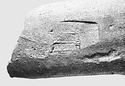
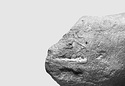
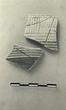
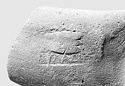
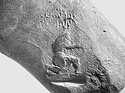
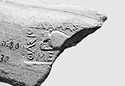
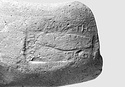
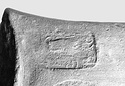
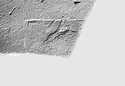
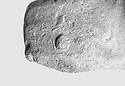
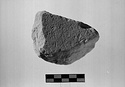
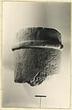
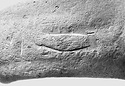
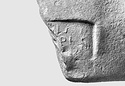
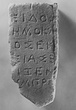
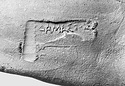
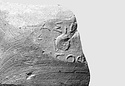
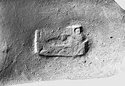
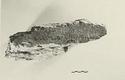
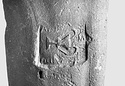
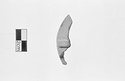
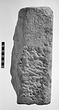
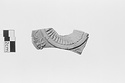
| Small curve fragment.
Highly micaceous clay.
Rectangular stamp; tripod(?).
Early Thasian. Par: see SS 09221(VG)*Dte: prob Period I?(VG)* Finished Modern fill at surface. unread tripod Leica ... 9-14 January 1939 ... Par: see SS 09221(VG)*Dte: prob Period I?(VG)* |
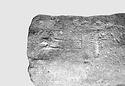
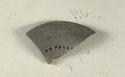
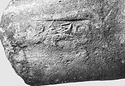
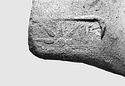
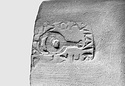
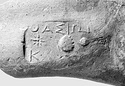
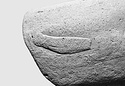
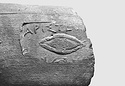
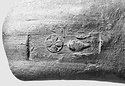
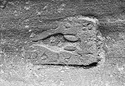
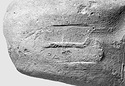
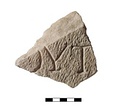
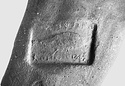
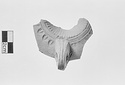
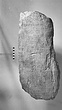
| Small, curve fragment.
Micaceous russet clay, the handle small for Thasian.
Rectangular stamp; tripod.
Early Thasian. Dte: poss Period I(VG 20.xi.52)* Finished In modern wall. [---]
tripod
[---] Leica ... 11 June 1935 ... Dte: poss Period I(VG 20.xi.52)* |
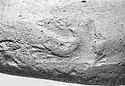
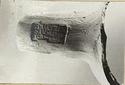
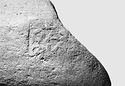
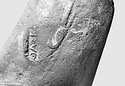
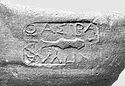
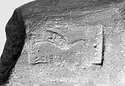
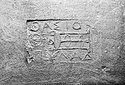
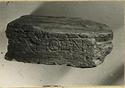
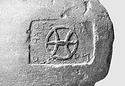
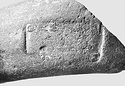
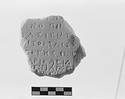
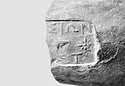
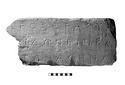
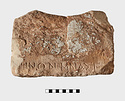
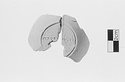
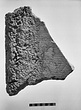
| Rectangular stamp; peacock(?) device. Dte: may be Period I: fabric cert looks so(VG 15.i.53)* Finished Area south of east-west late Roman wall; 4th century A.D. Hole. Θασίω̣ν̣
peacock
[ Ἀ]ρ̣έτω̣ν̣ 1635 ... 13 March 1952 ... Dte: may be Period I: fabric cert looks so(VG 15.i.53)* |
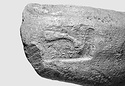
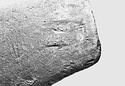
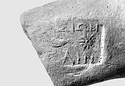
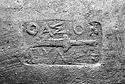
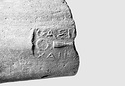
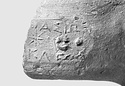
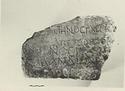
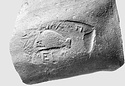
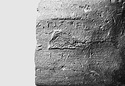
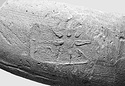
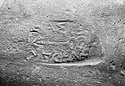
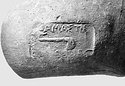
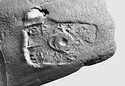
| Small rectangular stamp; symbol (fish?) across middle.
Early Thasian. Dte: hdl looks Period I(VG 3.i.53)*Rdg: =[---]dhv=
= Qa[-1-]i= (AB)* Finished Great Drain ... 24 May 1939 ... Dte: hdl looks Period I(VG 3.i.53)*Rdg: =[---]dhv=
= Qa[-1-]i= (AB)* |
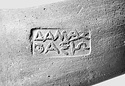
| Device.
Early Thasian.
Cf. SS 2131. Dte: period I stp, v sm, crowded(VG 2.i.53)*Stp: type of Bon nr
2120, but cited as SS 02131(VG)* Finished Turkish fill. η̣ | Θασ | ίω̣[ν]
device Leica ... 23 March 1937 ... Dte: period I stp, v sm, crowded(VG 2.i.53)*Stp: type of Bon nr
2120, but cited as SS 02131(VG)* |
| A fragment from the foot, black glazed on the outside only.
The inscription written in firm black glaze on the underside. Metroon, room iv, exposing south face of north wall of Period I; 6th. c. context ... 14 April 1934 ... Metroon, room iv, exposing south face of north wall of Period I; 6th. c. context. |
| Dte: file card has "Period I b?" and immediately underneath
"IV B (for this type) SS 09762" (VG) [IV B written w/ diff
pencil. Don't know which Period SS 09762 belongs to]* Well; fill behind tiles. Ἐπὶ ... 22-23 May 1939 ... Dte: file card has "Period I b?" and immediately underneath
"IV B (for this type) SS 09762" (VG) [IV B written w/ diff
pencil. Don't know which Period SS 09762 belongs to]* |
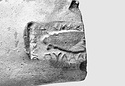
| Dolphin right.
Early Thasian. Dte: prhps Period I(VG 19.xi.52)*
Par: closely resembles type of =DAMASTHS-DEWFANHS=, but is apptly not
the same? (cf =O= before =L=)(VG)* Finished Disturbed area. [Θ]ά̣σι̣ο̣[ν] ... 5 April 1935 ... Dte: prhps Period I(VG 19.xi.52)*
Par: closely resembles type of =DAMASTHS-DEWFANHS=, but is apptly not
the same? |
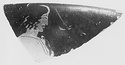
| Two fragments of upper wall. Handle zone filled with a narrow zigzag bound by groups of vertical bars. Horizontal lines on wall. Lower wall solid glaze. Thin red glaze.
Protocorinthian. Stoa pit E, pre-period ... 18 May 1935(?) ... Stoa pit E, pre-period I earth behind terrace wall I. |
| Vestige of rim preserved.
Highly micaceous russet buff clay. Nb. No. 3. Trench I, Assembly Place; filling of Period III. ΘΑΣΙΩΝ
[ΝΙΚΟΣΤΡΑΤΟΣ;] 448 ... Late 5th - Early 4th century BC ... Trench I, Assembly Place; filling of Period III. |
| Clay; buff, micaceous. Assembly Place; Filling of Period III ... 1931 |
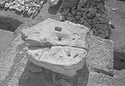
| Three joining fragments forming most of the upper part of a pedestal which had been used twice for giant figures.
Cuttings of top include: lewis hole in middle; two dowels for statue in Period I; one pry ... August 1946 ... Cuttings of top include: lewis hole in middle; two dowels for statue in Period I; one pry hole for statue in Period I; three shift holes for the same; two clamp cuttings for repair for Period II; one dowel hole for statue for Period II.
... For sketch se notebook ΟΔ I, p. 141. |
| Pnyx 36
Clay; buff, micaceous. Assembly Place, Filling of Period III ... 1931 |
| Cf. Pridik (1917), pl. VIII, 14. Par: device like that of Pridik 1917, Pl 8, 14 but diff stp(VG)*
Dte: poss period I(VG)*
Rdg: Bon 1957 nr 744 w/ rdg =HROSTRATOS= (prob wrong)(VG)* Finished Late Roman ... 25 February 1937 ... Par: device like that of Pridik 1917, Pl 8, 14 but diff stp(VG)*
Dte: poss period I(VG)*
Rdg: Bon 1957 nr 744 w/ rdg =HROSTRATOS= (prob wrong)(VG)* |
| Pnyx 28
Clay; buff, fine, slightly micaceous. Assembly Place; Filling of Period III ... Novemer 1932 |
| Pnyx 8
Clay; dull buff; fine; micaceous. Assembly Place; Filling of Period III ... 1931 |
| Pnyx 55
Clay; buff; fine, very slightly micaceous. Assembly Place; Filling of Period III ... October 1932 |
| Pnyx 37.
Clay; dull buff; fine; slightly micaceous. Assembly Place; filling of Period III ... October 1932 |
| Pnyx 23.
Clay; bright buff; fine; highly micaceous. Assembly Place; filling of Period III ... October 1932 |
| Nb. No. 1. Trench A. Assembly Place; filling of Period III. ΘΑΣΙΟΝ
ΠΥΛΑ[ΔΗΣ] 21 ... Late 5th and first half of 4th century BC |
| Nb. No. 1. Assembly Place; filling of Period III. ΘΑΣΙΟΝ ΔΑΜΑΣΤΗ[Σ]
ΜΕ[ΓΩΝ] 14 ... Late 5th and first half of 4th century BC |
| Nb. No. 1. Trench A, Assembly Place; filling of Period III. ΘΑΣΙΩΝ
ΚΛΕΟΦ[ΑΝΗΣ] 105 ... 20 Dec 1930 |
| Nb. No. 1. Trench A, Assembly Place; filling of Period III. ΘΑΣΙΩΝ
ΠΟ[Σ]ΙΔΕΙΟΣ 62 ... Late 5th and first half of 4th century BC |
| Nb. No. 1. Trench A, Assembly Place; filling of Period III. ΘΑΣΙΟ[Ν]
ΧΑΙΡΙ[Μ] 105 ... 20 Dec 1930 |
| Nb. No. 1. Trench A, Assembly Place; filling of Period III. [ΔΑΜΑΣ]ΤΗ[Σ]
ΘΡΑΣΙΠΠΟΣ 105 ... 20 Dec 1930 |
| Pinkish buff clay. Nb. No. 3. Trench M, Assembly Place; filling of Period III. ΘΡΑΣΙΠΠΟΣ 433 ... 10 Mar 1931 |
| Clay; bright buff; fine; slightly micaceous; traces of red paint. Assembly Place; filling of Period III ... October 1932 |
| Pnyx 12
Clay; bright buff; fine; slightly micaceous. Assembly Place; From the Filling of Period III ... October 1932 |
| Nb. No. 1. Trench C, surface 0,50m. Assembly Place; filling of Period III. [ΑΡΙΣΤΕΙΔΗΣ]
ΘΑΣΙ ΠΥΛΑΔΗΣ 165 ... 29 Dec 1930 |
| Pnyx 18
Clay; buff, fine, slightly micaceous, traces of red paint. Assembly Place, Filling of Period III ... October 1932 |
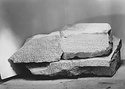
| Inscribed fragment of dedication base.
Inscribed face only preserved.
Two lines of the inscription preserved.
Hymettian marble.
Roman Imperial period. Found in modern context in the house 639/15, south ... 15 February 1947 |
Small fragment.
Clay: fine grey (burned); black glaze inside and out. Assembly Place, behind retaining wall of Period II ... 1931 |
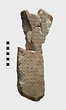
| Inscribed fragment.
Inscribed face, left side, bottom and back preserved.
Five lines of the inscription preserved.
Pentelic marble. Found in the wall of the church of St. Spyridon, over the Library of ... 19 April 1939 |
| Plain buff red clay. Nb. No. 3. Trench B, Assembly Place; filling of Period III. ΕΥΑΓ[ΟΡΗΣ] 440 ... Late 5th - Early 4th century BC |
| Pinkish buff clay. Nb. No. 2. Trench H, Assembly Place; filling of Period III. ΘΑΣΙΟΝ ΔΑΜΑΣΤΗΣ ΜΕΓΩΝ 313 ... 24 Jan 1931 |
| Pnyx 4
Clay; buff, micaceous, showing traces of red paint on handle. Assembly Place, Filling of Period III ... 1931 |
| Pnyx 35.
Clay; buff, micaceous, showing traces of red paint on handle. Assembly Place; filling of Period III ... 1931 |
| Pnyx 11
Clay; bright buff containing fine mica and some white grit. Assembly Place; Filling of Period III ... 1931 |
| Inscribed fragment.
Inscribed face only preserved.
Four lines of the inscription preserved.
The marble badly burned.
Pentelic marble. Found in context of Roman period over east wall of Paved Court, below ... 4 June 1938 |
| Inscribed boundary marker.
Complete (?).
Roughly worked cuble, perhaps a wall block. Smoother area on face where inscribed rasura at bottom suggests more than one period.
Hard gray stone with lighter yellowish-brown ... April 1975 |
| Inscribed fragment of columnar grave monument.
About half of the upper part preserved.
Two lines of the inscription preserved.
Hymettian marble. Found in masonry of Tomb 5 of the Turkish period, in the ... 17 March 1954 |
| Fine buff clay, slightly micaceous. Nb. No. 3. Trench A, Assembly Place; filling of Period III. ΘΑΣΙΟΝ ΔΑΜΑΣΤΗΣ ΘΡΑΣΙΠΠΟΣ 437 ... 13 Mar 1931 |
| Nb. No. 1. Trench A, Assembly Place; filling of Period III. [ΘΑΣ]ΙΩΝ
[ΔΙΑ]ΡΗ[Σ]
[ΣΚΥΜ]Ν[ΟΣ] 34 ... Late 5th and first half of 4th century BC |
| Rim preserved.
Buff clay, little mica; red stain. Nb. No. 3. Trench A, Assembly Place; filling of Period III. 437 ... 13 Mar 1931 |
| Russet clay. Nb. No. 2. Upper Terrace, getaway. Assembly Place; filling of Period III. ΑΡΙΣΤΟΚΡ[ΑΤΗΣ]
ΝΟ ΣΣΟ[Σ] 267 ... Late 5th-Early 4th century BC |
| Clay; buff, micaceous, fine; traces of red paint on the root of the handle Assembly Place; Filling of Period III ... 1931 |
Fragment of body, and nozzle only.
Clay: fine reddish; black glaze inside and out. Assembly Place, behind retaining wall of Period III ... 1931 |
| Inscribed fragment.
Smooth top preserved; otherwise broken.
Preamble; decree from the period of the Thirteen tribes.
Six lines of the inscription preserved.
Pentelic marble.
Cf. Hesperia 26 (1957), pp ... Early 3rd. century B.C. |
| Clay; bright buff, micaceous, a little white grit, traces of red color around the neck. Assembly Place; Filling of Period III ... 1931 |
| Pnyx 14
Clay; bright buff; containing some grit and fine grains of mice. Assembly Place; From the Filling of Period III ... October 1932 |
| Micaceous clay.
Rectangular stamp; star with dot at centre. Rdg: the present rdg to be revised, do not believe in this
name(VG 6.i.53)*Publ: Bon publ w/ rdg = `Hro"stratov= prob
wrong(VG)*Rdg: prhps =Bi"wn=?, ... 15 May 1939 ... Rdg: the present rdg to be revised, do not believe in this
name(VG 6.i.53)*Publ: Bon publ w/ rdg = `Hro"stratov= prob
wrong(VG)*Rdg: prhps =Bi"wn=?, but not characteristik
(VG 7.viii.54)*Dte: poss Period I(VG)*Par: SS 06902* |
| Nb. No. 1. Trench A, 10-13m from N. end. Assembly Place; filling of Period III. [Θ]ΑΣΙΩΝ
[Κ]ΛΕΟΦ[ΑΝΗΣ;] 179 ... 31 Dec 1930 |
| Russet clay. Nb. No. 1 Trench C, surface 1m. Assembly Place; filling of Period III. ΘΑΣΙ ΙΣΑΓΟΡΗ[Σ ΠΥ]ΘΟΓΕ[ΝΗΣ] 179 ... 31 Dec 1930 |
| Inscribed fragment.
Inscribed face only preserved.
Eight lines of the inscription preserved. The last three lines preserved crowded together.
Pentelic marble. Found in context of the middle Roman period, ... 18 May 1938 |
Fragment of rim only.
Clay: fine reddish; black glaze inside and out. Assembly Place, behind retaining wall of Period II ... 1931 |
| Russet clay with large buff core; red stain. Nb. No. 3. Trench A, Assembly Place; filling of Period III. ΘΑΣΙΟ ΩΝ ΗΡΑΚ 399 ... Late 5th-Early 4th century BC |
| Reddish buff clay. Nb. No. 3. Trench B, Assembly Place; filling of Period III. Π[ΟΣ]Ι[ΔΕΙΟΣ] [ΘΑΣ] Ι ΜΥΙ[ΣΚΟΣ] 433 ... 10 Mar 1931 |
| Clay; pale yellow coloring, particles of quartz and mica, traces of red paint at end of stamp. Assembly Place; Filling of Period III ... 1931 |
| Russet buff clay, much mica; gray core. Nb. No. 2. Trench J, Assembly Place; filling of Period III. [ΘΑ]ΣΙΩΝ
[ΑΡΙΣ]Τ[ΑΓΟΡΗΣ;] 339 ... 29 Jan 1931 |
| Pinkish buff clay, red stain. Nb. No. 1. Trench A, 10-13m from N. end. Assembly Place; filling of Period III. ΘΑΣΙΟΝ ΔΑΜΑΣΤΗΣ ΚΛΕΟΦΑΝΗΣ 165 ... 29 Dec 1930 |
| Inscribed fragment.
Inscribed face and bottom preserved.
In top of stone the bottom of a large rectangular cutting; a dowel-cutting partly preserved at left end.
Four lines of the inscription preserved ... 20 April 1939 |
| Inscribed fragment.
Inscribed face, chisel-dressed, only preserved.
One line of the inscription preserved, with three letters.
Pentelic marble.
ADDENDA Goes with I 5451a-b.
Cf. I 5422. Found in context ... 15 March 1938 ... ADDENDA Goes with I 5451a-b.
Cf. I 5422 ... Found in context of Roman period, in front of the north end of the Stoa of Attalos; with coins nos. 87-92 for the day. |
| Inscribed fragment.
Left end and back broken away.
Top is original but it has been rough picked to serve as a step. Bottom has been re-worked. Right end preserves anathyrosis.
Pentelic marble. Found in ... Ca. 375 B.C. |
| Inscribed fragment.
Broken at right only, but damaged by fire and badly chipped.
Mouldings at top and bottom of preserved faces.
Remains of large rectangular cutting in the top and in the bottom.
Two lines ... 10 May 1939 |
| Dark russet clay, white pebble in the clay below the stamp. Nb. No. 1. Trench A, Assembly Place; filling of Period III. ΘΡΑΣΩ[ΝΙΔΗΣ]
ΘΑΣΙΜΕΓ[ΩΝ] 83 ... Late 5th and first half of 4th century BC |
| Pnyx 16.
Clay; bright buff; fine; micaceous. Nb. No. 6, WT 152. Assembly Place; filling of Period III. ΑΛ(Θ)ΗΜ(ΕΝΗΣ) ΘΑΣΙΩΝ
ΦΕ(Ι)ΔΙΠΠ(ΟΣ) 1333 ... Late 5th - Early 4th century. |
| Inscribed fragment.
From near the middle of the top of a pedimental stele.
Beneath the superscription, the face of the stele was cut back a depth of 0.05m.
The tympanum is plain.
Inscribed below the pediment ... 31 March 1934 |
| Rim preserved.
Laurel leaf at the centre.
Highly micaceous pinkish buff clay; red stain. Nb. No. 2. Trench H, Assembly Place; filling of Period III. ΚΛΕΟΦΩΝ ΘΑΣΙΩΝ ΦΕΙΔΙΠΠΟΣ 296 ... 21 Jan 1931 |
| Inscribed fragment of Herm of Zeno.
Fragment from the sloping upper part of a portrait herm; left side and inscribed face only preserved.
Herm of Zeno, son of Mnaseas, the Stoic philosopher.
One line of ... 2nd. century A.D. |
| Inscribed fragments from a monument.
Six joining fragments and several splinters; one inscribed fragment does not join.
With curved face decorated with small shields in low relief.
Lettering in various ... 14 July 1954 |
| Fragment of rim and body only.
Clay: fine buff. Assembly Place, behind terrace wall of Period III ... 1931 |
| Inscribed fragment.
Inscribed face, right side, top and possibly back preserved.
Below line 2, the face is picked, and line 3 is in a slightly higher plane.
Surface damaged by fire.
Two lines of the inscription ... 17 April 1939 |
| Handle and fragment of rim only.
Clay: slightly gritty buff-red. Assembly Place, behind terrace wall of Period III ... 1931 |
| Fragment of base only.
Clay: fine buff. Assembly Place, behind retaining wall of Period III. 94-17-26 ... 1931 |
| Handle and fragment of rim only.
Clay: fine buff. Assembly Place, behind terrace wall of Period III. 94-17-22 ... 1931 |
| Handle almost complete; fairly long curve.
The fabric somewhat resembling Knidian.
Stamped on the curve. The herm well stamped, bearded, on its side with head to right; the thyrsos with ribbon tied around ... 18 June 1935 ... Rdg: herm bearded, wearing polos (VG)*
Dte: not at all clear it is Period I; the stp is below curve (VG, 19.xi.52)* |
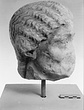
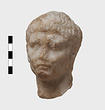
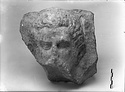
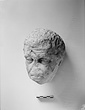
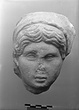
| Broken off from a relief along its left side. Nose, mouth and chin battered.
The hair is parted in the middle and tightly waved; it is drawn over the ears and covers the nape of the neck. Its surface is ... Julio-Claudian period. |
| Fragment of rim and discus only.
Clay: fine buff (burned). Assembly Place, behind terrace wall of Period III. 94-17-23 ... 1931 |
Rim fragment from a large black-glazed skyphos, heavy-walled type.
Scratched around the rim outside: ΓΟΛΥΞΕ
Glaze inside, firm black; outside thin lack to red, much peeled. Behind Retaining Wall of Period ... 1931 |
| Inscribed fragments of round base or altar.
Two joining fragments of a round base or altar with at least two columns of inscribed text. All faces but front broken.
By Prytaneis of the Boule, name of tribe ... 12 August 1993 |
| Inscribed fragment.
Broken above, at right and below. Back recut. Left edge of a large stele.
Four different uses: first as an inscribed stele; second as a threshold, the back was cut down ca. 0.03m ... 9 June 1971 ... Four different uses: first as an inscribed stele; second as a threshold, the back was cut down ca. 0.03m. and is heavily worn; a band was left along the edge as the door stop; third period of use in a bothros, the surface of whole left edge, front and back, for as much as 0.13m, is eaten away by acids, and at the front the text is completely lost; fourth use, in modern wall, where found.
... ADDENDA Belongs with I 7450, I 2542.
Same series as IG II2, no. 1622. |
| Left corner, and top of pediment of stele broken away; otherwise complete save for minor fractures on surface and edges.
The front of the stele is rough at the bottom for 0.39m. and uninscribed for 0.39m ... 283/2 B.C. |
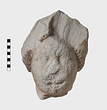
| Chopped off behind and much battered, the features nearly gone.
The high coiffure is Flavian, with rows of snail-shell curls in an erection over the forehead, drill holes in the center of each curl. Round ... Flavian period. |
| Broken away above and behind.
Preserved are the nose, mouth and chin of a life-sized bearded head.
Back added from circled marbles in section Κ November 1953.
Pentelic marble.
Drilled for setting on base ... Antonine period. |
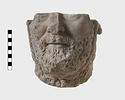
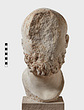
| The face, except for corner of left eye, and the left cheek, is missing; otherwise intact. The neck ends in a carefully cut tenon.
The head is that of a man with a thick curly beard and short curly hair ... Period of Hadrian. |
| Nose, mouth and chin badly battered; eyes and ears somewhat chipped. Broken at top of neck.
Head of a child or a youth, life-size.
Pentelic marble.
Drilled for setting on base June 1950. Finished Fill ... Julio-Claudian period. |
| Broken off at the root of the neck, nose and chin damaged.
A Julio-Claudian portrait of a man, summary but effective.
Pentelic marble.
Drilled for setting on base June 1950. Finished From pit in floor ... Julio-Claudian period. |
| Three fragments of an inscribed stele.
Fragment ΟΕ 89 a), broken on top, bottom, back and right side.
The left side is smooth picked, with a smooth band along the front edge.
The text is arranged in two ... 31 March 1934 ... ADDENDA Fragment a), joins with I 701, I 249a and I 1856 ... All fragment found in late well, on the south side of the Metroon, room iii of period IV. |
| Crown of head, brow and eyes preserved, the hair brushed down over the forehead in long locks reaching nearly to the eyebrows.
Fair work; probably broken from a high relief.
Pentelic marble.
Drilled for ... Early Antonine period. |
| The back of the relief preserved; elsewhere broken. Mouth and chin missing.
Bearded male head facing. The pupils hollowed out.
Stained from the cesspool.
White marble.
Drilled for setting on base December ... Hadrianic or Antonine period (?). |
| Inscribed architectural fragments.
Sepulchral Epigram.
Fragment Ξ 8, broken on sides and at bottom.
Smooth top, with break on upper edge of face, perhaps moulding gone. From top of first line, with edge ... (Ξ 8) 11 June 1934
(Ξ 107) 25 February 1935
(Ξ 204) 19 March 1935 ... ADDENDA With I 2331 (Ξ 42) ... (Ξ 107), found in context of period of Dark Ages, east of the northern part of the Odeion.
|
| The face is much rubbed and worn.
A middle-aged man with light beard and mustache, and curly hair.
The neck was cut to be inset. Drill holes for the attachment of a wreath.
Good workmanship.
Pentelic marble ... Period of Hadrian. |
| Broken at neck; the face scarred.
The head faces left; the brows are furrowed; the eyes, deep-set, are well cut; the hair is carefully worked in small locks.
Pentelic marble.
Drilled for setting on base ... Flavian period. |
| Inscribed fragments.
Fragments ΗΗ 35, ΗΗ 42, ΗΗ 47, mended from three fragments; inscribed face only preserved.
Eleven lines of the inscription preserved.
The additional fragments, ΗΗ 111 and ΗΗ 169, ... 332/1 B.C. |
| Nose, mouth and chin partly broken away and much battered.
The hair is much worn. Back of the head and the bun were left unfinished; the ears, especially the right one, are only blocked out, and there ... Julio-Claudian period. |
I. head of youth, right, he wears fillet. Maeander border.
A. Parts of two legs, right.
No relief contour; white for the boy's fillet. Assembly Place, filling of Period III, Trench Α. 264 ... 16 January 1931 ... I. head of youth, right, he wears fillet. ... Assembly Place, filling of Period III, Trench Α. |
I. Head of a dog, right.
Reserved and glazed circles beneath. Very little of beginning of foot present. No relief contours.
As Campana Fragments, Pl. 20, 13. Assembly Place, Filling of Period III ... 1931 ... I. Head of a dog, right.
... Assembly Place, Filling of Period III. |
| The back sliced off obliquely; the small head broken off at the top of the neck; nose and right side of forehead broken.
Above the waving hair is preserved part of a headdress on which a rough ovolo pattern, ... Antonine period. |
| Rim fragment only preserved. Upper part of long-haired youth to right. Heliaia peristyle, west aisle; undisturbed fill of peristyle period. 3962 Leica ... August 1961 |
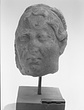
| The head of a woman from a relief, apparently to be seen half-facing. Her hair is parted in the middle, and waved low on the forehead and temples. She is veiled, the veil being set well back, so that it ... Period of Trajan (?). |
|
|