|
|
| Well at 25/Μ. Well. Pottery-Date ... Β-6 1149, 1150 Β:1934.0317:2 N 3094 F 11:1 ... 1st-Early 2nd A.D ... Pottery-Date |
| Well at 25/Μ. Well. Text. List of Tins and Boxes. Pottery; Date. List of Objects. List of Coins ... Β-6 1155, 1156 F 11:1 ... Pottery; Date |
Vanderpool, Eugene McCredie, James R. Steinberg, Arthur ... American School of Classical Studies at Athens ... Hesperia 33.1 1 69-75 10.2307_147029 ... 1964 ... Koroni: The Date of the Camp and the Pottery |
| Retrograde. Date: pottery from layer 1, mid 5c BC(HAT)* Stoa Piers 15-20, layer I. Ἀρ (retr) 2748 Leica ... 10 September 1953 ... Date: pottery from layer 1, mid 5c BC(HAT)* |
| Well at 33/ΚΔ. Well. Pottery. Date ... Β-6 1041, 1042 F 12:3 ... Pottery ... Date |
| Well at 38/ΛΣΤ. Well. Pottery. Date ... Β-6 1005, 1006 Β 850 P 4374 Β 399 P 3293 Β 400 P 3294 Β 831 P 4366 Β:1934.0305:2 N 3009 Lot Β 49 Lot Β 40 Lot Β 41 F 12:4 ... 4th A.D ... Pottery ... Date |
| Device. Date: pottery and coins of Athenian Imperial Type(VG)*
Publ: to appear in [ ... ] publication(VG)* Below strosis. Late Roman(?). Ἀγ̣ί̣[ας]
Ἀρισ[τογέ]
νης [device] Leica ... 4 June 1937 ... Date: pottery and coins of Athenian Imperial Type(VG)*
Publ: to appear in [ ... ] publication(VG)* |
| Well. Well at 33/ΚΔ. Text. Tins and Boxes. Discussion of Pottery and Date. Index of Objects. Photos. Well at 15/ΛΔ. Coin ... Β-6 1045, 1046 Β:1934.0420:1 F 12:3 ... Discussion of Pottery and Date |
| At 43/E is a well of late date. The fill contained much clearly Turkish pottery ... AMS Horizontal (normal) ... At 43/E is a well of late date. The fill contained much clearly Turkish pottery. |
| At 43/E is a well of late date. The fill contained much clearly Turkish pottery ... AMS Horizontal (normal) ... At 43/E is a well of late date. The fill contained much clearly Turkish pottery. |
| Roman local pottery from the Athens Agora.
Forms W 631-699. Painted series (white) ... John W. Hayes ... Cf. DA 13140 for explanation of types.
Agora Hayes Coarse Ware Volume
The date 2018 refers to when the drawing was sent to the Agora.
The date May 2003 is uncertain ... 2018 |
Wall profile restored.
Ring foot; low strap handle.
1632 is similar in shape and date, but banded ... 325-310 B.C. |
Hollow with a small hole in the top. Unglazed and smooth.
The finish suggests a date in the late 5th century ... late 5th century. |
| Date of filling early third c. B.C.
Little pottery. Seven stamped amphora handles. Latest coin dates in first third of 3rd c. One small fragment of moldmade bowl of undetermined type. Coins:
12 August ... 310-220 B.C ... Date of filling early third c. ... Little pottery. Seven stamped amphora handles. |
| Lamps from Filling of Middle Drain. Pottery from Filling of Middle Drain. Evidence for Date of Latest Course of Great Drain; West Branch ... Ζ-14 2676, 2677 Ζ 1216 L 3087 Ζ 1276 L 3137 Ζ 1383 L 3325 Ζ 1233 P 10717 Ζ 1234 P 10718 Ζ 1235 P 10719 Ζ 1255 P 10723 P 10805 Ζ 1278 P 10806 Ζ 1279 P 10807 Ζ 1306 P 10831 Ζ 1307 P 10832 Ζ 1308 P 10833 ... Pottery from Filling of Middle Drain ... Evidence for Date of Latest Course of Great Drain; West Branch |
Narrow outturned rim. Ostrakon of Hippokrates Anaxileo. For the date, probably from "one of the first three or four ostrakophoriai," cf. Hesperia, XV, 1946, p. 272, 6. |
| Varia from Filling of Middle Drain. Fill. Evidence for Date of Latest Course of Great Drain; West Branch. Pottery Containers from Filling of Middle Drain ... Ζ-14 2678, 2679 Ζ 1221 B 491 Ζ 1253 I 4948 Ζ 1280 IL 631 Ζ 1385 ST 234 Ζ 1386 BI 436 Ζ 1396 B 539 Ζ 1397 B 540 Ζ 1398 B 541 Ζ 1399 IL 646 Ζ 1400 IL 647 Ζ 1401 IL 648 Ζ 1447 B 542 Ζ 1628 IL 671 Ζ 1641 A ... Evidence for Date of Latest Course of Great Drain; West Branch ... Pottery Containers from Filling of Middle Drain |
| Profile, rim, preserved.
ADDENDA: From "USE" deposit of Well A?
Date: 490-480. Carl Roebuck, Nb. No. 7.
Well A. 358 ... 13 May 1938 |
| Square(?) stamp with cluster at centre.
Early Thasian. Date: pottery 1/2 4c BC; [ ... ] of not known - prhps for LT?;
NB p144 refers to container 110, the [ ... ] of which [ ... ] to
a Meg bowl frag w/ the ... 2 May 1940 ... Date: pottery 1/2 4c BC; [ ... ] of not known - prhps for LT? |
One handle missing.
Ring foot with a groove on its outer face; underside lightly moulded; ridge on lower part of wall. Vertical spurred handles. Reserved: underside with band, two circles and dot. Deco- ... Ca. 430 B.C. |
| Robinson, H. S ... American School of Classical Studies at Athens ... A group of closed deposits, ranging in date from the 1st century B.C. to the early 7th century A.D., provide evidence for the relative and absolute chronology of pottery used during many centuries of Roman ... 1959 ... A group of closed deposits, ranging in date from the 1st century B.C. to the early 7th century A.D., provide evidence for the relative and absolute chronology of pottery used during many centuries of Roman domination—from the sack of Athens by Sulla in 86 B.C. to the Byzantine period. A descriptive catalogue divides the pottery into eight groups, arranged into chronologically differentiated layers. |
| About two-thirds of discus and rim of lamp with central handle.
Discus plain; single row of dots on rim.
No glaze.
Yellow-buff clay.
Type XXX of Corinth collection. Date of finding and provenience unknown; ... 1951 ... Date of finding and provenience unknown; from tin without ticket among Iota pottery in Skela House; 3rd. |
Flaring ring foot; horseshoe handles. Reserved: underside with two circles; zone above foot with part of foot, decorated with cross-hatching; handle-panels and just below; inside of rim.
For the date, ... Ca. 350 B.C. |
| Well at 15/ΛΔ. Well. List of Coins. Hesperia XI, p. 220. Hesperia VI, p. 167. Text. List of Tins and Boxes. Pottery. Date. List of Objects. Well at 33/ΚΔ ... Β-6 1105, 1106 Β:1934.0405:1 N 3210 Β:1934.0405:2 Β:1934.0405:3 N 3211 Β:1934.0405:4 N 3212 Β:1934.0410:1 Β:1934.0410:2 N 3218 Β:1934.0411:1 N 3231 Β:1934.0412:1 Β:1934.0419:1 Β:1934.0419:2 Β:1934.0419:3 ... 9 May 1934 ... Pottery ... Date |
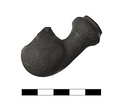
| Round pipe with no keel.
Stamped zigzag pattern on wreath at end of socket; stepped ring termination.
Brownish-gray clay, dark gray slip. Catalogued August 1981. Excavation date: 6 December 1931, according ... 6 December 1931 ... Excavation date: 6 December 1931, according to label on pipe ... From pottery storage. |
Fillet at junction of stem and foot, with a scraped groove above and below it. Top of foot slopes. Reserved: outer face of foot, resting surface, center of stem inside, handle-panels. Glaze fired red in ... 480-450 B.C. |
Most of rim and two-thirds of wall missing.
Flat resting surface; pointed underside. Rouletting. Metallic black glaze, much missing.
Shape close to examples from F 16:8, but glaze and context indicate ... 250-200? |
A well (diameter 1m) in the industrial area west of the Areopagus, in the area later occupied by House C. Water level 1.50-2.m Dumped filling of broken bedrock with considerable fragmentary pottery in ... Ca. 500-480 B.C ... Water level 1.50-2.m Dumped filling of broken bedrock with considerable fragmentary pottery in the upper meter and a half. No evidence of period of use and no distinction in date in the filling. |
Great Drain: fillings in south part of section; Martyrs I, II and III, all layers (essentially no difference in the layers).
Pottery sorted and recorded by H.A. Thompson 12 may 1950: "Having gone through ... Second half of 2nd c. B.C.-Early 1st c. B.C ... Thompson 12 may 1950: "Having gone through some 40 tins of pottery saved from the three martyrs. ... ... In view of the quantity of pottery & objects already recorded from the drain this pottery has been discarded."
Twenty-five stamped amphora handles; latest of 79 coins date in last quarter of 2nd c.; pottery closely similar to that in Thompson's Group E; two molds, one for long-petal bowl. |
| A well at the northeast corner of Classical Building, behind back wall. Dumped fill appears to have occurred as a single event as there are joining sherds throughout.
POU date ca. first half 5th c. B.C.; ... 5th c. B.C ... Dumped fill appears to have occurred as a single event as there are joining sherds throughout.
POU date ca. first half 5th c. B.C.; pottery in fill spans ca. last quarter 6th c.-430 B.C.; out of use ca. 430 B.C ... Pottery primarily of the mid 5th c. with the latest sherds dating to just before the last quarter of the century. |
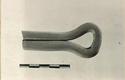
| Upper part of a neat double-rolled handle, the two sides spreading at the top to form a loop.
Unglazed.
ADDENDA This handle fragment made up (July 1959) with the kyathos bowl P 10082; from a different ... April 1954 |
| Handle broken off; about half of bowl missing. Small plain round-bottomed bowl; long double round handle, projecting horizontally from lip.
Bowl glazed. Handle unglazed.
ADDENDA This bowl made up (July ... March 1937 |
Hole chipped through floor.
Similar to 32, but somewhat larger and with ring foot. Less carefully made; the handles smeared on.
Of the same date, P 6940 D-E 8-9:1, with broad glaze bands; and P 6953, ... 350-320 B.C. |
Associated with the Tholos.
Originally a well but after it had been in use for a short time the shaft was partially filled in and the upper part widened to form a large cistern.
The pottery falls into ... 335-250 B.C ... Originally a well but after it had been in use for a short time the shaft was partially filled in and the upper part widened to form a large cistern.
The pottery falls into three distinct groups ... however, the groups are fairly closely contemporary in date. |
| Two joining fragments which preserve part of the plain in-turned rim of a cup or skyphos. Below the rim a garland. Between rim and garland in added yellow: Α Σ
Black glazed inside and out. Left fragment ... 13 April 1934 |
A small concentration of pottery in lowest 1.80m., possibly a use fill. Three fills above, with little pottery, ranging from Hellenistic to late Roman in date. Coins:
26 February 1934 #4-#6
27 February ... 325-200 B.C ... A small concentration of pottery in lowest 1.80m., possibly a use fill. Three fills above, with little pottery, ranging from Hellenistic to late Roman in date. |
Very deep flat-bottomed basin. Rolled rim. Shallow vertical grooves from top to bottom around half the interior. Wheelmarks prominent outside. Gritty gray to brownish clay; pithos fabric.
On a fragment ... Context ca. 425-400 B.C. |
| Shallow pit below layer I in Stoa Shop VI (Pyre)
Diameter 0.90; D. 0.15m Under shop VI of the Stoa of Attalos Pottery, ash, burning and packing of small stones in pit in stratum. The pyre was covered by ... Ca. 350 or 325 B.C. ? ... Shallow pit below layer I in Stoa Shop VI (Pyre)
Diameter 0.90; D. 0.15m Under shop VI of the Stoa of Attalos Pottery, ash, burning and packing of small stones in pit in stratum. ... Two other pits with ash were found, but without pottery. The pyre must date at least as late as layer II, and probably not too much later. No contemporary structures, wells, or cisterns were preserved in this area, but it is about 10m south of the mudbrick commercial building that functioned in the second quarter of the 2nd c., and had a predecessor of unknown date. One pot shows signs of burning. |
| Single rim fragment.
Ware as P 35056 but wall rather steeper and more curved; low triangular rim with marked overhang and a groove on the interior.
Date of vessel 400 A.D. or early 5th c. A.D., date of ... 23, 31 May 1933 |
| Rim sherd of closed vessel (or cup?).
Flanged rim.
Pinkish-red ware; deep red gloss (late series), lustrous on interior.
Context and date of object: early 2nd c. A.D.? Inventoried 30 January 2006. Finished ... 19 March 1934 |
Flaring ring foot; horseshoe handles. Glazed all over, save for a narrow reserved band at junction of foot and under- side.
For another skyphos of the same date, see P 10996 B 15:1 Hesperia, XVIII, 1949, ... 425-400 B.C. |
| Rodney S. Young ... RSY/JP Disturbed Geometric burial over "Sacrificial Pit VI" (Grave B 21:22). Grave IX in notebook. Bones discarded?
Pottery found in the upper filling of a sixth century cremation pit, which had perhaps ... Middle Geometric II/Transitional to Late Geometric ... Bones discarded?
Pottery found in the upper filling of a sixth century cremation pit, which had perhaps cut through a Geometric inhumation to which the disturbed human bones close by may have belonged ... Excavation date more likely 31 May 1939 (p. 1929). |
| Missing much of handle and spout, and about half the body; restored in plaster. Spreading ring foot. Body flaring below, convex above, bulging at the middle. Vertical spout, with high concave neck, bulging ... May-June 1951 |
| Moore, M. B ... American School of Classical Studies at Athens ... This volume presents the inventoried red-figure and white-ground pottery found in the Agora Excavations between 1931 and 1967. Although many of these vases have already been published in various reports ... 1997 ... This volume presents the inventoried red-figure and white-ground pottery found in the Agora Excavations between 1931 and 1967. ... In the catalogue, measurements and descriptions are given for 1,684 pieces, with relevant comparanda and up-to-date references. Inscriptions, graffiti, and dipinti are included, as well as reconstruction drawings of some of the more important or unusual scenes. |
| Two joining fragments preserving about half of small bowl. Base lost.
Vertical rim. Rounded bowl chamfered at join with rim.
Context and date - early 6th c. A.D. Added 1 March 2006. Finished Late Roman ... 15 February 1932 |
| Marcie Handler ... This pyre was found in the fill under Pyre J 2:23. Unfortunately, no floor surface was found between the two pyres. There were no complete vessels in this pyre. The sherds of the pyre vessels were mixed ... 275-250 B.C ... In addition to the catalogued pottery, fragments of between five and seven additional pyre saucers, one ribbon-handled plate, and one chytridion were left in the pottery bag. The pottery found around the pyre suggest a date after 275 B.C. (west slope ware was present, but moldmade bowl fragments were absent), which is very close to the date for the upper pyre, J 2:23 (1st quarter of the 3rd century B.C.). |
| Rim and stem socket missing.
It has a bowl condensed to a disk, set off from rim by a wide, flat band. Keel beneath bowl outlined by two rows of rouletting.
Brownish-red clay and slip, burnished. Catalogued ... 6 December 1931 ... Excavation date: 6 December 1931, according to label on pipe ... From pottery storage. |
| Flat bottom.
Thin blue iridescent glass. Date of finding unknown, 1951 (?). Bottoms of about 20 similar bottles, and typical pure Herulian (mid 3rd c. A.D.) sherds from same fill, stored in tin 211; G ... 1951 ... Date of finding unknown, 1951 (?). ... Provenience unknown; from tin without ticket among pottery of this section in Skela House.
3rd c. |
| About one-third of side and rim of small hemispherical bowl.
Bowl with impressed decoration. Two grooves below rim; vertical dashes impressed on upper part of side, ovals below.
Pale slightly iridescent ... 1951 ... Date of finding unknown, 1951 (?) ... Provenience unknown; from tin without ticket among pottery of this section in Skela House.
3rd c. |
| Pyre in north central room of house, measuring 0.50m east-west by 0.35m north-south. Pottery, bone, and burnt material in pit dug into layer IIb (crushed bedrock floor: lot Ω 464, 4th c.) and covered by ... 350-325 B.C ... Pyre in north central room of house, measuring 0.50m east-west by 0.35m north-south. Pottery, bone, and burnt material in pit dug into layer IIb (crushed bedrock floor: lot Ω 464, 4th c.) and covered by layer Ia (lot Ω 462, second half of 4th c., possibly into 3rd c., containing more fragments of pyre pottery probably from this pyre). The stratigraphy around the pyre cannot be physically connected to the architectural history of the house, but the date of the pyre would be consistent with a dedication at the time of the rebuilding or during the subsequent reoccupation. There were extensive traces of burning, and teh pottery has been burnt. |
| Pocket, identified as sacrificial pyre by SIR. Possibly disturbed. Outside south wall of building. Concentration of pottery in a small pocket below a "Hellenistic" fill. There is no mention of bone or ... First quarter 4th c. B.C ... Concentration of pottery in a small pocket below a "Hellenistic" fill. There is no mention of bone or burning, but some of the pottery is burnt. The pyre dates shortly after the proposed date for the beginning of the second phase of Building E; the chronology may be sufficiently flexible to allow association with this reconstruction of the building. |
Greek House J, under room 8 of Roman House H.
Typical though very fragmentary pyre pottery lay dispersed in a stratum over bedrock with pottery ranging from the 5th to the mid-3rd c.
In same general area ... Early 4th c. B.C.? ... Typical though very fragmentary pyre pottery lay dispersed in a stratum over bedrock with pottery ranging from the 5th to the mid-3rd c.
... If the early date is correct, it falls within the first phase of the house but cannot be related to a construction event. |
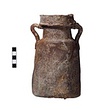
| Complete. Roughly made; the handle lightly ribbed; trefoil mouth; flat bottom.
Red clay. Unglazed.
ADDENDA The evidence of the graves gives an early Christian date, ca. 7th to 9th c. A.D. Grave 15, next ... 3 May 1934 |
| Rim fragment decorated with a band of enclosed palmettes and lotus flowers, suggesting a date in the late archaic or early classical period. Relief contour. Very good glaze on the inside but on the outside ... (1955) |
Pointed body. Alternate black and added red bands on the wall; lines of added red on the flat projecting rim have faded. Glazed inside.
Another, finer but more fragmentary, P 17834 J 18:4-L. There is ... Ca. 550 B.C. |
| A well in the industrial area of the Areopagus, about 7.00m. west of the West Bath, to a depth of 14.60m. This well was the direct successor to A 17:1, replacing it when it collapsed. The use filling at ... Second quarter 6th. c ... The earth filling of the top 1.90m., where the walls of the well had broken out to form a pit, contained very scanty pottery, of the same date as that of the use filling. ... Dumped filling of same date. |
Flaring ring foot; horseshoe handles. Reserved: underside with two circles and dot. Stacking line round body.
Compare P 14812 O 22:1 Hesperia, XVIII, 1949, p. 320, fig. 2, 141. For others of this date, ... 375-360 B.C. |
| Single rim fragment.
Low sloping wall, short flattish rim with moldings on top.
Hard yellowish ware, darkish red slip.
This may copy early Arretine ware.
Context: Late Roman, date ca. 30-15 B.C. Added ... 18-22 May 1935 |
Center of floor and parts of rim and wall restored.
Low, broad, slightly flaring foot; grooved resting surface; nearly flat underside. Resting surface and underside reserved. Shallow body with groove ... Ca. 275? |
Unguentarium; the shape as 1491, but the foot straighter and slightly concave beneath. Attic black, glazed by dipping; two scraped grooves on the shoulder.
Attic imitation of 1491; another example comes ... Context ca. 325-300 B.C. |
Handles missing.
Flaring ring foot; low bowl with vertical wall just below rim. Flat top to rim which is folded over. Horizontal ribbon handles. Reserved: resting surface and underside, disc in center ... Early 6th c. B.C. |
Ring foot with concave moulding on inner face; narrowly spaced ribbing with two grooves round lowest part of wall. Double handle with shouldering. Reserved: resting surface and underside with circle and ... Ca. 450-425 B.C. |
Heavy ring foot. Small heavy skyphos handle. Lid slightly convex; tall knob with disc top, the center depressed. Reserved: on the bowl, the rim and the flange, handle-panel, the outside of the foot, the ... Not later than ca. 460 B.C. |
Rolled rim, spreading ring foot, single bell handle.
Another, P 23340 H 12:15-U, with a similar tightly rolled rim and space for one handle only (now missing), has a disc foot with rounded profile, similar ... The context, a filling over bedrock below the west part of the Middle Stoa, is inconclusive, being mostly of the second half of the 5th century. |
Hellenistic Baggy Kantharos: Boiotian?
Part of wall, rim, and lower handle attachment.
Convex upper wall, incurved rim. Groove well below lower handle attachment. Below rim, ivy garland with incised ... Context of 325-275 |
| Rim fragment.
Large version, with coarse rouletting on rim. Fairly clean-breaking ware with polished internal slip (cf. ware of LRP form 88).
Date of context: 7th c. (Probably mid-5th c., residual) Added ... 16 March 1938 |
Rim to base fragment of Eastern Sigillata B.
Steep straight wall, with chamfered rim marked off by grooves (2 on inside). Flat base.
Orange-red clay and gloss. Slight uncoated stripe across floor.
Ca ... 26 April 1960 |
| Single rim sherd.
Faint groove on lip.
Orange-red; exterior of rim fired crimson.
Date of deposit: late 4th c. A.D. Added 1 March 2006. Finished Dumped fill in front of Stoa of Attalos. Found with coins ... 18 May 1936 |
| Single rim fragment.
Low wall, narrow bifid rim. No decoration.
Normal orange-brown ware (slip rather darker than body).
Context and date: 3rd quarter of 5th c. A.D. Added 1 February 2006.
58 - (2.30-2.80m.) ... 8 March 1933 |
Skyphos: Pergamene Appliqué.
Fragment of wall.
Nearly vertical wall curving in below. Bunch of three ivy leaves with two clusters of berries, with three more clusters of berries at left.
At right, incised ... 1st-century context, with worn coin of late 1st century (<i>Agora</i> XXVI, variety 152; cf. Svoronos, pl. 80:37-40) |
| Pyre in Room 8 of Roman House H. Concentration of artifacts, bone, and flecks of carbon in stratum, no pit discerned. the pyre lay within a red fill apparently contemporary with it, but with some later ... 300-290 B.C ... The stratigraphy around the pyre could not be related to the architectural history of the house, though the date allows association with the reconstruction of the house near 300. The pottery shows traces of burning. |
| Seven fragments, some joining, some not, preserve part of a brazier; tentatively restored in plaster.
An open basin, apparently nearly round, with low feet (two preserved), and a semicircular fire compartment ... 1 June 1938 |
Intact.
Slightly concave underside with string marks. Wall slightly concave at base, convex above. Reddish yellow fabric (5YR6/6); very thin, dull orange wash.
Others of Hellenistic date with thin wash: ... 325-275 |
| Belly fragment of shallow cup.
Horizontal "thorn" motif on belly, ribbing below.
Light brown ware with grayish tint; clean breaks. Possibly from Rome region.
Date of context: ca. 50-20 B.C. Found with ... 15 May 1939 |
| Half of base.
Orange-red; inner surface smooth, outer surface scratched (from turning process).
Graffito on bottom: A.
Late Roman C' Ware.
Date of deposit: Late 4th c. A.D.
Added 6 February 2006. Finished ... 5 June 1936 |
Part of lip and one handle, save for the attachments, missing; otherwise unbroken.
Round-bodied pot on low ring foot; straight neck, rolled rim. Two rolled handles rising from shoulder; tails below the ... Context ca. 420-390 B.C. |
Sand fill N of Base A.
... Because of the uncertainty of ground level contemporary with Base A and of the possibility of missing a continuous strosis or disturbance in this soft sandy fill, I have kept ... Last quarter 2nd-first quareter 3rd c. A.D ... Sand fill N of Base A.
... Because of the uncertainty of ground level contemporary with Base A and of the possibility of missing a continuous strosis or disturbance in this soft sandy fill, I have kept the pottery from the separate patches dug separately; hoping that when the pottery of 2nd and 3rd c. A.D is published a more precise date for the lower fill will be possible [p. 3062].
|
Upper parts of handles missing, restored.
Ring foot; strap handles, slightly concave. Reserved: underside with two glazed circles and dot.
From the same deposit, a red-figured kantharos of this same ... Ca. 450 B.C. |
| Two fragments from shoulder; fragment a) mended from two pieces.
False spirals between bands; broad band at bottom and narrower ones above.
Subgeometric style. a) Lot ΣΤ 154; b) Lot ΣΤ 153. Excavation ... 18-19 April 1932 |
| Most of rim, part of walls and both handles missing. Restored in plaster. Neatly moulded conical foot with low stem; high concave upper wall with ivy leaf garland in thinned clay; vertical strap handles ... 25 May-9 June 1938 |
| Single fraqment.
Straight sloping wall with plain rim, slightly beveled.
Brick-red ware, fairly clean; smooth semi-gloss red slip all over (=Africana C1 ware). LRP form 50A early in series.
Context and ... 23-24 February 1937 |
| Rim sherd of plate.
Vertical rim with moldings at top and bottom; a molding flanked by relief lines added at mid-height. Groove inside lip. No applique ornaments on preserved part.
Pinkish clay, bright ... 15 April 1937 |
| Fragment of pedestal foot (floor not preserved).
Low splayed form, with thick basal molding.
Hard pinkish ware with good red gloss. Arezzo, Pisa or perhaps South Gaulish ware?
Date of deposit: Ca. 50+ ... 20-24 February 1936 |
| Rim of a small thin-walled cup. Slip worn.
Red gloss, thin, with finger-marks on outside.
Ware as P 32031.
Context and date: second half of 1st c. B.C.?
Context of late 1st c., with much later 1st c ... 5-9 March 1936 |
| Single rim fragment.
Types as P 27167 but with two grooves on inside, two grooves on outside. Short rim, concave on top.
Normal ware.
Context and date about third-quarter of 5th c. A.D. Added 1 February ... 8 March 1933 |
Deep Cup.
Small part of rim and about one-fourth of upper body preserved, with edge of lip missing; restored.
Deep bowl with greatest diameter near bottom. Wall decorated with evenly spaced groups of ... 1st century after Christ? (mixed late Hellenistic to Byzantine context) |
Rim and floor fragment.
Sloping outer face of rim elaborately moulded. Below a plain band, a cyma reversa and a bead and reel. Reddish tile fabric. Outside, some remains of smooth cream slip; inside, ... Context ca. 500-480 B.C. |
Disc-shaped foot; flat resting surface rising at the center to a nipple. Neck inset from shoulder. Reserved: under foot and edge of foot, neck and adjoining part of handle, inner face of shoulder with ... Ca. 500 B.C. |
| Contents of Pithos Y; probably belonging to sacrificial pyre III.
In northern corner of courtyard. Characteristic pyre pottery in fill of one of two pithoi set into the floor of the courtyard as part ... 400-350 B.C ... Characteristic pyre pottery in fill of one of two pithoi set into the floor of the courtyard as part of 4th c. reconstruction (phase 3). Pottery is very fragmentary and probably not all from the pyre. Perhaps the pyre material was unearthed in the course of later activities and thrown into the pithos, which had gone out of use.
The date of the pyre puts it near the beginning of phase 3 of the house, so it could have originally been buried in connection with renovations that inaugurated that phase. there is no record of burning. |
| Mended from many pieces; upper half only preserved. Body ribbed; short roughly made neck; thick short handles from neck. Late Roman type, but early Byzantine date.
Incised on shoulder in large letters: ... June 1949 |
| Small fragment preserves part of rim, wall and foot. Steep and richly profiled wall; low ring foot. Rouletting on floor.
Red clay. Glazed all over, glaze fired brown to red.
ADDENDA Early Roman, imitating ... June 1959 |
| [Originally identified as pelike]
Wall fragment.
Neck and part of head of a Griffin, right, white, seen against his wings. At right edge of fragment, the elbow of an attacker.
No relief contour; dilute ... 25 April 1957 |
| Long rim fragment.
Triangular rim with grooves on inside. Undecorated.
Fired drab orange-brown, slip fired crimson-red (some black patches on outside of rim).
Late Roman C.
Context and date: ca. 400 ... 15 April 1936 |
Fish-plate: Corinthian?
Chips missing.
Broad ring foot, convex to outside; beveled resting surface, reserved; convex underside. Concave floor. Broad scraped groove around shallow depression and around ... Context of 300-250, with later disturbance |
Type A Pyxis.
Foot and lower body preserved.
Ring foot with three wide areas cut away to make tripod support; rounded resting surface; slightly convex underside. Cylindrical body, slightly concave. Fairly ... Context of 325-200 with late Hellenistic disturbance |
| Fragment from upper part preserving part of rim and of handle; mended from two pieces. Moulded rim; raised ridge running around the vase by the handle with a vertical ridge beside the handle.
An unusual ... 18 April 1932 |
| Two loose rim sherds, surfaces flaking.
Vertical rim: S-curved exterior with grooves marking off convex bands; slight flange at bottom (remains of rouletting). Concave band between fine grooves on upper ... 27 May 1938 |
| Chalice rim.
On exterior from top: beaded lip bearing rouletting, slight groove, two convex moldings bearing rouletting flanking a concave molding marked off by grooves. On interior, broad convex molding, ... 26-29 June 1933 |
| Rim fragment of cup. Very worn.
Rounded wall with narrow shoulder; low concave rim; an offset at base of wall marks off missing foot. Two faint rouletted lines on shoulder with a groove below; fine groove ... 28-29 June 1935
29 April-6 May 1936 |
| Single rim piece with carination.
Low sloping convex wall with low 'step' at junction with flat floor. Tiny downturned lip, fine grooves flanking the 'step' on both faces, and fine groove inside lip ... 13, 18, 20 February 1936 |
|
|
.jpg.icon.jpg)
.jpg.icon.jpg)
.jpg.icon.jpg)
.jpg.icon.jpg)

.jpg.icon.jpg)
.jpg.icon.jpg)
.jpg.icon.jpg)

.jpg.icon.jpg)