|
|
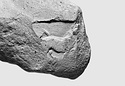
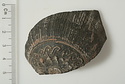
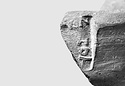
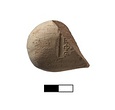
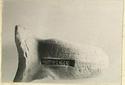
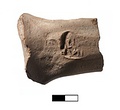
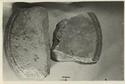
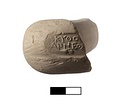
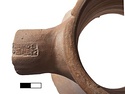
| Only part of a rectangular stamp preserved; animal standing right. Finished In rectangular cutting. [---]
dog 3962 Leica ... 29 May 1953 ... Only part of a rectangular stamp preserved; animal standing right ... In rectangular cutting. |
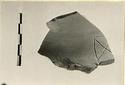
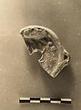
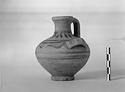
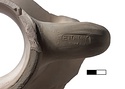
| Fragment from neck with start of shoulder.
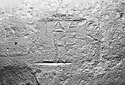
Monogram scratched at base of neck:
Buff clay, gray at core. Unglazed. Rectangular cutting. 3962 Leica ... 3 June 1953 ... Rectangular cutting. |
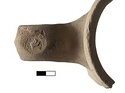
| Part of rim preserved.
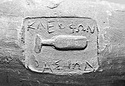
Rectangular stamp with alabastron in centre. Cxt: hole N of Room 4* Finished In rectangular cutting, 4th century B.C. fill. Κλεοφῶν
vaseI
Θασίων 3962 Leica ... 29 May 1953 ... Part of rim preserved.
Rectangular stamp with alabastron in centre ... In rectangular cutting, 4th century B.C. fill. |
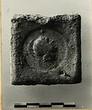
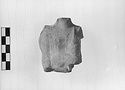
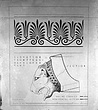
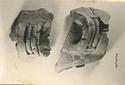
| Small fragment from side of circular mould.
Preserves only part of border and one raised surface.
Gorgoneion (?).
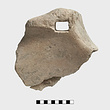
Buff to reddish-buff clay. In rectangular cutting. 3962 Leica ... 3 June 1953 ... In rectangular cutting. |
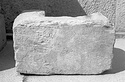
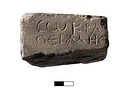
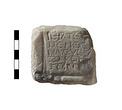
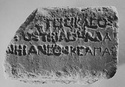
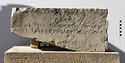
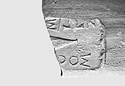
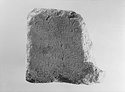
| Inscribed fragment.
Somewhat broken at upper rear.
Inscribed face damaged at left. A rectangular cutting in top.
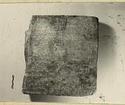
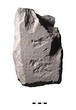
Pentelic marble. Found in modern fill, at east edge of section. Leica, 86-20-11 ... 22 August 1959 ... Inscribed face damaged at left. A rectangular cutting in top.
|
| A single fragment preserves some of lower part of body. Rosette at bottom; around it a guilloche. On body long leaves.
Glaze slightly metallic.
Cf. P 21038. 113/Α'* Finished Rectangular cutting. 175 ... May 1940 ... Rectangular cutting. |
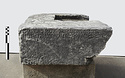
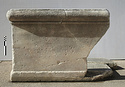
| Anathyrosis on preserved edge. On top a mason's mark: ΑΡ. A shallow rectangular cutting and a deeper circular cutting at one corner of broad surface, from reuse as threshold block.
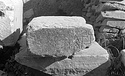
From Temple of Ares ... February 1949 ... A shallow rectangular cutting and a deeper circular cutting at one corner of broad surface, from reuse as threshold block.
|
| Fragment of top only, with small side lug and attachment for vertical strap handle preserved.
Raised band on outer edge; small swimming fishes in relief on discus.
Thin red glaze.
Buff clay. Rectangular ... 22 February 1937 ... Rectangular cutting. |
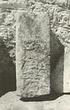
| Inscribed fragment of columnar grave monument.
Part of top preserved; rectangular cutting in side.
Three lines of the inscription preserved.
Hymettian marble. Found in Turkish context, west of the north ... 28 April 1936 ... Part of top preserved; rectangular cutting in side.
|
| Handle split down the middle.
One corner of stamp preserved. Sherds from same fill, second half of 4th century B.C., stored in tins 258-262. Finished In rectangular cutting north of Shop Room 4. [Θα]σίων ... 30 May 1953 ... In rectangular cutting north of Shop Room 4. |
| Inscribed fragment of base for statuette.
Part of an upper corner preserved.
Broken below.
Part of rectangular cutting in top.
Inscribed on two adjacent faces.
Hymettian marble. Found in marble dump, from ... 25 February 1956 ... Part of rectangular cutting in top.
|
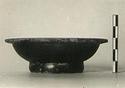
| Chips missing from rim. Small shallow dish on ring foot; broad flat-topped projecting rim; resting surface lightly grooved.
Metallic black glaze overall, except on resting surface; somewhat chipped and ... 3 June 1953 ... Rectangular cutting. |
| Back and part of one side preserved.
Fragment from a large heavy mould.
Coarse pinkish-buff clay (tile fabric).
ADDENDA: Mold fragment for a panther passing left, its head facing. S.W. of the church, ... 8 June 1938 ... S.W. of the church, rectangular cutting in bedrick.
|
| Inscribed fragment.
Broken at right and back.
Part of small rectangular base with rectangular cutting, rough picked in top. Left side smooth finished; bottom deeply picked. Shallow groove as frame for ... 24 April 1947 ... Part of small rectangular base with rectangular cutting, rough picked in top. |
| Inscribed fragment.
Inscribed face and bottom preserved.
In top of stone the bottom of a large rectangular cutting; a dowel-cutting partly preserved at left end.
Four lines of the inscription preserved ... 20 April 1939 ... In top of stone the bottom of a large rectangular cutting; a dowel-cutting partly preserved at left end.
|
| Most of rim, much of body and most of flange missing. Rather high neck; underside of foot concave.
Soft pinkish-buff clay. Traces of white slip.
Fragments of at least one more kernos from same fill left ... 3 June 1953 ... Rectangular cutting. |
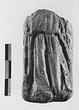
| Slightly battered square weight with circular stamp in which the head of Athena, helmeted, right, in low relief.
On underside, a punched inscription.
Rectangular cutting under Phaidon street actually ... 7 June 1957 ... Rectangular cutting under Phaidon street actually in section Ψ at 8/ΣΤ(cf. nb. |
| Inscribed fragment.
Rectangular block, broken at bottom and at upper left front.
Traces of red paint in letters. Moulding at top.
On left and right sides a rectangular cutting, 0.26m. down from the top ... 17 March 1952 ... Inscribed fragment.
Rectangular block, broken at bottom and at upper left front.
... On left and right sides a rectangular cutting, 0.26m. down from the top.
|
| Inscribed fragment of stele.
Two large joining fragments, the upper of which preserves some of the flat top of the stele proper, with a dowel hole for the attachment of the pedimental top. Upper right ... 140/39 B.C ... There is a marked taper towards the top.
Rectangular cutting in face of block cuts away several letters of last two lines of first decree and of first citation.
... Found lying face down in two pieces in a rectangular cutting in the floor of the Civic Offices, directly in front of the retaining wall of the Middle Stoa. Reused here for at least the second time, the rectangular cutting in the face of the upper fragment being from a previous re-used. |
| Inscribed fragment.
Inscribed face only preserved.
Left side and bottom surfaces perhaps recent, when stone was broken up.
Traces of rectangular cutting in top.
Three letters remain.
Hymettian marble ... 8 January 1936 ... Traces of rectangular cutting in top.
|
| Inscribed fragment of a base.
Top and bottom preserved, broken at back and both ends.
Front edge of rectangular cutting (possibly for re-use?).
One line of the inscription preserved.
Island (?) marble ... 9 February 1938 ... Front edge of rectangular cutting (possibly for re-use?).
|
| Back half of body missing.
Concave top with high-swung basket-handle over it. Double-convex body. Long nozzle, fluked. Unpierced knob at side.
Very flaky black glaze.
Type XII of Corinth collection, type ... May 1940 ... Rectangular cutting. |
| Mended from many pieces; small fragments missing from wall and rim. A coarse grayish pot with flaring walls and a hole made in the bottom. Lip thickened slightly inside. The pot roughly cut off from the ... 10 March 1936 ... Rectangular cutting, late Hellenistic context. |
| About half preserved, mended from several fragments.
Large figurine of a soldier or warrior wearing a tunic, a cloak and high-laced sandals. He holds a shield (strap only preserved).
Dark reddish clay ... 27 April 1956 ... Hellenistic dining room: Roman level of rectangular cutting along East side of floor patch. |
| Inscribed fragment.
Inscribed face only preserved.
A rectangular cutting at the lower left corner of the inscribed surface, which must date from reuse.
Attic alphabet.
Six lines of the inscription preserved ... Second half of 5th. century B.C ... Inscribed face only preserved.
A rectangular cutting at the lower left corner of the inscribed surface, which must date from reuse.
|
| Inscribed fragment.
Put together from two pieces.
Broken top and bottom, left and back.
Right side smooth picked, has had a rectangular cutting at 0.09m. from front.
Hymettian marble. Found in the wall ... 26 November 1934 ... Right side smooth picked, has had a rectangular cutting at 0.09m. from front.
|
| Inscribed fragments of statue base.
Fragment ΣΑ 380 a), inscribed face only preserved.
Fragments ΣΑ 380 b), two joining fragments. Broken left, right and below.
Part of rectangular cutting for statue ... 8 and 11 June 1949 ... Part of rectangular cutting for statue in top.
|
| a) Preserves nose, mouth, chin, left cheek and left eye. White for teeth and iris of eye. Black glaze inside and out.
b) Preserves some of top of head and stubs of ring handle. Glaze on exterior and most ... May 1940 ... Rectangular cutting. |
| Fragment preserving part of wall, with flat floor and low raised base set off by grooves.
On wall, conventionalized relief pattern of grape clusters and vine (no leaves). End of handle attachment covering ... 22 February 1937 ... Rectangular cutting. |
| Fragments missing from wall and bottom. A plain pot similar to P 6983 (ΚΚ 239), but with the sides more rounded and the bottom and hole more carefully finished.
Clay pink to gray, with gray core. Rectangular ... 12 March 1936 ... Rectangular cutting, Hellenistic context. |
| Inscribed fragment.
Broken at right only, but damaged by fire and badly chipped.
Mouldings at top and bottom of preserved faces.
Remains of large rectangular cutting in the top and in the bottom.
Two lines ... 10 May 1939 ... Remains of large rectangular cutting in the top and in the bottom.
|
| Inscribed fragment.
Broken away behind and at left.
Top smooth with corner of rough picked rectangular cutting.
Right side and bottom toothed.
Three lines of the inscription preserved.
Hymettian marble ... 4th. century B.C ... Top smooth with corner of rough picked rectangular cutting.
Right side and bottom toothed.
|
| Fragment of inscribed stone.
Top is preserved, and at left, two sides of rectangular cutting, 0.105m. from inscribed face.
The angle between the top and the inscribed surface is mostly worn away.
One line ... 27 February 1933 ... Top is preserved, and at left, two sides of rectangular cutting, 0.105m. from inscribed face.
|
| Inscribed fragment.
Broken below; top and sides dressed with toothed chisel; back rough.
Surface much worn.
One line of the inscription preserved.
Hymettian marble. Found in marble dump, in the area of ... 3rd. century B.C ... Probably from rectangular cutting in floor of House F directly in front of the retaining wall of the Middle Stoa. |
| The thin edge broken.
A large shoulder blade, probably of a whale, with a rectangular cutting at the top.
The broad surface shows marks of cutting. Finished Pit, below wall B. Leica, 96-72-31, 96-72-32, ... 19 April 1934 ... A large shoulder blade, probably of a whale, with a rectangular cutting at the top.
The broad surface shows marks of cutting. |
| Roughly rectangular fragment preserving part of front, top and back surface. Front surface battered, only few letters preserved on each line.
Front surface with nine lines of the text of Nikophoros' law ... 361 B.C ... Roughly rectangular fragment preserving part of front, top and back surface. ... Flat top with section of a deep rectangular cutting. Back roughly picked with sloping fillet at upper edge.
|
| Inscribed block.
The right side broken away.
A rectangular and circular cutting on the under side, also three small holes.
Seven letters remain.
Hymettian marble. Found in the area of the Stoa of Attalos ... February 1936 ... The right side broken away.
A rectangular and circular cutting on the under side, also three small holes.
|
| Broken at top. worked smooth on front face, left rough-picked on back and sides, bottom also worked smooth. Front face preserves shallow wedge-shaped cutting characteristic of articulation of Eponymoi ... 21 June 1967 ... P.H. 0.463; W. 0.285, (rectangular cutting) 0.043, (dowels) 0.011; D. 0.210, (rectangular cutting) 0.051, (dowels) 0.057; H. (rectangular cutting) 0.110 |
| Preserves back and right side, both rough-picked. On the back a horizontal rectangular cutting; at the right a frame.
Represents a woman in Isis dress with a garland hanging down beside the knot.
From ... Early Severan period ... On the back a horizontal rectangular cutting; at the right a frame.
|
| Top of large columnar grave monument.
In the top is a rectangular cutting, into which a fragment of dark blue-gray stone is now wedged with cement.
Bottom broken off, carrying with it the ends of the fourth ... 6 March 1933 ... In the top is a rectangular cutting, into which a fragment of dark blue-gray stone is now wedged with cement.
|
| Inscribed fragments of base with dedication.
Two joining and one non-joining fragments.
A round dedicatory base inscribed around the rim. In very good condition. The tooling is clear throughout. Rectangular ... 11 and 17 August 1966 ... The tooling is clear throughout. Rectangular cutting in the top to receive the monument.
|
| Inscribed base.
Broken off at right. All faces preserved smoothly dressed. A large rectangular cutting in the top, rough picked inside.
Archaistic dedication in elegiacs to Deo by her attendant, Lysistrata ... Ca. 455 B.C ... A large rectangular cutting in the top, rough picked inside.
|
| Lower half remains, broken at top. Rough-picked back, sides and bottom preserved. Surface much worn.
At bottom a plain panel framed by narrow raised bands; feet of draped figure, with vases to either side ... 29 February 1952 ... At right end of bottom small rectangular cutting: dowel hole?
|
| Inscribed fragment.
Broken behind, above and at right.
Left end and bottom dressed with toothed chisel. At back, the corner of a large rectangular cutting for insertion of a votive offering; the cutting ... 5th. century B.C ... At back, the corner of a large rectangular cutting for insertion of a votive offering; the cutting goes the whole height of the block, clear to the bottom.
|
| Inscribed fragment.
Inscribed face, right face, top, and rough picked back preserved. Broken at bottom.
The stone has been reused for left face is roughly cut back to a surface which forms an acute angle ... 29 May 1936 ... The stone has been reused for left face is roughly cut back to a surface which forms an acute angle with the front, and in bottom broken surface base of a rectangular cutting, and a shallow cutting reprendicular to front surface which may date from reuse.
|
| Of the relief only the upper part of the sistrum is preserved, considerably battered. The top of the block, fairly smooth-picked, is preserved with a dowel cutting, partly broken off, at the right. Just ... 5 May 1934 ... The top of the block, fairly smooth-picked, is preserved with a dowel cutting, partly broken off, at the right. Just above the sistrum, in the face of the block, a small rectangular cutting has still apparently a bit of led in it. ... It is not unlikely that the top dressing and the dowel cutting represent an earlier use.
|
| A fragment from the middle of the top block. An arc of a setting line for an Ionic base is preserved on top. Close behind the line of the base, a cutting for a rectangular post. The cutting, broken away ... 1936 ... Close behind the line of the base, a cutting for a rectangular post. The cutting, broken away below, slopes on one side as in a classical lewis cutting. |
| About one quarter of capital preserved with original top and bottom, and part of the rectangular cutting of the centering. Surface finished with at fine toothed chisel, as if intended for stucco but no ... 2 May 1953 ... About one quarter of capital preserved with original top and bottom, and part of the rectangular cutting of the centering. |
| Right part of a rectangular stamp; device. Finished Cutting intermediate strosis to working floor. [Θασί]ω̣ν
[device]
[Παίστρα]τ | ος Leica ... 20 May 1954 ... Right part of a rectangular stamp; device ... Cutting intermediate strosis to working floor. |
| Inscribed fragment of base.
Broken away at left and behind. The surface much weathered; in the top is a cutting, rectangular.
Dedication to Athena Ergane.
Three lines of the inscription preserved.
Pentelic ... Early 4th. century B.C ... The surface much weathered; in the top is a cutting, rectangular.
|
| Intact. Round-bodied hydria on rather heavy ring foot; thickened lip, slightly projecting. Vertical band handle from lip; horizontal band handles on shoulder.
Yellow-buff clay; decoration in red glaze: ... 23 May 1940 ... Rectangular cutting beneath floor of Klepsydra forecourt, lower clay layer ca. 0.60m. above floor. |
| First interpretation: uncertain object.
Full width preserved, with part of top (or bottom), of one face, and of both sides.
In the face a large rectangular cutting, and two small round holes. Horizontal ... 17 April 1936 ... In the face a large rectangular cutting, and two small round holes. |
| Broken at head, waist, sides. Part of back missing.
Frontal draped seated female figure holding lion in lap. Right arm held next to body and bent slightly at elbow.
Left arm missing. Torso hollow; back ... 5 July 1973 ... Torso hollow; back not articulated, seems to have had a rectangular cutting in it.
|
| Fragments of an inscribed architrave.
Top and bottom, picked fine, preserved.
In the top a narrow rectangular cutting, which looks rather like a clamp cutting than one to receive any part of a statue ... End of 5th. century B.C ... In the top a narrow rectangular cutting, which looks rather like a clamp cutting than one to receive any part of a statue or stele.
The cutting is broken at the raer; remains of lead in place.
|
| About half of length and wall to full height preserved on one side.
Rectangular sarcophagus with plain projecting base, straight side wall with small and large half round moldings (archaic) at the top, ... June 1946 ... About half of length and wall to full height preserved on one side.
Rectangular sarcophagus with plain projecting base, straight side wall with small and large half round moldings (archaic) at the top, plain flat rim above. ... On bottom, 0.05m. in from each corner, a rectangular cutting to receive feet of sarcophagus. A rectangular hole cut through the center of the floor, of which only parts of two sides are preserved along the line of break.
|
| Left part of a rectangular stamp preserved. Finished Cutting strosis to working floor. Ἐ[πὶ Ξενο]
φῶ̣[ντος]
Θε̣[σ(μο)φορίου] Leica ... 11 May 1954 ... Left part of a rectangular stamp preserved ... Cutting strosis to working floor. |
| Right end of rectangular stamp preserved; oar.
Joins with SS 11724. Martyr, cutting working floor to Agora floor. [Θασίων]
[oa]r
[Ναυσικύδ]ης Leica ... 21 May 1954 ... Right end of rectangular stamp preserved; oar.
... Martyr, cutting working floor to Agora floor. |
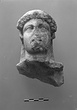
| Head and very upper part of pillar preserved, including part of the rectangular cutting for left arm stub. Nose, mouth and chin damaged. Beardless, rather full face. Double row of curls across forehead, ... Roman period ... Head and very upper part of pillar preserved, including part of the rectangular cutting for left arm stub. |
| Columnar grave monument.
At least part of the bottom, rough picked, seems to be original. Full height preserved (?). In the top, which is chipped and worn at the back, there is a shallow rectangular cutting ... 6 November 1933 ... In the top, which is chipped and worn at the back, there is a shallow rectangular cutting ca. 0.04 square. |
| Inscribed fragment.
Piece from top of monument (or epistyle fragment?) with moulding above inscribed surface.
Broken at bottom and back; rough picked top with dowel and pry hole in center, possibly anathyrosis ... 11 March 1939 ... Broken at bottom and back; rough picked top with dowel and pry hole in center, possibly anathyrosis band on only bit of preserved edge; rough picked right end; in center of left end, bit of worked surface, floor of rectangular cutting.
Two lines of the inscription preserved.
|
| Inscribed base.
Left side hacked off and reworked, and face much chipped.
A rectangular cutting, rough picked, inside top, its dimensions ca. 0.27X 0.222 X 0.065m. deep.
Front and right faces smoothly ... 2 June 1938 ... Left side hacked off and reworked, and face much chipped.
A rectangular cutting, rough picked, inside top, its dimensions ca. 0.27X 0.222 X 0.065m. deep.
|
| Intact but chipped.
Rectangular.
Squarish base. Flat on top.
Buff clay. Panathenaic Way, cut IV, cutting F 1, below stacking. 1020 Leica PD 2773-45 ... 10 June 1959 ... Intact but chipped.
Rectangular.
Squarish base. ... Panathenaic Way, cut IV, cutting F 1, below stacking. |
| Front and bottom finished with fine-toothed chisel, the side roughly, with broad chisel, the surface curving out from vertical towards bottom, as if to fit around something. Three small holes in front ... April 1949 ... At 0.10m. from left side, and 0.13m. from bottom, a rectangular cutting at break.
|
| Thin rectangular stamp.
Hikesios group. Piers 15-16, east; cutting floor at level of bottom of 8th foundation course; fill over floor of Square Building. Ἡγησίου 742 Leica ... 8 July 1949 ... Thin rectangular stamp.
Hikesios group ... Piers 15-16, east; cutting floor at level of bottom of 8th foundation course; fill over floor of Square Building. |
| Inscribed fragment.
Fragment of pedimental monument, with recessed niche for sculpture. Back preserved very rough; top of left pediment preserved.
Pediment separated from the face by a simple raised band ... 2nd. century A.D ... In a rectangular cutting in the pediment a "basket", in high relief, i.e., a circular object, with parallel equal grooves.
|
| Inscribed base.
Right side, right two-thirds of front and rear one-third of left side intact and finely dressed.
Top edge, where preserved, beveled, and top surface smooth dressed. Rectangular cutting ... 1964 ... Top edge, where preserved, beveled, and top surface smooth dressed. Rectangular cutting summetrically set in top surface. |
| Rectangular stamp. Finished Pier 19, east; cutting floor of Square Building; layer of bedrock and chips; Square Building, construction fill. Θασί | [ω]ν Τιμ̣ | [αρ] | χ̣ίδα |
letter Ξ 916 Leica ... 27 July 1949 ... Rectangular stamp ... Pier 19, east; cutting floor of Square Building; layer of bedrock and chips; Square Building, construction fill. |
| Inscribed statue base.
Broken away to left and behind; much worn by traffic on its underside, its top in its second use.
Part of a plain plinth with the mark of the left foot of a life-sized bronze statue ... 31 March 1939 ... The foot had been secured by a large heel dowel for which a rectangular cutting remains. |
| Inscribed boundary stone.
Intact, except for chips and wearings at back.
Rectangular cutting at top 0.145X0.065m. probably dating from block's reuse as doorsill.
All surfaces rough picked except for about ... 4th. century B.C ... Intact, except for chips and wearings at back.
Rectangular cutting at top 0.145X0.065m. probably dating from block's reuse as doorsill.
|
| The lower part of a standing draped female with fine close folds, miniature style.
Rough inside. Traces of cutting for rectangular vent.
Careless finish.
Fabric as T 2073 (EE 233).
Traces of curve on side ... May 1939 ... Traces of cutting for rectangular vent.
|
| [Originally identified as mortar(?)]
Small segment with rim, floor and upper part of high base preserved. Gently sloping floor with thickened lip, a groove around its top; a hole through the floor; edge ... 30 May 1953 ... Rectangular cutting north of Shop Room 4.
|
| Inscribed fragment of statue base.
Base for a bronze statue of a standing figure with right foot advanced.
Broken below at left. Much of back missing, but joining fragments give some of back surface. Most ... 13 May 1952 ... Inscribed surface marred in places.
A rectangular cutting 0.225m. across, 0.26m. front to back and 0.07m. deep in the underside indicates that our block was set on a pillar.
|
| Corner sima, cut in one piece with the extremities of both the horizontal and raking sima. The sinking for the statue plinth has a curved outline. Beside the main sinking are two drilled hole perhaps intended ... 11 March 1937 ... (sinking for the statue plinth) 0.06, (drilled holes) 0.015; W. (rectangular cutting) 0.055; P.L. (rectangular cutting) 0.093 |
| Arch fragment.
Rectangular stamp with amphora; broken across middle of stamp. Finished Piers 15-16, east; cutting floor at level of bottom of 8th foundation course; fill over floor of Square Building ... 8 July 1949 ... Arch fragment.
Rectangular stamp with amphora; broken across middle of stamp ... Piers 15-16, east; cutting floor at level of bottom of 8th foundation course; fill over floor of Square Building. |
| Indistinct Rectangular stamp broken across middle; retrograde(?).
Cf. SS 2576. Par: SS 02576* Piers 15-16, east; cutting floor at level of bottom of 8th foundation course; fill over floor of Square Building ... 8 July 1949 ... Indistinct Rectangular stamp broken across middle; retrograde(?).
... Piers 15-16, east; cutting floor at level of bottom of 8th foundation course; fill over floor of Square Building. |
| Two non-joining fragments of a torus with six flutes.
a) Preserves part of rectangular dowel cuttings on both top and bottom surfaces, at about the center.
b) Perhaps preserves one corner of a similar ... 17 March 1938 ... Two non-joining fragments of a torus with six flutes.
a) Preserves part of rectangular dowel cuttings on both top and bottom surfaces, at about the center.
b) Perhaps preserves one corner of a similar dowel cutting, surface broken away below.
|
| Complete except for chips. Large rectangular block with moldings at upper front edge; from top to bottom: a shallow cavetto, torus, scotia, torus and a cyma reversa. Top surface has a cutting apparently ... 21 April 1972 ... Top surface has a cutting apparently to receive a parapet. At the left, this cutting joins a larger cutting, apparently for a post. The post in turn abuts against a round column, the evidence for which is preserved in the curved end of the cutting for the post as well as an empolion cutting 0.06m. in on a side. |
| Three non-joining fragments, each mended from several pieces; two handles, small part of rim. Many non-joining pieces from body. The profile is strongly drawn in at the rim. The rim is rounded inside with ... May 1952 ... Down the center a deep long rectangular cutting. In this are inserted two rolled strips of clay with diagonal grooves on each, giving the impression of spirals. The clay on top and bottom of the cutting is pressed in over the rolls of clay. |
| Inscribed fragments.
Fragment ΙΙ 84 a), broken at right only, but much chipped.
Corner of a tripod base, with traces of a cutting on top, and contact surface below.
Inscribed on one of the broad, slightly ... a) (II 84) 30 March 1937
b) (ΒΒ 260) 27 April 1939 ... Corner of a tripod base, with traces of a cutting on top, and contact surface below.
... Fragment ΒΒ 260 b), broken at both sides; smooth bottom; a back surface not parallel to front; top surface must be very close to original, but actual original surface gone; one end of rectangular cutting on line of break at right.
|
| Inscribed fragments of base.
Ephebic decree; decree of Leontis for Philothios the Sophronistes; Archonship of Nikokrates.
Fragments a), a large number of fragments, all joining (but not all joined because ... 333/2 B.C ... In the top, a rectangular sinking.
Forty lines of the inscription preserved.
... Fragment c), from the top; broken bottom and sides; at the back part of the face of the rectangular cutting.
Parts of the first five lines of the inscription preserved.
|
| Inscribed base.
A rectangular base, fully preserved, with a cutting in the top surface, presumably the bedding for a Herm.
The front inscribed surface, which was used as a bench, badly worn.
Records victory ... 4th. century B.C ... Inscribed base.
A rectangular base, fully preserved, with a cutting in the top surface, presumably the bedding for a Herm.
|
| Split vertically into two halves. Broken off below neck, and arms and legs missing. Back not worked.
Standing female figure wearing a thin tight-fitting chiton represented by long wavy lines. Deep rectangular ... Last quarter of 6th c. B.C ... Deep rectangular cuttings at top for attachment of arms. Similar cutting at bottom for attachment of lower body, with part of lead dowel in place. Shallow rectangular sinking on front, at lower edge of fragment, probably to receive bunched-up folds of skirt.
|
| Inscribed fragment of columnar base.
Broken at top, but lower part of rectangular rough picked cutting for dedicated object preserved; bit of finished surface on left side demands an oval, not circular ... 27 March 1939 ... Broken at top, but lower part of rectangular rough picked cutting for dedicated object preserved; bit of finished surface on left side demands an oval, not circular column; right side broken on upper surface, rough picked in lower concave part.
|
| Inscribed base.
Both corners of inscribed face broken. A rectangular plinth, with neat drafting at lower edge all around; above, a very flat cavetto moulding, also rectangular. In the center, a circular ... 18 June 1937 ... Both corners of inscribed face broken. A rectangular plinth, with neat drafting at lower edge all around; above, a very flat cavetto moulding, also rectangular. In the center, a circular sinking for a small column, of which the butt remains in the cutting, leaded all around.
|
| Inscribed statue base.
Large rectangular base for a statue of the Emperor Trajan. Left rough picked on top, perhaps to receive another block. No trace of a cutting, though part of the top is still concealed ... 28 July 1971 ... Large rectangular base for a statue of the Emperor Trajan. ... No trace of a cutting, though part of the top is still concealed in the wall.
|
| Both ends broken off; elsewhere all faces preserved.
A ceiling beam designed to be the end of a series, as only one side (and the bottom) is carefully worked. Bottom plain, face plain, with a simple cove-molding ... 11 March 1937 ... In face of beam, a cutting, with anathyrosis at its left side, from top to bottom rectangular. To the right of this cutting both face and bottom less carefully worked.
|
| Broken above and at back. Resting surface worn. Lower edge battered.
Remains of a cutting , perhaps a dowel hole, in the bottom surface, which is now worn. A slight flare as for an apophyge at the bottom ... Roman period ... Remains of a cutting , perhaps a dowel hole, in the bottom surface, which is now worn. ... In a rectangular panel a herm in relief. |
| Inscribed fragment of pedestal.
A small rectangular pedestal, with a plain crowning member. Broken below, chipped around top, where there are traces of a shallow cutting for a small statue or dedication ... 23 February 1939 ... A small rectangular pedestal, with a plain crowning member. Broken below, chipped around top, where there are traces of a shallow cutting for a small statue or dedication.
|
| Full height preserved.
Rim of echinus cut almost vertical and has a deep V-groove under the abacus instead of curving in. The trachelion is unfluted and flares upward slightly. Top of abacus worked smooth ... August-September 1932 ... Square dowel cutting in bottom of cap.
... Rectangular rock cut shaft. |
| Chipped on sides and at molding on top.
Rectangular altar, square in section. Molding at top and bottom. Top flat. Relief on three faces: 1) scene of sacrifice with a bull, large square hole in center ... |
| Upper left corner is broken off but joining fragment survives. Like A 3732 but from straight course. On upper surface are cutting for Π-clamp on right, lewis hole in center, and dowel (?) hole on left ... 24 July 1969 ... On upper surface are cutting for Π-clamp on right, lewis hole in center, and dowel (?) ... Note the rough rectangular notch cut from back left corner. |
| Rim, neck and start of one handle preserved; large projecting, mushroom-shaped rim.
Pinkish micaceous clay, buff at core and surface, with very light thick slip.
The end of a rectangular or oval stamp ... 19 April 1935 ... The end of a rectangular or oval stamp remains ... This footing trench is 1.00m. wide on the west and 0.73m. on the north, except just as the corner where the north cutting widens to ca. 1.00m. ... At the bottom of a wide footing trench at the northwest corner of a poros foundation, so called Rectangular chamber. |
| The neck is pushed in by handles at the top, there giving an aval rather than a circular opening. Upper parts of both handles preserved.
Light red clay with some mica in it, and traces of thin slip.
... 17 April 1935 ... Light red clay with some mica in it, and traces of thin slip.
Rectangular stamp on one of the handle ... This footing trench is 1.00m. wide on the west and 0.73m. on the north, except just as the corner where the north cutting widens to ca. 1.00m. ... At the bottom of a wide footing trench at the northwest corner of a poros foundation, so called Rectangular chamber. |
| Inscribed fragments.
Prytany list of the tribe Hippothontis.
Fragment Ρ 31, side piece of stele with recessed panel probably for relief. Broken at right, top and bottom.
Three inscribed faces; an inscription ... Mid. 2nd. century A.D ... Broken at top and bottom. A rectangular groove is cut vertically down the center of face A, a later cutting (?).
|
| Long curve fragment.
Amphora. This group (SS 3784-87; SS 3790-3813; SS 3901; P 5524-5536) was found on 17-19 April. This footing trench is 1.00m. wide on the west and 0.73m. on the north, except just ... 19 April 1935 ... This footing trench is 1.00m. wide on the west and 0.73m. on the north, except just as the corner where the north cutting widens to ca. 1.00m. ... At the bottom of a wide footing trench at the northwest corner of a poros foundation, so called Rectangular chamber. |
| Neck, rim and part of both handles preserved.
Two stamped handles. This group (SS 3784-87; SS 3790-3813; SS 3901; P 5524-5536) was found on 17-19 April. This footing trench is 1.00m. wide on the west ... 19 April 1935 ... This footing trench is 1.00m. wide on the west and 0.73m. on the north, except just as the corner where the north cutting widens to ca. 1.00m. ... At the bottom of a wide footing trench at the northwest corner of a poros foundation, so called Rectangular chamber. |
| The neck and one handle nearly complete.
Red stain on neck.
Stamps on both handles. This group (SS 3784-87; SS 3790-3813; SS 3901; P 5524-5536) was found on 17-19 April. This footing trench is 1.00m ... 18 April 1935 ... This footing trench is 1.00m. wide on the west and 0.73m. on the north, except just as the corner where the north cutting widens to ca. 1.00m. ... At the bottom of a wide footing trench at the northwest corner of a poros foundation, so called Rectangular chamber. |
| Neck and upper part of both handles preserved.
Pinkish-buff clay with dark bits; pinker at the core. This group (SS 3784-87; SS 3790-3813; SS 3901; P 5524-5536) was found on 17-19 April. This footing ... 19 April 1935 ... This footing trench is 1.00m. wide on the west and 0.73m. on the north, except just as the corner where the north cutting widens to ca. 1.00m. ... At the bottom of a wide footing trench at the northwest corner of a poros foundation, so called Rectangular chamber. |
| Fragment of neck and shoulder; one handle with stamp preserved complete; the lower attachment only of the other.
The heavy cream slip has peeled considerably. This group (SS 3784-87; SS 3790-3813; SS ... 19 April 1935 ... This footing trench is 1.00m. wide on the west and 0.73m. on the north, except just as the corner where the north cutting widens to ca. 1.00m. ... At the bottom of a wide footing trench at the northwest corner of a poros foundation, so called Rectangular chamber. |
| Part of rim preserved; probably from same jar as SS 3813.
Circular stamp with rose.
Cf. Hesperia 32 (1963), p. 326, n. 16. This group (SS 3784-87; SS 3790-3813; SS 3901; P 5524-5536) was found on 17-19 ... 19 April 1935 ... This footing trench is 1.00m. wide on the west and 0.73m. on the north, except just as the corner where the north cutting widens to ca. 1.00m. ... At the bottom of a wide footing trench at the northwest corner of a poros foundation, so called Rectangular chamber. |
|
|