|
|
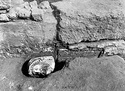
| Marcie Handler ... Pyre under floor no. 9 in the center of Room 4. It was adjacent to the southern face of Wall 4, but at lower elevation than the lowest course of the wall foundation (which was found at 52.250 masl.), suggesting ... 375-350 B.C. |
| Brian Martens ... Located in the southern section of Room I, now bound by the scarp of Wall U at the north,, the scarp of Wall L at the east,, and a modern pit at the south. At its now low elevations, excavated in the 2015 ... Third quarter of 5th c. B.C. |
| James Artz Pirisino Daniele Kylindreas Miltiades ... Excavation in Room 3 of ΒΘ West revealed 5 ceramic vessels in a row against the eastern face of Wall 12. 3 complete vessels (ΒΘ 122, 124, and 125) were catalogued, along with the base of a plain glazed ... 9th-11th c. A.D. |
| Bronze-casting pit and furnace against S apse of Church (106/ΛΕ). Late Roman sherds of the 4th and the 6th c. A.D. were found with fragments of moulds from bronze casting. The west end was destroyed by ... 5th-6th c. A.D. |
| Laura Gawlinski ... Circular pit uncovered in Early Building II, south of Room E latrine, adjacent to the preserved latrine floor surface. Continues beneath the latrine surface and the western scarp (unexcavated). Fill relatively ... Late 5th c. B.C. |
| Laura Gawlinski ... Ovoid pit cut into bedrock or sterile fill just north of preserved floor surfaces in the so-called Strategeion. Length (west-east) 2.6m; widens at 1.25m from the east scarp so that at west pit is 0.75m ... 4th B.C. |
| Brian Martens ... Mycenaean Chamber Tomb J 1:11, located in the area north of Wall K, was partially excavated during the 2014 season. At this point the full western extent of the chamber has not been located because of ... LHIIIA |
| Anne McCabe ... Adjacent to the SW face of Byzantine Wall 14. The circular cutting, 0.90m in diameter, appeared at 53.504m under a layer of loose rubble (Lot 481). Wall of the well roughly built, consisting at the top ... 11-19 July 2006
24 June-21 July 2009 |
| Herm head deliberately buried in a pit with coins of the 2nd half of the 4th c. Head found at an elevation of 51.907. Bottom of the pit at 51.637 m. Coins:
27 June 1972 #199-#205
Bits of bronze, iron ... 2nd half 4th c. B.C. |
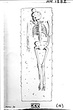
| Laura Gawlinski ... Burial of a woman (young adult female ca. 18-20); precise dating difficult due to disturbance by later features, but the amount of Neolithic and Geometric pottery extracted from the trench is significant ... Prehistoric |
| Laura Gawlinski ... Bronze foundry north of bridge on Piraeus street, east of Great Drain.
Keyhole-shaped bronze casting pit, cut into bedrock.
2016: Continuation of the excavation of a rectangular pit with foundry debris, ... Late 6th-early 5th c. B.C.
(Late Archaic/ Early Classical) |
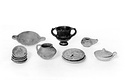
| Excavation of this pit began in 1995, tentatively identified as a pyre. This proved to be so with continued excavation in 1996. The deposits J 2:8 and J 2:9 were combined to become J 2:9. Miniature vessels ... Ca. 300 B.C. |
| Marcie Handler ... Cist grave for two infants. The grave was cut into a sterile rocky layer on its southern and western sides, and a sterile fill layer on its northern and eastern sides. No obvious grave marker was present, ... Early Iron Age |
Shaft (= well + caves) at 116-118/ΚΕ-ΚΣΤ Coins:
6 May 1939 #16-#21
8 May 1939 #35-#37
9 May 1939 #1
24 April 1940 #6 ... 2nd. quarter - mid-5th. c. A.D. |
| Johanna Hobratschk ... South end of Byzantine Room J, adjacent to Pithos B and under St. Philip's st scarp. Built lining at the E and N side, roughly constructed of some large square blocks and slabs, smaller field stones of ... 21 July-3 August 2006
2011
28 June 2012-16 July 2012 |
| Located in House H, Room 13 on the lower northwest slope of the Areopagus ... Late 2nd c. B.C. |
| Pit (f) in bedrock used for casting archaic bronze statue for the first Temple of Apollo Patroos (Hesperia 6 (1937), pp. 82-84) ... 6th c. B.C. |
| Roman Pithos at 38/ΛΔ. Cf. also Ψ734 (P 14037) from late pit at 41/ΛΓ ... Early to Middle Roman |
| Hole (Well) and adjoining water channel with 4th c. pottery, probably a dumped fill.
At a depth of about -5.70m we started yielding some very crude potsherds, clearly not made on the wheel (maybe Prehistoric) ... Prehistoric-Roman |
| Cistern at 53/ΚΓ and channels. The pottery in the cistern and in the two channels was a thoroughly mixed lot of broken material from 5th c. B.C. to 4th c. A.D. and all seemed the same except the bottom ... 5th c. B.C.-4th c. A.D. |
| Well cut into bedrock under late Roman building in ΕΛ. 1.2m in diameter with small cutting of unclear function at south edge about 0.2m wide. Walls cut straight down, tapering near bottom to 0.8m. Footholds ... Late Archaic |
| Well west of the Eponymous Heroes monument. The shaft was of irregular width (ca. 0.81m where the full circle was first preserved), sunk in soft bedrock clay much of which had collapsed around the top ... Ca. 600-550 B.C. |
| Mike Laughy ... This pyre was found within an otherwise mostly sterile fill directly under a white floor surface in the southern section of Area IV. It was located ca. 0.50m. east of a similar deposit, Pyre J 2:25. The ... 4th c. B.C. |
| Enclosure within Roman Circular Building. The finds apparently reflect the entire area inside the enclosure. Pottery lot ΒΓ 515 identifies the deposit as layer 10 and coin #895 from layer 11 says "layer ... 12-18 August 1971
9-10 May 1972 |
| Marcie Handler ... The contents of this Hellenistic cistern shaft were excavated in a series of layers: the preserved top of the shaft, six layers in the shaft and the fill within the tunnel. At the bottom of the shaft on ... POU: Mid-3rd c. BC
Dumped fill: after 225 BC |
| Kernos Pit #1 under Valerian Wall. P 30173-P 30174 added on May 7, 1973 ... 4th c. B.C. |
| Margaret Crosby ... Grave 1 (Grave XXVI: EG) Urn cremation (trench-and-hole), adult male?
[JP]
Boots or Booties Grave. Near the west branch of the Great Drain, about 100m to the southwest of the Agora horos inscription ... Early Geometric I |
| Cistern at 79/ΜΗ.
A well dug through at a later date destroyed all cistern filling.
No filling preserved. No typed list ... Probably 3rd cent. B.C. |
| Classical dump at N/1,6-6/6,8.
Layer 14 in Early Trench E. A tremendously thick layer of dumped fill with ceramic contents ranging down through the second half of the 5th century and into very early years ... Late 5th c. (Early 4th c.) |
| Marcie Handler ... This deposit is a Mycenaean cist grave with two cover slabs, a type of burial described by Immerwahr in Agora XIII (pp. 103-104). Cist graves appear side by side with chamber tombs in the Mycenaean cemeteries ... LHIIB-LHIIIA:1 |
| Dumped filling mostly of 3rd c. A.D., but dumped as late as 5th century. Nbp. 143: The fill in this cistern was of three kinds: to within .60m. of the floor plain broken bedrock with no sherds; then a ... 10-17 February 1937 |
| Rebecca Wood Robinson ... Damaged Protogeometric grave (E.L. Smithson: Grave XL).
Small corner only preserved, cut in part into the filling of the Submycenaean Grave J 9:2. In this corner, and spilling into the disturbed upper ... Late Protogeometric |
| Brian Martens ... It was partially excavated during the 2012 and 2013 seasons. The tomb, located at the center of Room III in the NE area of section ΒΖ, was found under fill surrounding perpendicular mid-to late 6th c ... LHIIIA |
| Side-chamber at the bottom of a circular shaft. AA 27; ST 103 from shaft above burial. PD 427 ... Neolithic |
| Well cut into bedrock, associated with late Roman building G in ΕΛ 1.2m in diameter, narrows to 0.5m at bottom. Disturbed by later pits at top. Excavated from 85.77-79.25m (6.52m), but bedrock at 85.91m ... Late 4th/early 5th AD |
| Debris filling in a bronze casting pit and workshop, characterized by mold fragments but including also a few plain vases and fragments of wine jars. Third quarter of 4th. c. BC.
The pit was cut into the ... Ca. 350-325 B.C. |
| Grave 2 in notebook. Child of about two (or 10?) months, body placed in plain pithos, which rested on its side at the bottom of a pit; the mouth closed with a stone slab.
The burial forms a group with ... 750-725 B.C |
| Grave II in notebook = RSY Grave 17. PD 731-j ... Ca. 510-490 B.C. |
| Grave V in notebook = RSY Grave 5. PD 731-c, Ptg. 244 ... Second quarter of the 6th. c. B.C. |
| Grave VII in notebook = RSY Grave 21. PD 731-k ... Date uncertain, presumably 7th. or 6th. c. B.C. |
| Grave X in notebook = RSY Grave 14. PD 731-g ... Ca. 525-500 B.C. |
| Grave XIV in notebook = RSY Grave 13. PD 731-f ... Late 6th. c. B.C. |
| Stone-curbed Pit (Sacred Pit) to North of Altar of Ares.
An accumulation of votives dating at least from the middle of the 7th. c. B.C. into the early 5th. c. Finds include those from the immediate area ... 7th-5th c. B.C. |
| Grave XX in notebook = RSY Grave 16. PD 731-i ... Late 6th. c. B.C. |
| Grave XXI in notebook = RSY Grave 11. Pottery discarded; late Roman, mostly coarse. PD 731-e ... Ca. 530 B.C. |
| Grave XXV in notebook = RSY Grave 4. PD 731-b ... 750-725 B.C. |
| Mycenaean grave.
Small pit grave (0.50m by 1.35m by 0.75m deep) containing the skeleton of an infant girl. Although a simple grave with a single interment, the pit was packed with gifts. These consisted ... No later than mid-15th c. |
| David Scahill ... Protogeometric/Early Geometric well under floors in Room 1, Classical Building II, on north side of south ashlar wall. See J 3:9 for the burial within this well.
Cf. Hesperia Suppl. 50 (2018), p. 106, ... 27 June 2001
17 July 2002 |
| Well South of Soft Yellow Poros Foundation. Dumped filling of a collapsed well, that, due to hazardous conditions, could not be cleared below- 2.50m. The well was partly cut on the east side by a Byzantine ... Protogeometric-Early Geometric II, ca. 850 B.C. |
| Deposit of terracottas, molds and pottery in a shallow pit sloping downward from north to south. This deposit was located beneath a layer of fill under a Late Roman plaster floor (Lots ΒΕ 2093-2095). The ... 1st c. A.D. |
| Pit with traces of burning ... Probably 3rd qtr. 5th c. B.C. |
| Byzantine vaulted chamber at 94/ΚΕ, that overlay monument bases on the west side of the Panathenaic Way ... Byzantine |
| David Scahill ... Burial in Geometric well (J 3:8), in Classical Building II, Room I, next to south ashlar wall. "No grave goods!"
ADDENDA: J. Papadopoulos later associated P 34449 and P 34450 to that grave. (Cf. Agora ... Geometric |
| Pyre 1 in Central House, Room XI, strosis 3. Sacrificial pyre with characteristic small vases amid carbonized twigs and bone.
Near north side of courtyard. This pit was cut slightly into strosis 3 (lot ... 1st quarter 4th c. B.C. |
| Late 4th-early 3rd c. B.C. |
| Grave XVII in notebook = RSY Grave 15.
Only lower half of skeleton preserved. Bones discarded? ... Last quarter of the 6th. c. B.C. |
| Grave I in notebook = RSY Grave 2.
Inhumation burial in Cemetery on West Slope of Areopagus. Outline of grave disturbed by later cutting. Outstretched skeleton, probably of adult female. PD 731-a ... Late 8th century B.C. |
| Filling in footing trench at 63/ΝΔ Packing of coarse pottery, including numerous stamped jars and a small amount of kitchen ware ... Ca. 250-210 |
| Grave VI in notebook = RSY Grave 10. PD 731-d Ptg. 251 ... Ca. 520-525 B.C. |
| Circular pit and irregular cutting north of it. Diam. of pit ca. 0.80m; Dimension of irregular cutting ca. 1.00x1.20m. The pit was dug into bedrock and filled with red earth which was packed with undisturbed ... Second half of 7th c. B.C. |
| Cistern at 75/ΜΓ connected with cistern N 18:3 by tunnel.
Only coin is Bioiotian dating between 220 and 197. Only indications of date are 1st c. lamps, two long-petal bowls, and fragments of early Roman ... 1st. c. B.C. |
| David Scahill ... Below packed clay floors in Room 2 of Classical Building II; bordered on east and south sides by polygonal cross wall and back wall extension for Classical Building. Late Roman wall and drain installation ... LHIII A:1 |
| Hole at 57/ΛΣΤ = Pottery Dump at 57/ΛΣΤ. May well have accumulated on the spot where it was found, its fragmentary state being attributable to the later rubble wall laid over it.
Cf. also P 19982 (ΟΟ ... Ca. 400-375 B.C. |
| Homer A. Thompson ... PG grave to NW of Stoa Pier 19 (Tomb no. 5 in notebook). In some records as Grave XLII.
It consisted of a rectangular pit, oriented north-south, cut into bedrock. The sides of the pit were lined and the ... Earlier-Developed Protogeometric |
| Rodney S. Young ... Grave 4 in notebook. Amphora, no other pots but carbonized remains of food offerings. Over urn two stone slabs, on top, mass of small stones containing Late Geometric sherd ... Late Geometric |
| Rodney S. Young ... Grave 5 in notebook.
The grave had been somewhat disturbed by the digging of Well B. The hydria lay on its side; in it was found the skeleton of a small child lying on its side with the knees drawn up ... Late 8th-early 7th c. B.C. |
| Urn Burial in Tholos Cemetery. Grave 9 in notebook.
Amphora containing bones of a small child. Little pots had been put under its neck ... Late 8th-Early 7th c. B.C. |
| Rodney S. Young ... Grave 13 in notebook.
Two skeletons of small children lay in a pithos which had been put on its side; its mouth was stopped by a stone slab.
Most offerings were inside the pithos, but two kantharoi and ... Late Geometric |
| Sacrificial Pit I in notebook = RSY Grave 20 ... Ca. 510-490 B.C. |
| Rodney S. Young ... Grave 20 (E.L. Smithson: Grave X: PG). Bones discarded. Pit tomb, inhumation (on bier or in coffin?), perhaps of a child. Little ash and carbon in the filling, but the grave offerings were unburned.
JP ... Developed Protogeometric |
| David Scahill ... Roman temple north. Adult male inhumation. Pit tomb, partially stone-lined ... Late Mycenaean or Final Mycenaean/Submycenaean |
| Mycenaean Chamber Tomb.
Only the bottom 0.10 to 0.20m of the chamber was preserved along with the partial skeletal remains of two or three occupants. The plan revealed a square chamber (1.80m by 1.80m), ... Myc. III A 1:2 (14th c.) |
| Eugene Vanderpool ... Grave (E.L. Smithson: Grave XVI: PG). Bones discarded.
Only the lower portion of the urn-hole was preserved in bedrock, roughly oval in outline, with a maximum preserved width at the top of 0.70m narrowing ... Late Protogeometric/Early Geometric I |
| Homer A. Thompson ... (Grave XXX: EG)
Rectangular cutting with burned bones of a female 40-45 years old, and both burned and unburned pottery fragments.
Rectangular trench, measuring approximately 0.80m long, 0.40m wide, with ... Middle Geometric I |
| Well at 52/Ι, on the lower northeast slopes of the Areopagus. It was cut down and re-used in the late Roman period, in connection with the water channel. Use fill of 1st to early 2nd c.
Dump fill 5th to ... Early to Late Roman |
| Dorothy Burr Thompson ... Child's Grave (E.L. Smithson: Grave XXVIII: G).
Cf. Container Lot ΣΤ 165 (fill over geometric grave).
Neat, rectangular, unlined trench, cut into bedrock to a preserved depth of 0.20m,below the level ... Early Geometric I |
| Eugene Vanderpool ... Infant grave near Phaidon street cistern. No offerings.
Roughly rectangular, almost elliptical cutting in bedrock, measuring 0.70m long, 0.35m wide, and 0.40m deep, oriented south-southwest to north-northeast ... Late Helladic III C/Early Protogeometric (date uncertain) |
| Stephen G. Miller ... Irregular circular tomb (Diam. 2.20-2.60) with blocked dromos to northwest. Top of tomb lost in Archaic grading of area, center disturbed by Byzantine pit, overbuilt by northern-eastern walls of Room 3 ... LH III |
| Homer A. Thompson ... PG grave to NW of Pier 19 (Grave 4).
It consisted of a rectangular pit, oriented north-south, cut into bedrock. Only the lowest part of the tomb pit was preserved; the upper part was cut away in the Classical ... Earlier-Developed Protogeometric |
| Homer A. Thompson ... PG grave north of Stoa Pier 19 (Grave 6). In some records as Grave XLIII.
Unlined rectangular pit cut into a shallow depression in bedrock that was formed by the collapse of the roof of Mycenaean Chamber ... Developed Protogeometric |
| Grave 16 in notebook.
Length of shaft 1.81m; width 0.64m; depth from cover 0.54m.
Skeleton of a woman , head at northwest end. Most of pots piled over feet and legs of skeleton at southeast end.
An iron ... 750 B.C. |
| In area West of the Areopagus. Fills with many figurines and molds, possibly from a terracotta factory.
Twelve stamped amphora handles; no long-petal bowls; Type 54 A lamp Coins:
31 May 1939 #11
1 June ... Mostly 200-150 B.C. |
| Laura Gawlinski ... Well in courtyard of Early Building I, adjacent to wall of Room B. Tile lined; upper course in situ, lower two collapsed probably in antiquity. Letters inscribed on rims (eta, phi, omicron, theta). Medium ... First quarter of the 4th c. B.C. |
| Evelyn Lord Smithson ... Grave 3: (Grave XXVII: EG). Urn cremation (trench-and-hole), adult male. Carbonized figs and grapes included in inventoried objects (no number). [JP]
"Craftsman-Warrior" tomb: combination of weapons and ... Early Geometric I |
| Cistern on lower north slope of Areopagus.
Latest of thirteen amphora handles dated ca.199; twelve legible coins, the latest dating ca. 196-190. Three intrusive pieces:two semiglazed fragments and piece ... 260-190 B.C. |
| An area about 10m2. on the lower northwest slopes of the Areopagus, southeast of the archaic fountain house. A dumped fill to the end of the 3rd quarter of the 7th c. B.C., containing many votives, overlying ... 7th c. - 625 B.C. |
| Burned Deposit. A thick deposit of ash, cinders and pottery fragments extending alongside wall of cemetery. Character of pottery like the pyre of F 12:2 ... Late Geometric |
| Well O: EG. AS 875-878 ... Middle Geometric |
| Grave XXVI in notebook = RSY Grave 12 ... Ca. 525-500 B.C. or sightly later |
| Pit at 74/ΜΑ (1.10x0.58).
Debris filling containing a quantity of animal bones; probably a household refuse pit Animal bones (domestic animals); cow, pig, goat, sheep, hen, dog, and several varieties ... Ca. 525-470 B.C.
480-440 B.C. |
| The cistern was lined with stones at the top with an opening 0.80 m in diameter. For the most part, it seemed to cut into bedrock except along its northern edge where some 5th c. B.C fill remains and main ... 2-19 July 2010 |
| Grave XII in notebook = RSY Grave 9 ... Just after the middle of the 6th. c. B.C. |
| Grave XV in notebook = RSY Grave 1.
Part of a burial jar with bones of 18-month-old child. Position of body not determinable. Foot of jar had been broken to insert body of child and stopped with stones ... Second half of 8th. c. B.C. |
| Grave XVI in notebook = RSY Grave 3.
Bones of a young child found inside. Discarded? ... 6th. c. B.C. |
| Sacrificial Pit II in notebook = RSY Grave 7 ... Ca. 540 B.C. |
| Sacrificial Pit III in notebook = RSY Grave 6.
Small bit of calcined bones (discarded?) ... Ca. 550-530 B.C. |
| Grave 1 in notebook (E.L. Smithson: Grave XXV: PG). No remains. Probable trench-and-hole.
JP
Roughly circular pit measuring 0.39m in diameter cut into bedrock to a depth of 0.72m. Pyre refuse-described ... Late PG/EG I |
| Roman Bath, Herulian destruction debris in A3. The high proportion of vessels for eating suggests that this was not the actual bath fill but was probably dumped in from the ruined houses higher on the ... Second half of 3rd and into 4th c. A.D. |
| Dorothy Burr Thompson ... Grave 22 in notebook. No offerings. Disturbed grave of baby ... LH IIIC/EPG (date uncertain) |
|
|