|
|
| Obverse: human figure standing with right arm stretched forward (?).
Reverse: plain. Originally listed as a coin no. 6, for the day (IV/22/37). Well. 3644 Leica ... April 1937 ... Agora X, p. 97, pl. 22, no. |
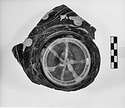
Ring foot; rilled rim, sloping inwards. Two raised rings on underside. Concave moulding on undersurface. Decoration on floor: small central circle, around this, band of enclosed ovules within palmettes; ... Ca. 430 B.C. |
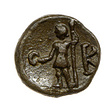
| Obverse: clear impression of a figure (soldier ?) in helmet, cuirass and tunic, standing holding a spear upright in his left hand, and a wreath extended in his right.
To the right, the letter K.
Reverse: ... 20 April 1939 ... Agora X, p. 96, pl. 22, no. L 97. |
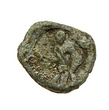
| Obverse: nude figure left, bent over at waist.
Reverse: plain. Pit.
Hellenistic sand fill. 1843 Leica ... 25 May 1939 ... Agora X, p. 97, pl. 22, no. |
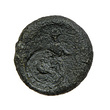
| Obverse: nude bearded male figure seated left on a ship.
In his upraised left hand, a cross-shaped object; his right arm outstretched. In the field, in front of his face, two small symbols: stars (?) ... 4 August 1947 ... Agora X, p. 97, pl. 22, no. |
| A little bent out of shape.
Obverse: standing draped figure.
Reverse: plain. Under "strosis 1" just east and N.E. of chamber tomb. 1538 Leica ... 1 June 1951 ... Agora X, p. 97, pl. 22, no. |
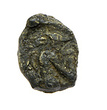
| Obverse: figure wearing petasos to right. Object in front: Herm or statue ?
Reverse: plain. Hole in bedrock at bottom of drain.
Hellenistic sand. 1763 Leica ... 23-24 May 1939 ... Agora X, p. 97, pl. 22, no. |
| Obverse: head and upper part of a small standing figure. The lower part obliterated by a countermark.
Reverse: plain. Cleaning sides of 100/N wall: in fill under wall. Leica ... 30 April 1947 ... Agora X, p. 97, pl. 22, no. |
| Intact save for hole in shoulder. Small low ring foot; narrow neck and mouth; the neck drawn in sharply just below small projecting lip; thick band handles, from neck below lip to top of shoulder.
Light ... 8 April 1937 ... Agora V, no. M 97, p. 93, pl. 22. |
Mended from many fragments, with missing pieces restored in plaster and painted, notable among them the left horizontal handle and part of the wall below it. Glaze fired greenish around left handle; abraded ... Ca. 430 B.C. |
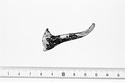
| Handle fragment.
Broken at both ends.
Part of long thin looping handle, indenting at point of juncture with body. Roughly oval in section. Ruddle along S.E. chapel wall. 5039 97-22-33, 97-22-(34), 97-22-(35) ... 15 July 1993 |
| The base is set off by an incised line.
Reddish unpainted clay.
Type XXVII of Corinth collection.
Mixed fill. Leica PD 1375-22 ... 19 April 1935 |
| Lower part of handle remains. Roundish in section.
Incised on outside:
Gritty buff clay. North of Tholos, west area, layer II. Second half 4th. c. 2323 Leica ... 18 May 1937 |
| Small fragments of rim missing; restored in plaster; foot chipped. Ring foot; flaring floor joining upper wall at an angle; out-curved rim.
Glaze red to black, somewhat peeled. Finished Well. 1763 Leica, ... June 1937
June 1938 |
| Clay: bright buff, hard and firm, retaining traces of oil on its inner surface. Another non-joining fragment added in 1934? East Stoa, from the filling behind the terrace wall, (Trench ι, north part, above ... October 1932 |
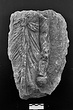
| Broken on all sides. Back rough-picked.
Head, feet and right arm missing of figure, which appears to be female holding some object, a situla, at end of hanging arm. Drapery focussed in knot on bosom ... 14 March 1932 |
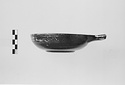
| Intact. Low ring foot with convex resting surface. Flat rim, sharply incurving. Horizontal handle attached at rim. Glazed black, with reserved resting surface, handle panel, and inside of handle. Stacking ... 19 July 1996 |
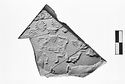
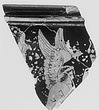
| Three joining fragments from side of an open, lidded pot, flanged to receive lid (pyxis?). Parts of three figures preserved, left to right: uncertain object; nude youth, right, with high wings; part of ... 17-24 May 1940 |
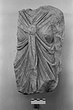
| Perhaps part of a relief, as indicated by the preserved rough-picked back. The figure, probably Isis, is preserved from the neck nearly to the knees; broken at both sides. The garment is drawn up in a ... Period of Hadrian. |
| Mended from three fragments. High ring foot flaring outward, with a sunken ring around its resting surface; flaring side wall. Around outside above foot, two sunken rings, beween them a wave pattern in ... 13 April 1934 |
|
|