|
|
| Bicknell, Studies in Athenian Politics and Genealogy, p. 88. Vanderpool, Hesperia, Suppl. VIII, p. 404. Fragments; New Names. Well. Fragmens; Possible Parts of Known Names, Restored Exempli Gratia. Group ... Agora 25 137 P 4904 P 14994 P 5510 P 28762 P 6208 P 17614 P 18223 P 17899 P 18234 P 17935 S 21:1 A 18-19:1 ... Fragments; New Names ... Fragmens; Possible Parts of Known Names, Restored Exempli Gratia |
| Xanthippos Ariphronos (Cholargeus). Pit. Boulter, Hesperia 32, 1963, p. 135, no. 37, pl. 51. Fragments. Fragments; New Names. Group E 1. Ostraka. Stamires and Vanderpool, pp. 379, 390, no. 33. Hesperia ... Agora 25 135 P 25979 P 31303 P 12531 P 17611 P 17791 P 17615 P 18221 P 17645 P 18222 P 18228 Q 20:1 A 18-19:1 ... Fragments ... Fragments; New Names |
| Fragments; New Names. Group E 1. Ostraka. Group E 12. Vanderpool, Hesperia, Suppl. VIII, p. 404. Group E 13. Semple Lectures II, p. 247, fig. 28. PA 5061. Vanderpool, Hesperia, Suppl. VIII, p. 403. Group ... Agora 25 136 P 18229 P 5917 P 18230 P 17222 P 18233 P 14 P 20416 P 23023 P 3664 A 18-19:1 H 12:14 ... Fragments; New Names |
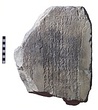
| Inscribed fragments.
Fragment ΕΛ 280 a), broken at left and below.
Anathyrosis at right. Cutting for T-clamp in top. Back smooth picked.
Stoichedon (lines 3 ff.)
Fragment ΒΔ 14 b), broken on all three ... 5th. century B.C ... Inscribed fragments.
Fragment ΕΛ 280 a), broken at left and below.
... Since the latter preserves, in lines 9-10, the last letters of two words, the beginnings of which are on our new fragment, and since the minimum amount of space in line 2 between Pandionidos and Leontidos can be estimated (ca. 0.17m. from "Ρ" to "Λ"), it is possible to ascertain the number of letter spaces on lines 9-10, and to make tentative restorations of names there which are attested (in the 4th. century B.C.) as from the tribe of Pandionis. These names "ΚΤΕΣΙΧΑΡΕΣ" and "ΦΕΙΔΟΣΤΡΑΤΟΣ" are of course, not the only possibilities.
|
| Either Hippokrates. Hyperbolos Antiphanous Perithoides. Kallias Didymiou. Kallias Kratiou (Alopekethen). Kallixenos Aristonymou Xypetaion. Kimon Miltiadou (Lakiades). Kleiboulos Nikodemou. Kleophon Kleippidou ... Agora 25 x ... Fragments ... Fragments; New Names ... Fragments; Parts of Names, Known or Unknown |
| Bradeen, D. W ... American School of Classical Studies at Athens ... This volume presents the funerary inscriptions found in the Athenian Agora between 1931 and 1968. In addition, all Agora fragments of the public casualty lists known in 1971 have been included, together ... 1974 ... In addition, all Agora fragments of the public casualty lists known in 1971 have been included, together with fragments associated with them but found elsewhere, although the latter are not discussed in full. ... The catalogue is arranged alphabetically by demotics and ethnics; the indexes include names, tribes, geographical names, significant Greek words, and Latin words. The author’s unparalleled familiarity with Attic funerary scripts enabled him to offer valuable chronological suggestions for otherwise undatable private monuments and his historical understanding gave new meaning to the public funerary monuments. |
http://agathe.gr/democracy/theater.html Theater Western drama was an Athenian invention which developed late in the 6th century B.C. out of the festivals celebrated in honor of the god Dionysos. Originally held in the Agora, the plays were soon ... The statuettes represented add new types to those known from the literary sources and enrich our picture of the Athenian theater during the 4th century. ... Listed are the names of the winning producers and playwrights for both comedy and tragedy. ... The Latin inscription, "Comedia Pylades," may refer to the names of the two actors represented. |
| Prichett, W.K. 1942. Greek Inscriptions, Hesperia 11, pp. 230-249. Prichett, W.K. 1946. Greek Inscriptions, Hesperia 13, pp. 138-165. Prichett, W.K. 1953. The Attic Stelai, Hesperia 22, pp. 225-311. Prichett, ... Agora 31 xvii ... Prichett, W.K. 1961. Five New Fragments of the Attic Stelai, Hesperia 30, pp. 23-29 ... Milne, Shapes and Names of Athenian Vases, New York 1935 |
http://agathe.gr/publications/monographs.html Monographs Excavations in the civic and cultural center of classical Athens began in 1931 and have continued almost without interruption to the present day. The first Athenian Agora volumes presenting ... With thousands of names from 700 years of administration listed, the dedications also provide a rich source for prosopographers. ... In addition, all Agora fragments of the public casualty lists known in 1971 have been included, together with fragments associated with them but found elsewhere, although the latter are not discussed in full. ... The catalogue is arranged alphabetically by demotics and ethnics; the indexes include names, tribes, geographical names, significant Greek words, and Latin words. |
http://agathe.gr/publications/picture_books.html Picture Books The Athenian Agora Picture Book series, started in 1951, aims to make information about life in the ancient commercial and political center of Athens available to a wide audience. Each booklet ... By linking the shapes of pots with their social functions, this book gives meaning to the ancient names, such as skyphos, olpe, kantharos, lekane, and hydria, that one encounters when visiting museums. ... Like fragments of overheard conversations, the thousands of informal inscriptions scratched and painted on potsherds, tiles, and other objects give us a unique insight into the everyday life of the Athenian Agora. ... This full-color guide sheds new light on the marble industry in and around the Agora, including rich evidence for sculptors’ workshops, their tools, and techniques. |
|
|
.png.icon.jpg)
.png.icon.jpg)
.png.icon.jpg)
.png.icon.jpg)
.png.icon.jpg)