|
|
| Commercial Unknown Conglomerate, Limestone Fair, foundations and east stylobate with column drums ... Mid 2nd B.C ... Site | By Area | South | Middle Stoa |
| Civic Unknown Limestone Fair, foundations and lower part of superstructure ... Late 6th. B.C. to 5th B.C ... Site | By Area | North | Royal Stoa |
| Commercial Unknown Poros Limestone, Marble Fair, foundations and stylobate ... 2nd A.D ... Southeast Stoa ... Southeast Stoa |
| Social, Military Display, Museum Peisianax Limestone, Some Marble Fair, foundations and parts of superstructure ... 500-450 B.C ... Site | By Area | North | Stoa Poikile |
| Unknown Unknown Miscellaneous Reused Material Poor, foundations only ... 1st A.D ... Site | By Area | North | Miscellaneous | Northeast Stoa |
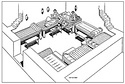
| Commercial, Civic Unknown Reused Material, Mudbrick Fair, foundations and walls up to a meter high ... 450-400 B.C ... South Stoa I ... South Stoa I |
| Possibly Commercial Unknown Conglomerate, Limestone Fair, foundations and parts of stylobate and back wall ... Mid 2nd B.C ... Site | By Area | South | South Stoa II |
| Commercial Attalos II of Pergamon Conglomerate, Limestone, Pentelic Marble, Hymettian Marble Fully Restored ... Ca. 150 B.C ... Stoa of Attalos ... Stoa of Attalos |
| Civic, Religious Unknown Pentelic Marble, Limestone Poor, foundations and fragments of superstructure ... 450-400 B.C ... Stoa of Zeus ... Stoa of Zeus |
http://agathe.gr/guide/royal_stoa.html Royal Stoa On the west side, lying just south of the Panathenaic Way, are the remains of the Royal Stoa (Stoa Basileios), one of the earliest and most important of the public buildings of Athens (Figs ... AgoraPicBk 16 2003: Royal Stoa |
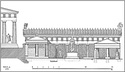
http://agathe.gr/guide/stoa_poikile.html Stoa Poikile Across modern Hadrian Street are the most recent excavations (2003), along the north side of the square. Here have been revealed the remains of another large stoa, identified on the basis ... Stoa Poikile Across modern Hadrian Street are the most recent excavations (2003), along the north side of the square. Here have been revealed the remains of another large stoa, identified on the basis of Pausanias as the Stoa Poikile (Painted Stoa). ... Cross section of the Stoa Poikile, with Doric columns outside, Ionic within; ca. 470–460 B.C. |
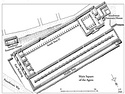
http://agathe.gr/guide/middle_stoa.html Middle Stoa The appearance of the south side of the Agora was radically changed during the 2nd century B.C. with the construction of several new buildings. This South Square, as it is called, was made ... AgoraPicBk 16 2003: Middle Stoa |
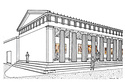
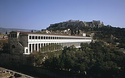
http://agathe.gr/overview/the_stoa_of_attalos.html The Stoa of Attalos The Stoa of Attalos was originally built by King Attalos II of Pergamon (159–138 B.C.), as a gift to the Athenians in appreciation of the time he spent in Athens studying under the ... The Stoa of Attalos The Stoa of Attalos was originally built by King Attalos II of Pergamon (159–138 B.C.), as a gift to the Athenians in appreciation of the time he spent in Athens studying under the philosopher Karneades. ... Oblique view of the Stoa of Attalos with the Acropolis in the background. ... The finished south end of the stoa at the time of the dedication. |
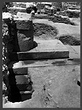
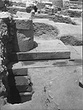
| East stylobate of the Middle Stoa: Column 4 (from the south end) ... Horizontal (normal) ... 29 Jun 1935 ... (Read Middle Stoa where South Stoa). |
| East stylobate of the Middle Stoa: Column 4 (from the south end) ... AMS Horizontal (normal) ... 29 Jun 1935 ... Site | By Area | South | Middle Stoa | Detailed Views ... Site | By Type | Stoas | Middle Stoa |
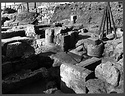
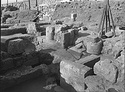
| East end of the Middle Stoa. Columns 2, 3, and 4 (from the south end) ... northeast Horizontal (normal) ... 29 Jun 1935 ... (Read Middle Stoa where South Stoa). |
| East end of the Middle Stoa. Columns 2, 3, and 4 (from the south end) ... AMS northeast Horizontal (normal) ... 29 Jun 1935 ... (Read Middle Stoa where South Stoa). |
http://agathe.gr/guide/south_stoa_ii.html South Stoa II South Stoa II ran westward from the south end of the East Building, parallel to the Middle Stoa (Figs. 38, 41). Dating to the second half of the 2nd century B.C., it consisted of a single ... AgoraPicBk 16 2003: South Stoa II |
http://agathe.gr/guide/south_stoa_i.html South Stoa I Measuring some 80 meters long, South Stoa I takes up much of the south side; its eastern end is the better preserved (Figs. 31, 32). It had a double colonnade, with sixteen rooms behind. It ... South Stoa I Measuring some 80 meters long, South Stoa I takes up much of the south side; its eastern end is the better preserved (Figs. 31, 32). ... Reconstruction of a dining room in South Stoa I, ca. 430–420 B.C. ... Aerial view of the east end of South Stoa I, ca. 430–420 B.C. |
http://agathe.gr/guide/stoa_of_attalos.html Stoa of Attalos Lining the east side of the Agora square is the Stoa of Attalos (Fig. 47), built during the reign of Attalos II of Pergamon (159–138 B.C.), who studied in Athens under the philosopher Karneades ... AgoraPicBk 16 2003: Stoa of Attalos |
|
|