|
|
Torus ring foot; horseshoe handles. Scraped line at junction of wall and foot. Reserved: underside with three circles and dot, and resting surface. Glaze unevenly fired and worn.
From the same deposit, ... 460-440 B.C ... From the same deposit, P 21404 Hesperia, XXII, 1953, pl. 38, 137. |
Torus ring foot; horseshoe handles. Scraped line at junction of wall and foot. Reserved: underside with circle and dot, and resting surface. Glaze peeled in parts.
Contemporary, P 21290 N 7:3 Hesperia, ... 470-460 B.C ... Contemporary, P 21290 N 7:3 Hesperia, XXII, 1953, pl. 38, 134; Archaeology, X, 1957, p. 195; from the same deposit, P 21894 Hesperia, XXII, 1953, pl. 29, 30. |
Duck askos. Deep bell mouth, low ring foot. Brownish buff clay, smooth surfacing; dull red glaze on rim, inside of mouth and over part of interior; a broad band around the foot.
For the bell mouth in ... Probably last quarter of 5th century ... For the bell mouth in black, cf. the globular lekythos, 1106, Pl. 38. |
Flaring ring foot; high strap handle concave on outer face. Glazed: upper half of neck, a line round the body at the handle-level, on the outer face of the foot below.
Two others are published from this ... Ca. 450 B.C ... Two others are published from this deposit: P 21920 Hesperia, XXII, 1953, pl. 32, 93 and P 21400 ibid., pl. 38, 133, a foot. |
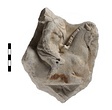
| Thin slab, back preserved, all edges broken.
Part of a man riding a horse to right. He wears a short chiton, over it a cuirass with lappets, and a short cloak, which waves in the breeze.
Pentelic marble ... 9 March 1937 ... Agora XXXV, no. 136, pl. 38. |
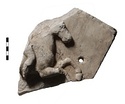
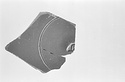
| Part of top, right edge and back preserved.
Forepart of prancing horse, with right leg of nude rider preserved.
In front of the horse, a hole pierced through the plaque, for attachment?
Pentelic marble ... 16 May 1939 ... Agora XXXV, no. 134, pl. 38. |
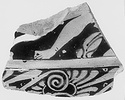
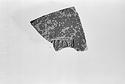
| Fragment from lower part; bottom of fragment, body of vase swells out: on it, part of an ornamental pattern with palmettes and coils is preserved. Above this, band formed by a groove, 0.005 wide, on which ... 13 February 1932 ... Agora XXX, no. 285, pl. 38. |
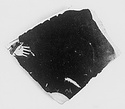
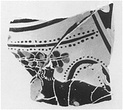
| From a bell or calyx krater. Shiny black inside. At the left, outstretched left hand, with drapery falling over the wrist.
Below to the right: ΘVΜ
Relief contours. A border, dark brown with two black ... 23 February 1935 ... Agora XXX, no. 284, pl. 38. |
| Mended at neck. Broad flat foot, projecting slightly; squat body. Very small lekythos.
Thin grayish-black to brown glaze, much peeled. Pocket in stereo (well). Leica, 82-25 ... 14 May 1932 ... Agora XII, no. 1138, pl. 38. |
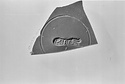
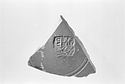
| Small piece from flat floor, with rectangular stamp, illegible:
Good red glaze inside and out, chipped inside.
Sigillata. Well in street of Roman Agora. 2771 Leica, 93-43-19 PD 1172-7 ... 5-6 August 1946 ... Agora XXXII, no. 670, pl. 38. |
| Mended from several fragments. Pieces from side and most of lip missing. Small ring base; squat body; rectangular shoulder; spreading neck; flat band handle. Groove on shoulder near edge. A couple of thin ... 11 May 1953 ... Agora XII, no. 1128, pl. 38. |
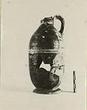
| Mended from many pieces; the mouth missing and fragments from the body. Deep body and widely flaring ring foot; moulded ring around neck; band handle rising from ring.
Deianeira.
Black glaze much worn ... 27 June-5 July 1947 ... Agora XII, no. 1098, pl. 38. |
| Fragment from the center of the floor of a bowl. Groove around floor.
At the middle, plantaform stamp: House A, room 3. Leica, 93-41-15 PD 1172-9 ... 29 march 1939 ... Agora XXXII, no. 665, pl. 38. |
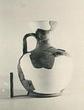
| Part of lip and much of walls missing; profile complete; restored in plaster. Small broad-shouldered globular jug on ring foot; narrow neck with handle-ridge; wide round bell mouth. Band handle, neck to ... 10 March 1939 ... Agora XII, no. 1107, pl. 38. |
| From the floor of a bowl; double groove around floor; stamp in center:
Graffito on bottom:
Western Sigillata. Brown gravelly fill. Leica, 93-41-2, 93-41-3 PD 1172-7 ... 1 April 1939 ... Agora XXXII, no. 662, pl. 38. |
| Black glaze over all. From graves on S.E. slope of Hill of the Muses, just south of city wall, just above Mouseion St., brought in by former workman. Leica ... 21 May 1946 ... Agora XII, no. 1135, pl. 38. |
| Two joining fragments from flat floor of a Sigillata bowl or plate. Within, incised circle and end of a stamp in planta pedis; the toes alone preserved.
Red-brown clay; sealing wax red glaze inside and ... 20 March 1948 ... Agora XXXII, no. 675, pl. 38. |
| Broken all around. About half of a foot-shaped stamp, broken lengthwise; a little of signature preserved:
Hard red clay and glaze; as Arretine.
Sigillata. Cutting Agora floor 2. 4301 Leica, 93-43-20 ... 15 May 1951 ... Agora XXXII, no. 676,pl. 38. |
| Mended from two pieces. Right upper corner of panel preserved. Wreathed, bearded head left, face missing; he wears himation. Red for beard, wreath and patterns on himation. Other patterns in white. Ivy ... 20 April 1955 ... Agora XXIII, no. 390, pl. 38. |
| Base and much of wall missing. Body approaches the spherical. Neck sharply set off both from shoulder and mouth. Fine buff clay, glazed on the inside and on the mouth outside, on the handle and over a ... 11 May 1935 ... Agora XII, no. 1109, pl. 38. |
|
|