|
|
Weinberg, Saul S ... American School of Classical Studies at Athens ... Hesperia 17.3 3 197-241 10.2307_146876 ... 1948 ... A Cross-Section of Corinthian Antiquities (Excavations of 1940) |
Amyx, Darrell A. Lawrence, Patricia ... American School of Classical Studies at Athens ... In the first section of this book, Amyx catalogues and discusses more than 200 fragments of Archaic Corinthian pottery with figure decoration, selected from those previously unpublished or inadequately ... 1975 ... In the first section of this book, Amyx catalogues and discusses more than 200 fragments of Archaic Corinthian pottery with figure decoration, selected from those previously unpublished or inadequately published. ... In the second section, Lawrence presents the contents of a well dug and filled in the Archaic period. ... The authors attribute a number of pieces to known and newly identified vase-painters. |
| Geagan, D ... The American School of Classical Studies at Athens ... This is the last of five volumes presenting inscriptions discovered in the Athenian Agora between 1931 and 1967. Published here are inscriptions on monuments commemorating events or victories, on statues ... 2009 ... Most are dated to between the 4th century B.C. and the 2nd century A.D., but a few survive from the Archaic and Late Roman periods. A final section contains monuments that are potentially, but not certainly, dedicatory in character, and a small number of grave markers omitted from Agora XVII. Each of the 773 catalogue entries includes a description of the object inscribed, bibliography, a transcription of the Greek text, and commentary. |
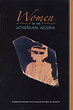
| Rotroff, S. I. Lamberton, R. D ... The American School of Classical Studies at Athens ... Using evidence from the Athenian Agora, the authors show how objects discovered during excavations provide a vivid picture of women’s lives. The book is structured according to the social roles women played—as ... 2006 ... Using evidence from the Athenian Agora, the authors show how objects discovered during excavations provide a vivid picture of women’s lives. The book is structured according to the social roles women played—as owners of property, companions (in and outside of marriage), participants in ritual, craftspeople, producers, and consumers. A final section moves from the ancient world to the modern, discussing the role of women as archaeologists in the early years of the Agora excavations. |
| Stroud, R. S ... American School of Classical Studies at Athens ... The first publication of a complex and well-preserved Athenian law of great interest to historians. Discovered in the Agora Excavations in 1986, this hitherto unknown law rivals in importance that of the ... 1998 ... The first publication of a complex and well-preserved Athenian law of great interest to historians. ... The first section of the volume includes an expert analysis of the layout of the inscription and useful notes, while the major portion of the text is devoted to detailed commentary on the law, its purpose, and implementation. The historical setting of the law is well-illuminated in the final section. The authors analyses of this important inscription provide a solid foundation for new avenues of research. |
| Wycherley, R. E ... American School of Classical Studies at Athens ... Here are presented all the ancient written references, both literary and epigraphical, to the Agora (including its environs) and its monuments. The introduction summarizes chronologically the authors cited, ... 1957 ... The texts are given in the original Greek or Latin, followed by a translation and a commentary. ... Many texts not given numbers in this order are included in the archaeological and topographical commentaries. Each section on a monument opens with a brief synopsis of the evidence contained in the texts which follow. |
Edwards, G. Roger ... American School of Classical Studies at Athens ... This report focuses on the pottery produced in Corinth in the Hellenistic period down to the time of that city's destruction by Mummius in 146 B.C. Imported pottery of the period, as well as Corinthian ... 1975 ... The material is arranged under Wheelmade Fine Ware, Coarse Ware, Blister Ware and Moulded Relief Ware, and is followed by a discussion of the deposits and their chronology. A special section is devoted to the fine ware decorated in West Slope style. |
| Rotroff, S ... American School of Classical Studies at Athens ... The second of two volumes on the Hellenistic fine ware unearthed in excavations in the Athenian Agora, this book presents the Hellenistic wheelmade table ware and votive vessels found between 1931 and ... 1997 ... An introductory section includes chapters devoted to fixed points in the chronology of the pottery, to a general discussion of the decoration of Hellenistic pots, both stamped and painted, or “West Slope,” and to the question of workshops. The author dedicates much of the text to a typology of Attic Hellenistic fine ware, carefully examining the origins, development, chronology, forms, and decoration of each shape. ... Especially important is the development of a chronological framework that builds upon and refines the author’s earlier work in this area. |
Hill, Bert H ... American School of Classical Studies at Athens ... The two springs in the Corinthian Agora, Peirene and the Sacred Spring, which were dug early in the excavation of Corinth, were studied in exhaustive detail for more than 40 years by Bert Hodge Hill as ... 1964 ... After introductory testimonia and identification, Peirene is described in its numerous periods (several Greek, seven Roman, Byzantine, and Modern) with a special section on Supply Tunnels and an analysis of paintings by Prentice Duell who did the watercolors from which the color plates were made. ... As Carl Blegen says in the preface, Here we see Bert Hill's searching methods, his logical mind at work, and his uncanny ability to deal with a complex problem. Although his final chronological conclusions are missing, his meticulous description, logical interpretation, convincing reconstruction, and evidence for relative chronology given in full detail are a worthy memorial to a great archaeologist. |
Bookidis, Nancy Stroud, Ronald S ... American School of Classical Studies at Athens ... A careful and detailed presentation of the architectural remains of the Sanctuary of Demeter and Kore on the slopes of Acrocorinth, beginning with the earliest traces of occupation in the Mycenaean period ... 1997 ... A careful and detailed presentation of the architectural remains of the Sanctuary of Demeter and Kore on the slopes of Acrocorinth, beginning with the earliest traces of occupation in the Mycenaean period and ending with the Late Roman cemetery. ... In the chapters on the architecture, arranged chronologically, the authors describe in detail the buildings found on each of the three terraces of the sanctuary, including the dining rooms, cooking and bathing facilities, and religious structures. A separate chapter discusses the elements of the Acrocorinth dining rooms and their place in the architecture of sacred dining. Extensively illustrated with section drawings and plans. |
|
|