|
|
| Introduction. Scope and Selection of Material. Howland, Agora, IV, p. 1. Classification and Arrangement. C. Grandjouan, Agora VI ... Agora 7 1 ... Howland, Agora, IV, p. 1 ... C. Grandjouan, Agora VI |
| Grandjouan, C ... American School of Classical Studies at Athens ... The volume contains a short introduction, a classification by types, a critical catalogue, a register of the dated contexts, concordances and indexes, and an excursus by T. B. L. Webster on the theatrical ... 1961 |
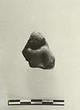
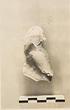
| Back missing, and broken off at neck.
Eyes pierced; hair hardly indicated.
Poor red glaze.
Buff clay.
ADDENDA: C. Grandjouan: From a plastic lamp. Well. Leica, LXIX-23 ... 30 May 1936 |
| A single fragment preserves head and torso of a child, probably part of a group.
Broken all around.
Traces of orange-red in depressions.
Buff clay.
ADDENDA: C. Grandjouan: Mother and child figurine. Well ... 4 May 1939 |
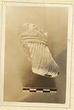
| First interpretation: A large foot in a shoe, decorated with grooves.
Pierced by two sets of vent holes.
Remains of red color.
ADDENDA: C. Grandjouan: A seated dog.
Late Roman. Cistern, bottom. 594, ... 10 April 1937 |
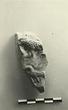
| Two animals in moderately high relief, on a heavy plaque.
Above, left, a spotted dog (?); below, a bird, eagle (?).
Late Roman.
ADDENDA: Part of scene: person with snakes, animals in field, Mithraic ... 7 February 1936 |
| Preserved is a helmeted head, facing right, and part of a plain back. Two finished edges at lower right.
Vent hole (?)
Traces of white and red paint.
Fine pinkish buff clay.
Part of a group (?)
ADDENDA: ... April-June 1936 |
| First interpretation: mold for figurine.
Mold for the lower part of a figurine of a seated type, perhaps similar to T 511. The corner of the mold preserved.
A knob of clay added on the exterior.
Light ... 25 February 1936 |
|
|
.png.icon.jpg)