|
|
| Classical dump at N/1,6-6/6,8.
Layer 14 in Early Trench E. A tremendously thick layer of dumped fill with ceramic contents ranging down through the second half of the 5th century and into very early years ... Late 5th c. (Early 4th c.) |
| Deposit of terracottas, molds and pottery in a shallow pit sloping downward from north to south. This deposit was located beneath a layer of fill under a Late Roman plaster floor (Lots ΒΕ 2093-2095). The ... 1st c. A.D. |
| Marcie Handler ... The contents of this Hellenistic cistern shaft were excavated in a series of layers: the preserved top of the shaft, six layers in the shaft and the fill within the tunnel. At the bottom of the shaft on ... POU: Mid-3rd c. BC
Dumped fill: after 225 BC |
| James Artz Pirisino Daniele Kylindreas Miltiades ... Excavation in Room 3 of ΒΘ West revealed 5 ceramic vessels in a row against the eastern face of Wall 12. 3 complete vessels (ΒΘ 122, 124, and 125) were catalogued, along with the base of a plain glazed ... 9th-11th c. A.D. |
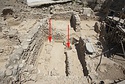
| Johanna Hobratschk ... South end of Byzantine Room J, adjacent to Pithos B and under St. Philip's st scarp. Built lining at the E and N side, roughly constructed of some large square blocks and slabs, smaller field stones of ... 21 July-3 August 2006
2011
28 June 2012-16 July 2012 |
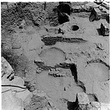
| Mike Laughy ... This pyre was found within an otherwise mostly sterile fill directly under a white floor surface in the southern section of Area IV. It was located ca. 0.50m. east of a similar deposit, Pyre J 2:25. The ... 4th c. B.C. |
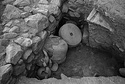
| Anne McCabe ... Adjacent to the SW face of Byzantine Wall 14. The circular cutting, 0.90m in diameter, appeared at 53.504m under a layer of loose rubble (Lot 481). Wall of the well roughly built, consisting at the top ... 11-19 July 2006
24 June-21 July 2009 |
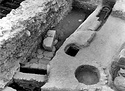
| The cistern was lined with stones at the top with an opening 0.80 m in diameter. For the most part, it seemed to cut into bedrock except along its northern edge where some 5th c. B.C fill remains and main ... 2-19 July 2010 |
|
|