|
|
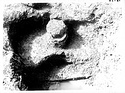
| Eugene Vanderpool ... Grave (adult female). (In some records as Grave XXXI).
The tomb was partly destroyed in antiquity; there are sherds of all periods down to Late Roman (and later) note din the fill immediately above it ... Middle Geometric I |
Well at 69/ΚΔ (Well G: PG, ELS).
Diameter 0.75m. Fairly but not perfectly evenly cut; no foot-holds in sides. Very little water gathered. The well produced a small amount of pottery, the bulk of it coming ... Protogeometric |
Filling of a well on the lower north slopes of the Areopagus, dug early in the 1st c. B.C. [construction fill]; in use into the the 2nd c. A.D.[well fill] (H Ms.) No apparent stratification.
Hellenistic ... 2nd c. A.D. |
Hellenistic construction fill mainly of amphoras used as packing between well tiles and bedrock. Estimated Grid ... 1st c. B.C. |
Estimated Grid ... 2nd c. A.D. |
Hellenistic Fill at 70/ΛΣΤ.
Fill in irregular hollow. Pottery resembles Sullan debris, but lack of late duoviri handles suggests deposit slightly predates the sack. Coins
6 March 1937 #1-#4 ... Late 2nd c. B.C. |
Appears to be use filling from 3rd c. A.D., pre-Herulian into 4th c. or later. Lined with tiles. Coins:
6 May 1937 #1-#2 (disintegrated) ... Early 3rd-early 6th c. |
Well at 73/ΜΓ.
The upper walls were of small stones but changed to tiles at a depth of ca. 12m which suggests that it perhaps was originally built in Late Roman times ... Byzantine |
|
|