|
|
Rodney S. Young ... (E.L. Smithson: Grave XXXVI:PG). Early fill over bedrock. No remains.
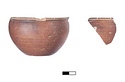
Two fragmentary unburned vases were found together on bedrock, beneath Roman and Byzantine fill. Disturbed earth over bedrock for several ... Early Protogeometric ... Disturbed earth over bedrock for several meters around them contained quantities of Early Iron Age pottery.
The excavator noted "cinders" among the Early Iron Age pottery in the fill in the immediate vicinity, which may further support the existence in the area of early tombs. |
| Marcie Handler ... Cist grave for two infants. The grave was cut into a sterile rocky layer on its southern and western sides, and a sterile fill layer on its northern and eastern sides. No obvious grave marker was present, ... Early Iron Age ... Early Iron Age |
| Late Geometric well ... Late Geometric ... Late Geometric Well |
No description in Deposit folders ... Geometric ... Geometric |
| Well O: EG. AS 875-878 ... Middle Geometric ... Middle Geometric |
Well P: EG ... Middle Geometric ... Middle Geometric |
Pocket of late Geometric pottery in bedrock behind Stoa Shop V; apparently a household deposit ... 750-700 B.C ... Late Geometric Pocket |
Burial disturbed. Located in Middle Stoa, north aisle, "upper trench", piers 3 and 4. Two individuals: small child (ca. 5 yrs. old) and adult female.
In its disturbed state the burial was found (at elevation ... First half of 7th c. B.C ... Late Geometric Burial |
| Dorothy Burr Thompson ... Grave 4 in notebook. (E.L. Smithson: Grave XLIV). No remains (not really a grave, note on p. 331).
Roughly rectangular patch of unworked fieldstones, measuring about 1.20x0.80m neatly laid on bedrock, ... 19-21 March 1932 ... The similarity of this feature to funerary deposit/ Q 8:12 in the cemetery along the south bank of the Eridanos, and in close proximity to Mycenaean and Early Iron Age graves, suggests that both deposits are funerary in nature. |
| Eugene Vanderpool ... Early Geometric grave (E.L. Smithson: Grave XXXIX) ... Late Protogeometric ... Early Geometric grave (E.L. |
| Rodney S. Young ... Grave 19 (In some records as Grave VIII). No remains, no burned matter or traces of burning.
JP
A small cutting with a single offering. The pit may have been for a simple child/infant inhumation, with ... Early Protogeometric ... The pit yielded no evidence of human remains, but a few small sherds were noted, one classified "Geometric" (not inventoried), suggested that this too, may have been a robbed Early Iron Age grave. |
| David Scahill ... Protogeometric/Early Geometric well under floors in Room 1, Classical Building II, on north side of south ashlar wall. See J 3:9 for the burial within this well.
Cf. Hesperia Suppl. 50 (2018), p. 106, ... 27 June 2001
17 July 2002 ... Protogeometric/Early Geometric well under floors in Room 1, Classical Building II, on north side of south ashlar wall. |
Well at 15/ΜΓ (Well E: PG, ELS). Supplementary filling around its top Small partly glazed one handler
Fragment of black figured kylix
Small protogemetric cup
Fragment of skyphos
Rim fragment of Large Open ... Protogeometric-6th - 5th c. B.C ... Geometric and Protogeometric Well |
Geometric Well on the west side, in the line of the Roman Panathenaic way; 3.70m below paving block of street that overhangs well. It was neatly cut, 1.05m. in diameter, but it was dug only to a depth ... Late Geometric, end of 8th century B.C ... Geometric Well in Panathenaic Way. |
RSY Grave A.
Under the Roman House with three rooms floored with mosaic near the southwest side of the area. The burial consisted of a pot laid on its side over the bedrock, presumably containing a child ... 7 August 1947 ... Pottery nondescript geometric, a little proto-geometric, discarded. |
| Located in Middle Stoa, west, south aisle, beneath pressure pipe (cf. A 4900). The siting of the well is remarkable in its proximity to Well I 13:3, also Geometric in date, which was found in 1968 only ... Second half of 8th c B.C ... Geometric Well in Middle Stoa |
Geometric Well under Rubble Wall of Predecessor.
Classical pit above a Geometric well with a small amount of pottery from the late 6th to the middle of the 4th c. B.C. Estimated Grid ... Late 8th century B.C ... Geometric Well under Rubble Wall of Predecessor.
Classical pit above a Geometric well with a small amount of pottery from the late 6th to the middle of the 4th c. |
Well east of Geometric Grave. The upper part collapsed into a pit, cut into by Middle Geometric grave I 18:1 and by a Byzantine wall. Some evidence for period of use; little pottery. At the top a few Geometric ... Early Protogeometric ... Well east of Geometric Grave. The upper part collapsed into a pit, cut into by Middle Geometric grave I 18:1 and by a Byzantine wall. ... At the top a few Geometric sherds, perhaps displaced from I 18:3. |
Geometric Well East of Stoa Room 10 Pottery mended May 1950, in two tins. Nothing discarded. Slight disturbance throughout became of proximity of Roman well (p. 1252). Estimated Grid ... 725-700 B.C ... Geometric Well East of Stoa Room 10 |
Geometric Well East of Stoa Room 4. Diameter 1.10m; narrows at bottom. Rough-cut, with irregular footholds north-south and east-west sides. Little water; no use fill Estimated Grid ... 725-700 B.C ... Geometric Well East of Stoa Room 4. |
|
|