|
|
| Agora Excavations
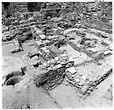
Season Summary 2015 ... John McK. Camp II ... Excavations were carried out in three areas: in Byzantine levels over the Painted Stoa in Section ΒΘ; at the north end and beneath the Classical Commercial Building in Section ΒΖ; and in Section ΟΟ in ... 8 Jun-31 Jul 2015 ... Excavations were carried out in three areas: in Byzantine levels over the Painted Stoa in Section ΒΘ; at the north end and beneath the Classical Commercial Building in Section ΒΖ; and in Section ΟΟ in the old excavations. |
| 1996 Excavation Summary ... John McK. Camp II ... Excavations were carried out in two areas: in early levels underneath the west end of the Middle Stoa, and in and around the Classical commercial building north of the Stoa Poikile. The result of the 1996 ... 10 Jun-2 Aug 1996 ... Excavations were carried out in two areas: in early levels underneath the west end of the Middle Stoa, and in and around the Classical commercial building north of the Stoa Poikile. |
| Preliminary Report on the 2013 Excavation Season ... John McK. Camp II ... Excavations were carried out in several areas, spanning Mycenaean to Byzantine times.
Full exploration in Section ΒΘ East was prevented since the Byzantine walls could not yet be removed, but a trial trench ... 10 Jun-2 Aug 2013 ... Excavations were carried out in several areas, spanning Mycenaean to Byzantine times.
... Fragmentary but high quality pottery of the Archaic period were found in numerous areas. Mycenaean pottery and scattered human bones indicate at least one Mycenaean tomb in the vicinity. |
| Report on the Agora Excavations May, 1947-April, 1948 ... Homer A. Thompson ... A report on the activities in the Athenian Agora during the period May 1947 to April 1948. The 1947 excavation lasted from March 10 to November 1. The efforts were concentrated on completing the exploration ... 10 Mar-1 Nov 1947 ... The efforts were concentrated on completing the exploration of areas that had already been opened up before The War, and in clearing a site for the Agora museum. The work was therefore confined to three areas: the southwest corner, the north slope of the Areopagus and the large area to the west of the Areopagus.
|
Excavation in the Athenian Agora: 1951 ... Homer A. Thompson ... A report on the 1951 excavations presented at the Open Meeting of the ASCSA, March 20, 1952.
Field work was concentrated in the market place proper, and large areas in the west, north central and southeastern ... 9 Apr-31 Aug 1951 ... Field work was concentrated in the market place proper, and large areas in the west, north central and southeastern parts were cleared down to the early Roman level.
|
| Agora Excavations 1997 Season Preliminary Report ... John McK. Camp II ... Excavations were carried out in two separate areas: under the Middle Stoa in the Agora square, and just north of the northwest entrance of the Agora. The excavations produced material covering a wide chronological ... 10 Jun-1 Aug 1997 ... Excavations were carried out in two separate areas: under the Middle Stoa in the Agora square, and just north of the northwest entrance of the Agora. |
| Agora Excavations 1995 Preliminary Report ... John McK. Camp II ... Excavations continued in the areas of the Panathenaic Way, west of the Stoa Poikile, and in and around the Classical commercial building north of the Stoa Poikile.
In the Panathenaic way the exploration ... 12 Jun-4 Aug 1995 ... Excavations continued in the areas of the Panathenaic Way, west of the Stoa Poikile, and in and around the Classical commercial building north of the Stoa Poikile.
|
| Preliminary Report on the 2005 Excavation Season ... John McK. Camp II ... Excavations were carried out in three sections in the summer of 2005: BZ, BH and Γ.
In section BZ, mostly Roman levels were excavated, dating from the 1st to the 5th centuries A.D. Much more of the north-south ... 13 Jun-5 Aug 2005 ... Eeast of the street, areas in line with the northern continuation of the commercial building to the south, were excavated.
|
|
|