|
|
| Agora Excavations
Season Summary 2015 ... John McK. Camp II ... Excavations were carried out in three areas: in Byzantine levels over the Painted Stoa in Section ΒΘ; at the north end and beneath the Classical Commercial Building in Section ΒΖ; and in Section ΟΟ in ... 8 Jun-31 Jul 2015 ... Excavations were carried out in three areas: in Byzantine levels over the Painted Stoa in Section ΒΘ; at the north end and beneath the Classical Commercial Building in Section ΒΖ; and in Section ΟΟ in the old excavations. |
| Section ΜΜ
Summaries for 1936 ... Homer A. Thompson ... Three main ancient features were excavated within Section ΜΜ: the North Stoa, the South Building and the ancient East-West Street passing between the two buildings. After the destruction of the buildings, ... 10 Feb-25 May 1936 ... Three main ancient features were excavated within Section ΜΜ: the North Stoa, the South Building and the ancient East-West Street passing between the two buildings. ... During Byzantine times, the area was covered with large buildings, presumably private houses. |
| Preliminary Report on the 1998 Excavation Season ... John McK. Camp II ... Most work this year was concentrated to a new area at the extreme northwest, where a modern building had been demolished. Fill from modern to Byzantine times were excavated. The principal feature uncovered ... 8 Jun-31 Jul 1998 ... Most work this year was concentrated to a new area at the extreme northwest, where a modern building had been demolished. Fill from modern to Byzantine times were excavated. ... The work in and around the Classical commercial building behind the Painted Stoa also continued. |
| Preliminary Report on the 2005 Excavation Season ... John McK. Camp II ... Excavations were carried out in three sections in the summer of 2005: BZ, BH and Γ.
In section BZ, mostly Roman levels were excavated, dating from the 1st to the 5th centuries A.D. Much more of the north-south ... 13 Jun-5 Aug 2005 ... Eeast of the street, areas in line with the northern continuation of the commercial building to the south, were excavated.
In section BH, the last of the Byzantine remains were cleared down to 10th century A.D. level.
... A large hoard of Athenian silver coins was discovered within the building. |
| Preliminary Report on the 2004 Excavation Season ... John McK. Camp II ... All the work during the season 2004 was concentrated on the northwest corner of the Agora north of the Panathenaic Way.
In BZ North, the last remains of Byzantine fills and walls were removed and Hellenistic, ... 7 Jun-16 Jul 2004 ... In BZ North, the last remains of Byzantine fills and walls were removed and Hellenistic, early Roman and late Roman fills were explored. ... In the building, further cleaning took place, revealing more of an early Roman structure. ... In Section ΒΗ, excavation of the Byzantine remains behind the Painted Stoa continued. |
| Report on Excavations in the Athenian Agora 1991 ... T. Leslie Shear, Jr ... This is a report on the archaeological field work conducted in the Athenian Agora during the period from December 1990 to December 1991. The actual excavation period was preceded by the demolition of a ... 10 Jun-9 Aug 1991 ... The actual excavation period was preceded by the demolition of a newly acquired building.
Excavations continued in the areas along the north side of Hadrian Street (sections ΒΖ and ΒΗ) and was started in the new area on Hastings Street (section ΒΕ).
... This new area revealed the Byzantine phases of a building just behind the stoa. The walls of the building follow the orientation of the Classical commercial building on the site. |
| Preliminary Report on the 2007 Excavation Season ... John McK. Camp II ... Excavation continued this year in the sections ΒΖ, ΒΗ and Γ.
In Section ΒΖ South, two areas were investigated: the north-south road and the areas west of the road. In the road, hard-packed gravel surfaces ... 13 Jun-3 Aug 2007 ... It seems to have been a building of at least six rooms/shops set side-by-side along the street. A draw-shaft and part of the tunnel of a Hellenistic cistern complex was found outside the building to the east. The tunnel may lead to a collapsed cistern located within the building itself.
In Section Γ, the excavation of the building identified as the Strategeion continued. |
| Preliminary Report on the 2008 Excavation Season ... John McK. Camp II ... Excavations took place in three sections, two north of Hadrian Street (ΒΗ and ΒΘ) and one in the old area south of the Tholos (Γ).
In Section ΒΗ, layers in, over and behind the building identified as the ... 10 Jun-1 Aug 2008 ... In Section ΒΗ, layers in, over and behind the building identified as the Painted Stoa were excavated to down below the middle Byzantine walls. The back wall and the interior colonnade were explored and detailed information about the building construction were gained. Behind the back wall a small fragment of a large terra cotta pipe was found in situ in middle Byzantine layers. Layers contemporary with the Stoa were not reached this season. |
| Agora 2019 - Summary Report ... John McK. Camp II ... Excavations were carried out in four sections: in Section ΝΝ in the southwest corner of the archaeological site, and in the northwest corner of the Agora in Sections ΒΖ, ΒΘ East and ΒΘ West.
Section ΝΝ ... 10 Jun-2 Aug 2019 ... In section ΒΘ West, work continued in the Byzantine levels above the Painted Stoa. ... They were probably part of a large building or monument which now lies under the scarp.
... The digging of an Archaic well was finished and the removal of a Middle Byzantine wall started. |
| Preliminary Report on the 2013 Excavation Season ... John McK. Camp II ... Excavations were carried out in several areas, spanning Mycenaean to Byzantine times.
Full exploration in Section ΒΘ East was prevented since the Byzantine walls could not yet be removed, but a trial trench ... 10 Jun-2 Aug 2013 ... Excavations were carried out in several areas, spanning Mycenaean to Byzantine times.
Full exploration in Section ΒΘ East was prevented since the Byzantine walls could not yet be removed, but a trial trench was opened in front of the Poikile Stoa. ... In Section ΒΘ West, the Middle Byzantine levels continued to be explored revealing more of the settlement found throughout the entire area north of Hadrian Street.
... In Section ΒΖ, early levels behind and under the Classical Commercial Building were investigated. |
| Preliminary Report on the 2010 Excavation Season ... John McK. Camp II ... Excavations took place in five sections: ΒΗ, ΒΘ, ΒΖ, Γ and Δ.
In Section ΒΗ, excavation continued and late fills overlying the Stoa Poikile were cleared. A good cross-section of the stoa foundations was ... 15 Jun-6 Aug 2010 ... Also recovered were fragments of a terracotta aqueduct running along the back wall of the Stoa. Two Byzantine wells within the interior of the building were left undug. ... In Section ΒΖ, excavations were concentrated on the northern parts of the Classical Commercial Building, in an attempt to clarify its plan and building history. ... In Section ΒΘ East, more walls of the Byzantine settlement were recovered. |
| AGORA 2022 - Preliminary Report ... John McK. Camp II ... The initial plan to excavate under the modern building at 14 St. Philip Street had to be postponed due to delayed demolition. Instead, excavations were carried out around and inside the Stoa Poikile.
In ... 14 Jun-5 Aug 2022 ... The initial plan to excavate under the modern building at 14 St. Philip Street had to be postponed due to delayed demolition. ... In ΒΘ East, Byzantine levels were excavated and more of several rooms were explored.
In ΒΘ West, Byzantine and Roman levels inside the western part of Stoa Poikoile were removed. |
| Section ΛΛ 193
Excavation Summary ... Dorothy Burr Thompson ... Excavations in Section ΛΛ revealed that the original contour of Kolonos Agoraios had been much sharper than in modern times. No traces of early graves were found in the area; first sign of habitation is ... 1 Feb-23 Jun 1937 ... In the early 3rd century the easternmost houses went out of use to leave space for the Hellenistic Building.
In the early Roman period a filling of large sherds covered most of the area, probably due to the general building activity of that period. ... In the Byzantine period blocks of houses were set over the whole area, and this settlement, when combined with those of ΜΜ and ΚΚ, present interesting material for the study of medieval Athens. |
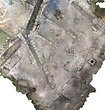
| Athenian Agora 2023: Preliminary Report ... John K. Papadopoulos Debby Sneed ... A summary of the first excavation season in Section ΒΚ, an area beneath a building demolished in the fall of 2022.
Prior the excavation a geophysical survey was undertaken.
Modern, Ottoman, and Byzantine ... 12 Jun-4 Aug 2023 ... A summary of the first excavation season in Section ΒΚ, an area beneath a building demolished in the fall of 2022.
... Modern, Ottoman, and Byzantine contexts were excavated and several features were revealed, such as foundation walls and pits. |
| Preliminary Report on the 1999 Excavation Season ... John McK. Camp II ... Most of the work this season was concentrated in the northern half of Section ΒΖ where the Byzantine levels were further explored. Street walls along both sides of the north-south road were revealed and ... 7 Jun-30 Jul 1999 ... Most of the work this season was concentrated in the northern half of Section ΒΖ where the Byzantine levels were further explored. ... In Section ΒΕ excavation continued in the Classical commercial building where another pyre was discovered. |
| Report on Excavations in the Athenian Agora 1990 ... T. Leslie Shear, Jr ... This is a report on the archaeological field work conducted in the Athenian Agora during the period from December 1989 to December 1990. The actual excavation period was preceded by preparatory operations ... 4 Jun-3 Aug 1990 ... The actual excavation period was preceded by preparatory operations including the demolition of a newly acquired building.
Excavations were carried out during nine summer weeks in two sections along the north side of Hadrian Street: ΒΖ (divided into north and south) and ΒΗ.
In section ΒΖ, Byzantine and and Roman fills were excavated. |
| Excavations in the Athenian Agora, 2024: Preliminary Report ... John K. Papadopoulos Debby Sneed ... A summary of the second excavation season in Section ΒΚ, in the area beneath the former building at 14 St. Philip Street.
The area was divided into three trenches and yielded mixed material from the Modern ... 10 Jun-2 Aug 2024 ... A summary of the second excavation season in Section ΒΚ, in the area beneath the former building at 14 St. Philip Street.
... Notable features from this season were walls in ΒΚ North from the Middle Byzantine period and pits from both ΒΚ West and South, the purpose and dating of which is still under investigation. |
| Agora Excavations Preliminary Report - Summer 2014 ... John McK. Camp II ... Excavations in 2014 were carried out in three sections: ΒΘ, ΒΓ and ΒΖ.
In Section ΒΘ, overlying the Painted Stoa, the Byzantine houses of the 11th century A.D. were further exposed in the western part ... 9 Jun-1 Aug 2014 ... In Section ΒΘ, overlying the Painted Stoa, the Byzantine houses of the 11th century A.D. were further exposed in the western part and two more pithoi were found. The eastern half was dug deeper; a pithos discovered at a lower level suggests an earlier phase of the Byzantine settlement. ... In Section ΒΖ, excavation continued in early layers in the area north of the Classical Commercial Building. A Mycenaean chamber tomb, collapsed in antiquity and cleaned out and filled in the late 8th century B.C., was partially excavated. |
| Section Φ Season of 1937 ... Eugene Vanderpool ... In antiquity the area included in Section Φ lay outside the Agora proper and were apparently occupied only by houses and small buildings. The earliest period of which any considerable remains were found ... 25 Jan-17 Jun 1937 ... A small building with polygonal limestone walls were cleared, its purpose uncertain. ... The most prominent feature is an apse. The building was destroyed in the 6th century A.D.
Numerous traces of dark age habitation were found, but few from the Byzantine period, and some from the Turkish period. |
| Preliminary Report on the 2012 Excavation Season ... John McK. Camp II ... Excavations were carried out in four areas during the 2012 season: three in the area of the Painted Stoa at the northwest corner of the Agora (sections ΒΗ, ΒΖ, ΒΘ), and one in the Panthenaic Way (section ... 11 Jun-3 Aug 2012 ... In section ΒΖ, excavation took place in the area beyond the Classical Commercial Building, mostly in late archaic fills. ... In section ΒΘ, in the eastern trench, excavation continued within several rooms of the Byzantine period; in the western trench, the upper part of Byzantine walls were exposed. |
| Preliminary Report on the 2002 Excavation Season ... John McK. Camp II ... Excavations continued in the northwest corner of the Agora (sections ΒΕ and ΒΖ) and in the Eleusinion area (ΕΛ), and a trial trench was opened up in the Panathenaic Way (Σ).
In section ΒΖ, the exploration ... 10 Jun-2 Aug 2002 ... In section ΒΖ, the exploration of the Byzantine settlement and the late Roman remains underneath them continued. Within the Byzantine walls some ancient blocks were found, several of them probably coming from funerary monuments. ... In section ΒΕ, various levels in, around and under the Classical Commercial Building were explored. |
| Athenian Agora
Excavation Summary for 2021 ... John McK. Camp II ... Excavations continued in sections ΒΖ and ΒΘ in and under the Classical Commercial Building, the Painted Stoa, and the orthostate enclosure suggested to be the Leokoreion.
In section ΒΖ the goal was to ... 14 Jun-6 Aug 2021 ... Excavations continued in sections ΒΖ and ΒΘ in and under the Classical Commercial Building, the Painted Stoa, and the orthostate enclosure suggested to be the Leokoreion.
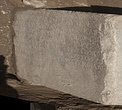
In section ΒΖ the goal was to find out more about the later Archaic remains, perhaps houses or shops, underlying the Classical building. Pottery of the 8th century B.C. and the discovery of another well suggest that the area was used for habitation in the Iron Age after centuries as a burial ground. ... In Section ΒΘ West, two trenches were opened to examine part of the floor of the Stoa Poikile beneath the late Byzantine houses. In the western trench, fragments of a Roman inscription were found. |
| Preliminary Report on the 2009 Excavation Season ... John McK. Camp II ... Excavations were conducted in four sections: Γ, ΒΘ, ΒΗ and ΒΖ.
In Section Γ, the investigation of the Classical buildings south of the Tholos continued with the aim to find out if they were civil, commercial ... 8 Jun-31 Jul 2009 ... These rooms were built in the 5th and 6th centuries, and were probably used as shops. The building went out use in the late 6th century. ... In section ΒΖ, the exploration of the Classical Commercial Building continued. It became clear that it was a building with a least six adjacent rooms in a row opening on to the street in front. ... Two more pyres were uncovered within the building. |
| Agora Volunteer Report 2017 ... John McK. Camp II ... Excavations took place in three sections, ΒΘ, ΒΖ and ΟΟ, covering a time span from the 14th century B.C. to the 12th century A.D.
In Section ΒΘ work continued in later layers over and in front of the Stoa ... 12 Jun-4 Aug 2017 ... In ΒΘ West, more of the remains of the Middle Byzantine settlement were explored; in ΒΘ East, deeper fills were excavated. ... In Section ΒΖ South, excavation of Room 4 of the Classical Commercial Building was completed, and more levels of the North-South Road were explored.
|
| Preliminary Report on the 2011 Excavation Season ... John McK. Camp II ... Excavations were carried out in three sections, two of them overlying the Painted Stoa (ΒΗ and ΒΘ) and one in the Panathenaic Way (ΒΓ).
In Section ΒΓ, excavations were concentrated on the Panathenaic Way ... 13 Jun-5 Aug 2011 ... In section ΒΘ, overlying the middle part of Painted Stoa, excavation continued in Byzantine levels. Remains of a settlement dating to the 11th and 12th centuries A.D. was uncovered. The building walls contain reused blocks, one of which comes from the Painted Stoa. |
| Preliminary Report on the 2001 Excavation Season ... John McK. Camp II ... Excavations were carried out at the northwest of the Agora in sections ΒΖ and ΒΕ, and in the area of the Eleusinion in section ΕΛ.
In Section ΒΖ, the investigation of the settlement of the 11th century ... 11 Jun-3 Aug 2001 ... The lowest floor levels of the buildings were excavated down into layers of the 7th to 9th centuries, exposing the Byzantine walls to their full depth and the upper parts of the late Roman walls beneath. ... In section ΒΕ, the work in the Classical shop building continued. Another Hellenistic pyre was found beneath the floor of one of the rooms. |
| ΚΚ Excavation Report 1936 ... Dorothy Burr Thompson ... Section ΚΚ, the area inside the modern fence around the so-called Theseion, was cleared to bedrock in order to determine the entire history of that portion of Kolonos Agoraios. Excavation revealed that ... 10 Feb-13 Mar 1936 ... A closed building, which purpose has not yet been determined, was set into the north side of the hill. ... Late Byzantine remains were scanty. |
|
|