|
|
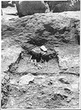
North rectangular stereo-cut pit.
Now Deposit E 19:5. Asterisk: E 18-19* ... North rectangular stereo-cut pit.
Now Deposit E 19:5 ... Asterisk: E 18-19* |
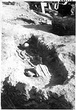
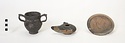
| Grave cut into bedrock (L. 2m, W. 0.58m), head toward E; offerings at south end. Skeleton of a male about 40 years old, laid out with knees slightly bent.
Brann. PD 434, PD 1058 ... 750-725 B.C ... Grave cut into bedrock (L. 2m, W. 0.58m), head toward E; offerings at south end. |
Rectangular shaft cut in rock with NE-SW orientation. Upper part of grave cut into fill over bedrock; this fill later swept away. Paving of small stones. Few human teeth and ribs.
(Dimensions: L. 1.62m, ... 725-200 B.C. |
| Cut in bedrock (P.L. 0.50m, W. 0.57m). Head at east, looking west; skull stood upright when found. Lower part of skeleton missing. PD 435 ... 750-725 B.C. |
North and South Rectangular Stereo-cut Rubbish Pits. These two adjacent rock-cut pits, of uncertain original purpose, were filled with deposits of rubbish evidently contemporary and probably dumped simultaneously, ... Second half of 5th c. B.C. |
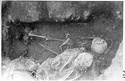
| Geometric Burial. Burial B in notebook.
Overlay E 14:13. Skeleton lay on smoothed bedrock, head southward, arms folded on chest, hands below chin. Legs, cut off by later disturbance, probably bent, with ... Late Geometric ... Overlay E 14:13. Skeleton lay on smoothed bedrock, head southward, arms folded on chest, hands below chin. Legs, cut off by later disturbance, probably bent, with raised knees.
|
| Pyre in cut in E-W street, layer 7 (Pyre 14). North edge of Piraeus street, west of the Great Drain Bridge, in the area west of Areopagus.
RSY-Pyre.
Pottery, a little burnt bone, and patches of charcoal ... 250-240 B.C ... Pyre in cut in E-W street, layer 7 (Pyre 14). |
Carefully cut in bedrock with firm footholds on either side. The use filling is represented by a few fragments of water jars (uninventoried), indicating a short period of use. The dumped filling, below ... Ca. 470-425 B.C. |
|
|