|
|
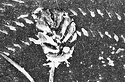
| Mended from three fragments; about three-quarters of the ring base preserved but none of the sides or rim of the dish, which shows a very faint upward curve toward the edges of the fragment. At the center, ... 4 April 1933 ... Hesperia 3 (1934), no. A 1, p. 316, fig. 2. |
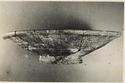
| A deep plate, or shallow bowl; mended from many pieces. Rather high ring foot; rounded rim.
Pinkish brown clay; poor glaze, most of which has peeled off. Well, in north cistern arm. Leica, 4-334 PD 346 ... 3 March 1934 |
| Mended from several fragments; most of one side missing. High ring foot; out-turned rim.
Wide hatched band around center, inside, enclosing four very small palmettes.
Attic clay. Silvery-gray glaze, ... 22 April 1932 |
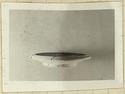
| Mended from two fragments; complete save for minor fractures.
Buff clay. Thin black glaze on the inside; the outside, and the rim with two grooves, unglazed. Well. Leica, 4-310 PD 347 ... 21 March 1933 |
|
|