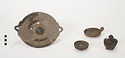
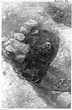
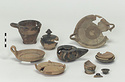
[Agora Deposit] G 19-20:1: House A, destruction debris

House A destruction debris over floors. All floors (rooms 1-7) dug in 1939. Re-examination of House A in 1967 (nbpp. 648 ff.). Coins: 27 February 1939 #5-#9 7 March 1939: #1 9 March 1939 #4-#6 11 March ... First half 3rd. c. A.D ... House A destruction debris over floors. ... Re-examination of House A in 1967 (nbpp. 648 ff.).

[Agora Deposit] A 20:2: Sacrificial Pyre

Grave over Drain A1 (House A) *Now A 18:9 (SIR). Asterisk: A 20:2* ... Grave over Drain A1 (House A) *Now A 18:9 (SIR) ... Asterisk: A 20:2*

[Agora Deposit] A 20:6: House fillings

Fills from construction and reconstruction of a house. "Brown House" = House A (RSY Hesp. 20) (and pit under Layer 4) in the industrial area west of the Areopagus. Under the original floor of this house ... Second half of the 5th. c. B.C ... Fills from construction and reconstruction of a house. "Brown House" = House A (RSY Hesp. 20) (and pit under Layer 4) in the industrial area west of the Areopagus. Under the original floor of this house were sherds including two red figured pieces (P 17137, P 19880). The filling of the floor levels of the house after its plan was changed and it was reconstructed yielded fragments of various coarse amphoras and black glazed table ware; four sherds incised with the letter kappa suggest that this is the initial of the owner of the house of the second period.

[Agora Deposit] A 20:9: Fillings

"South Triangle" abandonment filling over Brown House (House A) in the industrial area. Layers 1-3 and layer 4, to floor of second period. As late as the 3rd. c. B.C. but composed largely of earlier material ... 3rd c. B.C. and earlier ... "South Triangle" abandonment filling over Brown House (House A) in the industrial area. ... For fillings connected with construction and rebuilding of house, see A 20:6.

[Agora Deposit] A 18:8: Tiled shaft and pit

This shaft in the NE corner of House A, Room III, depth of one tile, is perhaps connected with drain A. Coins: 13 May 1940 #1-#13 14 May 1940 #2-#101 ... Early 3rd. c. B.C ... This shaft in the NE corner of House A, Room III, depth of one tile, is perhaps connected with drain A.

icon

[Agora Deposit] A 18:9: Sacrificial Pyre over Drain A1

Grave over drain A1 (House A). Date based on the fact that the lopas has the upturned handle and the flat rather than domed lid, not found in examples from the later pyres. LT West of House C. Pottery ... First half of 4th. c. B.c ... Grave over drain A1 (House A). Date based on the fact that the lopas has the upturned handle and the flat rather than domed lid, not found in examples from the later pyres. ... Construction of a Roman house had removed all trace of earlier structures here. ... Originally A 20:2. Published together with A 18:3 in Hesperia 47.

icon

[Agora Deposit] A 18:4: Mycenaean Pit Grave West of House N

Mycenaean grave to west of House N, room 5, with the burial of two young children. Rough rectangular cutting in soft stereo (0.95x0.64x0.28), lying under the western wall of a Geometric house, contained ... Myc. III C:1 ... Mycenaean grave to west of House N, room 5, with the burial of two young children. Rough rectangular cutting in soft stereo (0.95x0.64x0.28), lying under the western wall of a Geometric house, contained the doubled-up skeletons of two small children.

icon

[Agora Deposit] A 19:1: Sacrificial Pyre in House N

Pyre(?) in House N, S.W. Room. (=House C, Room 10) In room 10. Vessels from an earlier pyre were found dispersed in the makeup of the latest "floor" in the room, with tile fragments trodden into its surface ... First quarter of the 4th c. B.C ... Pyre(?) in House N, S.W. Room. (=House C, Room 10) In room 10. ... The pyre, however, is contemporary with the second phase of the house, and, if the beginning of the phase could be downdated a bit, could be connected with this reconstruction.

icon

[Agora Deposit] A 20:4: Pyre

A compact group of four complete vases and a lamp, found on a house floor; possibly the remains of a sacrificial pyre but without evidence of burning or the characteristic votive vases. Layer II, "nest ... 425-400 B.C ... A compact group of four complete vases and a lamp, found on a house floor; possibly the remains of a sacrificial pyre but without evidence of burning or the characteristic votive vases. ... The deposit dates near the end of the first phase of the house, but before the early-4th c. rebuilding. ... Neither burning nor bone is recorded (Young has not identified as pyre probably because of the early date, which would have made its burial after the abandonment of the house impossible).

icon

[Agora Deposit] A 18:3: Sacrificial Pyre in NN

Sacrificial pyre, disturbed; a small pyxis (P 14864) is close to that from B 18:4. First half of 4th. c. B.C., perhaps first quarter. West of House C. Pottery and cinders in pit in stratum. The pyre was ... First half 4th. c. B.C ... Sacrificial pyre, disturbed; a small pyxis (P 14864) is close to that from B 18:4. ... West of House C. Pottery and cinders in pit in stratum. ... Construction of a Roman house had removed all trace of earlier structures here.

icon

[Agora Deposit] A 20:3: Pyre

(RSY=Pyre 2). Pyre in the industrial area west of the Areopagus, in House B. In northern corner of room. No pit discerned. A deposit of small stones (a marker/) lay 0.30m above the level of the pyre, ... Third quarter of the 4th. century ... Pyre in the industrial area west of the Areopagus, in House B. In northern corner of room. No pit discerned. A deposit of small stones (a marker/) lay 0.30m above the level of the pyre, in turn covered by a 4th c. fill. ... Concentration of artifacts, a little bone, charred wood, cinders, and a "large sea shell" in stratum.

icon

[Agora Deposit] I 3:1: Well Under Room I of Byzantine House

A tile lined well under Room I of Byzantine House. A concrete shaft belonging to the mill cut off the top of the well and left in place 3 complete sets of tiles and most of a fourth set. All but the lowest ... 17-18 c. A.D ... A tile lined well under Room I of Byzantine House. A concrete shaft belonging to the mill cut off the top of the well and left in place 3 complete sets of tiles and most of a fourth set. All but the lowest set of tiles were cracked and pushed slightly out of alignment, as a result of subsequent construction.

[Agora Deposit] H 12:17: "Furnace" in House

From kiln in house of 7th c. B.C. (=Building A), to southeast of Tholos. Tholos Trench U, furnace ... 675-625 B.C ... From kiln in house of 7th c. B.C. (=Building A), to southeast of Tholos.

[Agora Deposit] D 18:6: A. Walker Coin Deposit in House C in ΟΟ

House C, Room 5, small hoard. Deposit created by A.W. and first appears in his thesis (Biblio. below). "Another small hoard or purse of Herulian date", A.Walker (1980), p. 127. Coins: 23 June 1947 #7-#13 ... Ca. 267 A.D ... A. Walker Coin Deposit in House C in ΟΟ

[Agora Deposit] D 17:20: A. Walker Coin Deposit in House F in ΟΟ

House F, room 4 below floor at -2.00m., fill 4. Deposit created by A.W. and first appears in his thesis (Biblio. below). Coins; 19 May 1949 #1-#16 Cf. coins from 17 June 1949 #1-#4 listed with lot OO 490 ... First quarter 2nd c A.D ... A. Walker Coin Deposit in House F in ΟΟ

[Agora Deposit] D 19:1: Cistern in House H in ΝΝ

Well in the industrial area west of the Areopagus. A flask-shaped cistern in House H with a dumped fill of the late fifth century brought from elsewhere and evidently deposited sometime in the 3rd c. B.C ... Ca. 420-400 B.C ... Well in the industrial area west of the Areopagus. A flask-shaped cistern in House H with a dumped fill of the late fifth century brought from elsewhere and evidently deposited sometime in the 3rd c.

[Agora Deposit] H 12:18: Archaic House

Archaic house with Distyle Porch (= Building J) in southeast of section: packing beneath floors (Layers a and b of Tholos Trench S.Layer b=Beneath original floor dated to ca. 500 B.C. Layer a=Between original ... 6th-early 5th c. B.C ... Archaic house with Distyle Porch (= Building J) in southeast of section: packing beneath floors (Layers a and b of Tholos Trench S.Layer b=Beneath original floor dated to ca. 500 B.C. Layer a=Between original and second floor dated to 490-480 B.C.

[Agora Deposit] L-M 17-18:1: Southwest House and Central House (1958)

Fillings associated with early houses on the lower north slopes of the Areopagus; various levels and dates. Both houses were built in the 6th century B.C. and destroyed by the Persians; both also have ... 6rd c. B.C.-3rd c. A.D ... Southwest House, Rooms I-VIII, 42-55/ΚΖ-ΜΖ: The earliest house had a court on the west with a Well (B) and two small rooms at the north. A pit at 54/ΛΓ (M 17:7) served the area and a good water pipe ... The latest period of the house is the Herulian destruction.

[Agora Deposit] B 15:5: Strosis

South House, Room 12, over pebble mosaic floor. Herulian destruction debris in a house. Coins: 29 April 1956 #1-#7 2 May 1956 #1-#3 9 May 1956 #1 26 May 1956 #1-#4 2 June 1956 #1-#4 PD 1350 ... 9 May 1956 ... South House, Room 12, over pebble mosaic floor. Herulian destruction debris in a house.

[Agora Deposit] B 18:6: Well in House T, Room 2W

A well in House T, Room 2W (Publ. House D), industrial area west of the Areopagus. Lower filling of dug bedrock including a small amount of pottery of the Geometric period. Gravelly filling in collapsed ... 3rd. quarter of 8th. c. B.C ... A well in House T, Room 2W (Publ. House D), industrial area west of the Areopagus. ... Gravelly filling in collapsed upper part of well shaft containing a few vases and fragments of the early 5th. c.; the filling in the well antedates the building of the house, shortly before the mid-century.

[Agora Deposit] C 19:4: Pit

Debris filling in a pit cut in bedrock at W side of House H, Room 10 ... Ca. 425-400 B.C ... Debris filling in a pit cut in bedrock at W side of House H, Room 10.

icon

[Agora Deposit] C 17:2: Pyre North of House G

North of House G (RSY=Pyre 13). Concentration of artifacts, small pieces of bone, and burnt material in stratum, no pit discerned. The pyre is cut by the trench of a wall of a Roman house to north. It ... 290-250 B.C ... North of House G (RSY=Pyre 13). ... The pyre is cut by the trench of a wall of a Roman house to north. It was found in digging "Hellenistic" fill; no further information about the stratigraphy or about the pottery from that fill is available. although the pyre was apparently not burnt in situ, the objects lay in a compact mass, not much disturbed, and they are mostly complete.

[Agora Deposit] H 12:8: Strosis

A strosis into which were set the foundations of house of 7th c. B.C. to SE of Tholos (=Building A and Trench W, layers h + i) ... 8th-7th c. B.C ... A strosis into which were set the foundations of house of 7th c. B.C. to SE of Tholos (=Building A and Trench W, layers h + i).

[Agora Deposit] B 21:17: Fill in House K

House K: Brown fill (publ. House U). Filling between terrace wall and house wall at the extreme west end of the Areopagus; a brown gravelly filling of early Roman date found here undisturbed but occurring ... Early Roman ... House K: Brown fill (publ. House U). Filling between terrace wall and house wall at the extreme west end of the Areopagus; a brown gravelly filling of early Roman date found here undisturbed but occurring also throughout this general vicinity, sometimes with later intrusions ... L 3709 (ΝΝ 460) recorded on deposit sheet and although from Terrace brown fill it is from a different grid.

[Agora Deposit] D 11:6: Hole ("Cistern") B

Pocket of soft fill in bedrock at corner of Late Roman house, with a hoard of lead tokens. No pottery catalogued. Herulian debris: cf. D 10:1, D 11:7 Coins: 25 May 1935 #8 Estimated Grid No pottery catalogued ... 25 May 1935 ... Pocket of soft fill in bedrock at corner of Late Roman house, with a hoard of lead tokens.

[Agora Deposit] C 19:5: House R Fillings

House R, fill under drain tiles and fillings associated with house K in industrial area, including what was C 19:15, plus C 19:16 and C 19:17. a) House built as dwelling in second half of 5th.c. b) Used ... Ca. 5th and 4th c. B.C ... House R, fill under drain tiles and fillings associated with house K in industrial area, including what was C 19:15, plus C 19:16 and C 19:17. a) House built as dwelling in second half of 5th.c. b) Used as marble-workers' shop from beginning of 4th. c. to near middle of century. Rebuilt as an industrial establishment about middle of 4th. c. c) Area built over in Hellenistic times. A small amount of material can probably be associated with the original period of the house (cont. 662) and at some points where the excavation was carried to bedrock pottery of the 6th c. was found.

icon

[Agora Deposit] B 19:3: Pyre in House C

Pyre in House C, Room 8 (RSY=Pyre 6). Near east corner of room 8. Artifacts, burnt bone, burnt sticks, and large cinders in a shallow pit dug into surface of layer 3, and covered by layer 2. Some cinders ... 350-325 B.C.-end of 4th c. B.C ... Pyre in House C, Room 8 (RSY=Pyre 6). ... Artifacts, burnt bone, burnt sticks, and large cinders in a shallow pit dug into surface of layer 3, and covered by layer 2. ... Organic material: "burned bones..found mostly together in a mass."

[Agora Deposit] J 15:1: Well

Well E (diameter 1.10-1.20m) just outside the northwest corner of the southwest Fountain House. Dug initially as a pit (J 15:2) partially covered by an early Roman wall ... Early 7th c. B.C ... Well E (diameter 1.10-1.20m) just outside the northwest corner of the southwest Fountain House. Dug initially as a pit (J 15:2) partially covered by an early Roman wall.

[Agora Deposit] C 19:9: Well in House R of Industrial Area West of Areopagus

Well in house R of industrial area west of the Areopagus. This well, originally tiled, was abandoned and filled at the time of the conversion of the house into a stone-cutters' workshop. Tiled well but ... Ca. 425-400 B.C ... This well, originally tiled, was abandoned and filled at the time of the conversion of the house into a stone-cutters' workshop. ... The well had been filled at once with a miscellaneous dump which contained some marble chips, a great many animal bones and some sawn-off ends of animal bones such as were found in House F and to the north of it, and a quantity of very fragmentary pottery of the late 5th c. ... In addition to P 18556 and P 18605, it produced 28 loomweights, a combination which suggests that some of the dowry of the lady of the house was thrown into the well.

icon

[Agora Deposit] B 19:6: Pyre in House N, Room 4

Pyre in House N, room 4 (RSY=Pyre 7), in the industrial area west of the Areopagus. Pottery, mall pieces of calcined bone, log, wood cinders, and charcoal in diamond-shaped pit in floor sequence. The pyre ... Late 4th-early 3rd c. B.C ... Pyre in House N, room 4 (RSY=Pyre 7), in the industrial area west of the Areopagus. ... The pyre came to light just below the surface of layer 4, with the pit going down into layer 5, the floor associated with phase 3 of the house. Layer 4 ran over the foundation of the wall between rooms 5 and 6; a layer of decayed mudbrick covered layer 4. The pyre seems to have been dug into layer 4, which was then patched and continued in use. A new floor was not laid, however, so the pyre may have been buried between the abandonment of the house and its collapse.

[Agora Deposit] Q 20:6: Disturbed Pyre

Greek House J, under room 8 of Roman House H. Typical though very fragmentary pyre pottery lay dispersed in a stratum over bedrock with pottery ranging from the 5th to the mid-3rd c. In same general area ... Early 4th c. B.C.? ... Greek House J, under room 8 of Roman House H. ... In same general area as pyre Q 20:4, it must come from a different, earlier pyre. If the early date is correct, it falls within the first phase of the house but cannot be related to a construction event.

icon

[Agora Deposit] B 18:2: Pyre in House C, Room 12

Pyre in House C, Room 12 (RSY=Pyre 9) in the industrial area west of the Areopagus. Notebook refers to House N. Beside west wall of room 12. Pottery, burnt bone, and cinders in a roughly round pit; disturbed ... Ca. 250 B.C ... Pyre in House C, Room 12 (RSY=Pyre 9) in the industrial area west of the Areopagus. Notebook refers to House N. Beside west wall of room 12. Pottery, burnt bone, and cinders in a roughly round pit; disturbed by Byzantine pit.

[Agora Deposit] H 11:2: Well in Tholos Trench Q

A well in room A of the Archaic House. Well with very irregular outline, cut down in the bedrock some 10m NE of the Tholos. Its filling yielded a handful of plain potsherds and the oinochoe P 13256 of ... Sub-Mycenaean(?) ... A well in room A of the Archaic House. ... Its filling yielded a handful of plain potsherds and the oinochoe P 13256 of an advanced Late Helladic III shape.

icon

[Agora Deposit] P 21:2: Well in East Colonnade of Roman House H

Well in East Colonnade of Roman House H. Diameter 0.80m, lined with field stones set in mortar. used as a cistern as well. No useful pottery dates. Capital from colonnade A 3866 and part of shaft found ... 29 July 1970 ... Well in East Colonnade of Roman House H. Diameter 0.80m, lined with field stones set in mortar. used as a cistern as well. ... Capital from colonnade A 3866 and part of shaft found at 2.50m-3.00m, indicating destruction of house (late 6th, 580's by Slavs). ... See also Q 21:4 from same house. Marble heads (S 2354-2356) deliberately discarded before house went out of use.

[Agora Deposit] B 19:4: Geometric Grave, RSY Grave A

RSY Grave A. Under the Roman House with three rooms floored with mosaic near the southwest side of the area. The burial consisted of a pot laid on its side over the bedrock, presumably containing a child ... 7 August 1947 ... RSY Grave A. Under the Roman House with three rooms floored with mosaic near the southwest side of the area. The burial consisted of a pot laid on its side over the bedrock, presumably containing a child. ... Pottery nondescript geometric, a little proto-geometric, discarded.

icon

[Agora Deposit] Q 20:4: Pyre in Room 8 of Roman House H

Pyre in Room 8 of Roman House H. Concentration of artifacts, bone, and flecks of carbon in stratum, no pit discerned. the pyre lay within a red fill apparently contemporary with it, but with some later ... 300-290 B.C ... Pyre in Room 8 of Roman House H. Concentration of artifacts, bone, and flecks of carbon in stratum, no pit discerned. the pyre lay within a red fill apparently contemporary with it, but with some later intrusions; no trace of a floor above it survives. The stratigraphy around the pyre could not be related to the architectural history of the house, though the date allows association with the reconstruction of the house near 300.

icon

[Agora Deposit] B 18:3: Pyre

Pyre in House T, Room 2 through floor of second period (RSY=Pyre 5) in the industrial area west of the Areopagus. 4th. c. BC. Concentration of artifacts, burnt bone, and charcoal in floor makeup consisting ... 375-350 B.C ... Pyre in House T, Room 2 through floor of second period (RSY=Pyre 5) in the industrial area west of the Areopagus. 4th. c. ... The pyre was partly covered by a pebble floor associated with phase 3 of the house, but the fill in which it was found cut through a floor associated with the second phase, and it predates the abandonment of the house substantially. The artifacts rest on a heavy layer of charcoal and ash, with burnt bone throughout, suggesting burning in situ.

icon

[Agora Deposit] F 5:2: Sacrificial Pyre under Room 18 in House 3

Grave V, under room 18 in House 3, plus burned deposit at 94/IΘ. Identified as sacrificial pyre by SIR on Agoraios Kolonos: In southeast corner of house 3. 35 artifacts, bone and charred material in pit, ... Ca. 300-275 B.C ... Grave V, under room 18 in House 3, plus burned deposit at 94/IΘ. Identified as sacrificial pyre by SIR on Agoraios Kolonos: In southeast corner of house 3. 35 artifacts, bone and charred material in pit, in floor sequence. The pottery and burnt deposit lay in the lowest 0.08m of the pit, which was filled with earth and topped with a broken tile. The pyre lay below two floors: a lower floor not closely datable and an upper floor with pottery largely of the 3rd c.

[Agora Deposit] H 12:20: Strosis

DBT note in Deposit Notebook: "Not a group in any strict sense, as numerous floors subject to confusion." Simon's House = House B; more than layer 7a. The page numbers and finds listed are an effort to ... 11 April 1954 ... DBT note in Deposit Notebook: "Not a group in any strict sense, as numerous floors subject to confusion." Simon's House = House B; more than layer 7a ... The page numbers and finds listed are an effort to put this "group" together; not really a defined closed deposit as much confusion between layer numbering and digging.

[Agora Deposit] K 16:1: Iron Waste Pit

"Iron Pit" beneath house 634/20 and in the upper part of a well. Coins: 22 April 1958 #1-#3 (illegible) 23 April 1958 #1 25 April 1958 #1 (illegible) ... 1st C. B.C ... "Iron Pit" beneath house 634/20 and in the upper part of a well.