|
|
| Sections Rho and Eta 1937 ... James H. Oliver ... Byzantine settlements in Sections Η and Ρ were removed and the foundations of the Temple of Ares exposed.
The most noticeable feature was the road serving as the main thoroughfare in the neighborhood from ... 24 Feb 1937 ... None of the superstructure of the temple is preserved in situ, but several fragments were found built into late walls or in otherwise unimportant fills. |
| Preliminary Report on the 2004 Excavation Season ... John McK. Camp II ... All the work during the season 2004 was concentrated on the northwest corner of the Agora north of the Panathenaic Way.
In BZ North, the last remains of Byzantine fills and walls were removed and Hellenistic, ... 7 Jun-16 Jul 2004 ... In BZ North, the last remains of Byzantine fills and walls were removed and Hellenistic, early Roman and late Roman fills were explored. A gap in the archaeological record between the late Hellenistic/early Roman to late Roman periods was discovered. ... Various walls representing several buildings and phases were exposed. |
| Preliminary Report on the 2001 Excavation Season ... John McK. Camp II ... Excavations were carried out at the northwest of the Agora in sections ΒΖ and ΒΕ, and in the area of the Eleusinion in section ΕΛ.
In Section ΒΖ, the investigation of the settlement of the 11th century ... 11 Jun-3 Aug 2001 ... The lowest floor levels of the buildings were excavated down into layers of the 7th to 9th centuries, exposing the Byzantine walls to their full depth and the upper parts of the late Roman walls beneath. ... In section ΕΛ, the area just south of and uphill from the Eleusinion was excavated, along the east face of the late Roman fortification wall. Some pottery fragments from the time of the wall's construction were found, but for most part a thick layer filled with fragmentary pottery from the late 3rd and early second centuries B.C. was excavated. |
| Preliminary Report on the 2003 Excavation Season ... John McK. Camp II ... Excavations in 2003 were carried out largely in the northwest corner of the Agora known as Section BZ. The area was divided into two parts: the north-south road and areas to the west, and east of the road ... 13 Jun-25 Jul 2003 ... The main topographical feature was the north-south street which divided the area in two parts with late Roman walls on both sides of the street. ... A new area of excavation was opened up to the east (north part of Section ΒΗ) and medieval walls were revealed.
|
| Sections Ε, Ν, Η 1952 ... Homer A. Thompson ... Mycenaean graves were excavated in section Ε.
Section Ν was disturbed by late pits, bothroi and walls. Excavation was carried out through Roman levels. The area seemed to have been leveled out and raised ... 4 Mar-31 May 1952 ... Section Ν was disturbed by late pits, bothroi and walls. ... Work in section Η was confined to cleaning in and around the large late Roman building covering most of the section. |
| Preliminary Report on the 2008 Excavation Season ... John McK. Camp II ... Excavations took place in three sections, two north of Hadrian Street (ΒΗ and ΒΘ) and one in the old area south of the Tholos (Γ).
In Section ΒΗ, layers in, over and behind the building identified as the ... 10 Jun-1 Aug 2008 ... In Section ΒΗ, layers in, over and behind the building identified as the Painted Stoa were excavated to down below the middle Byzantine walls. The back wall and the interior colonnade were explored and detailed information about the building construction were gained. ... A rubble wall may represent a late blocking of the interior colonnade, relatively common in the late Roman period.
... Mostly late fills were dug but the top of Byzantine walls came to sight in some places, as was large worked blocks that may have come from one or several Classical buildings.
|
| Section Φ Season of 1937 ... Eugene Vanderpool ... In antiquity the area included in Section Φ lay outside the Agora proper and were apparently occupied only by houses and small buildings. The earliest period of which any considerable remains were found ... 25 Jan-17 Jun 1937 ... A small building with polygonal limestone walls were cleared, its purpose uncertain. ... It was destroyed in the late 3rd century A.D. Two Roman wells were excavated, as well as a late Roman tomb. A late Roman building covered almost the whole section and was probably part of the great complex of late Roman buildings that covered most of the center of the Agora. |
| Section Χ 1937 ... Margaret Crosby ... The area signified as Section Χ lays outside the Agora proper and no signs of any public buildings were found. The area seems to have been used for private houses from the end of the 6th c. B.C. Apart ... 25 Jan-18 May 1937 ... Apart from few scattered sherd from the Geometric period, the earliest remains indicating habitation were two graves of the late 6th or early 5th c. ... No traces of walls of the Hellenistic period had survived but two wells and four cisterns show the existence of private houses in the area during this period.
A house of the Roman period was revealed in the central region of the section. A late Roman well was partly excavated.
|
| Excavations in the Athenian Agora, 2024: Preliminary Report ... John K. Papadopoulos Debby Sneed ... A summary of the second excavation season in Section ΒΚ, in the area beneath the former building at 14 St. Philip Street.
The area was divided into three trenches and yielded mixed material from the Modern ... 10 Jun-2 Aug 2024 ... The area was divided into three trenches and yielded mixed material from the Modern to Late Roman periods. Notable features from this season were walls in ΒΚ North from the Middle Byzantine period and pits from both ΒΚ West and South, the purpose and dating of which is still under investigation. |
| Preliminary Report on the 2009 Excavation Season ... John McK. Camp II ... Excavations were conducted in four sections: Γ, ΒΘ, ΒΗ and ΒΖ.
In Section Γ, the investigation of the Classical buildings south of the Tholos continued with the aim to find out if they were civil, commercial ... 8 Jun-31 Jul 2009 ... Byzantine pottery started to emerge by the end of the season. No walls were reached but was seen in the scarps. In the eastern part of section ΒΘ, rubble walls, presumably of modest houses of the 10th century A.D., were uncovered. ... The rubble walls dividing the stoa into rooms were also removed. |
| Preliminary Report on the 2007 Excavation Season ... John McK. Camp II ... Excavation continued this year in the sections ΒΖ, ΒΗ and Γ.
In Section ΒΖ South, two areas were investigated: the north-south road and the areas west of the road. In the road, hard-packed gravel surfaces ... 13 Jun-3 Aug 2007 ... To the west, Hellenistic and Classical levels were excavated, and a pyre buried under a floor was exposed, dating to the late 4th or early 3rd century B.C.
... Excavation in other fills went down to late 8th and early 7th centuries B.C. ... In Section BH, the last of the 10th/11th century walls and other Byzantine installations were cleared and excavation continued into late Roman fills. |
| Athenian Agora
Excavation Summary for 2021 ... John McK. Camp II ... Excavations continued in sections ΒΖ and ΒΘ in and under the Classical Commercial Building, the Painted Stoa, and the orthostate enclosure suggested to be the Leokoreion.
In section ΒΖ the goal was to ... 14 Jun-6 Aug 2021 ... In Section ΒΘ West, two trenches were opened to examine part of the floor of the Stoa Poikile beneath the late Byzantine houses. ... In the area further east, rubble walls of the late Roman period and other disturbances have destroyed most of the original stoa floor.
|
| Preliminary Report on the 2011 Excavation Season ... John McK. Camp II ... Excavations were carried out in three sections, two of them overlying the Painted Stoa (ΒΗ and ΒΘ) and one in the Panathenaic Way (ΒΓ).
In Section ΒΓ, excavations were concentrated on the Panathenaic Way ... 13 Jun-5 Aug 2011 ... It seems that the well was part of the latest face of the use of the Stoa in the late Roman period when inner walls were built to create rooms probably used as shops.
... The building walls contain reused blocks, one of which comes from the Painted Stoa. |
| Preliminary Report on the 2002 Excavation Season ... John McK. Camp II ... Excavations continued in the northwest corner of the Agora (sections ΒΕ and ΒΖ) and in the Eleusinion area (ΕΛ), and a trial trench was opened up in the Panathenaic Way (Σ).
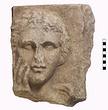
In section ΒΖ, the exploration ... 10 Jun-2 Aug 2002 ... In section ΒΖ, the exploration of the Byzantine settlement and the late Roman remains underneath them continued. Within the Byzantine walls some ancient blocks were found, several of them probably coming from funerary monuments. ... A well from the late 6th to early 5th century B.C. was excavated, and while scraping bedrock, a marble portrait head was discovered. |
| Agora Excavations 1995 Preliminary Report ... John McK. Camp II ... Excavations continued in the areas of the Panathenaic Way, west of the Stoa Poikile, and in and around the Classical commercial building north of the Stoa Poikile.
In the Panathenaic way the exploration ... 12 Jun-4 Aug 1995 ... The exploration of the levels overlying the Classical commercial building continued and more of the walls of the third room from the south were found along with a cement lined basin. ... West of Stoa Poikile, the clearing of a late Archaic well was completed. |
| Preliminary Report on the 2010 Excavation Season ... John McK. Camp II ... Excavations took place in five sections: ΒΗ, ΒΘ, ΒΖ, Γ and Δ.
In Section ΒΗ, excavation continued and late fills overlying the Stoa Poikile were cleared. A good cross-section of the stoa foundations was ... 15 Jun-6 Aug 2010 ... In Section ΒΗ, excavation continued and late fills overlying the Stoa Poikile were cleared. ... In Section ΒΘ East, more walls of the Byzantine settlement were recovered. Several walls contained reused ancient blocks. |
| Agora Volunteer Report 2017 ... John McK. Camp II ... Excavations took place in three sections, ΒΘ, ΒΖ and ΟΟ, covering a time span from the 14th century B.C. to the 12th century A.D.
In Section ΒΘ work continued in later layers over and in front of the Stoa ... 12 Jun-4 Aug 2017 ... In Section ΒΖ North, some walls were dismantled and a lion’s head spout was recovered. Late archaic levels produced more ostraka and a rare sample of reeds came out of 5th century B.C fills. |
| Agora Excavations Preliminary Report - Summer 2014 ... John McK. Camp II ... Excavations in 2014 were carried out in three sections: ΒΘ, ΒΓ and ΒΖ.
In Section ΒΘ, overlying the Painted Stoa, the Byzantine houses of the 11th century A.D. were further exposed in the western part ... 9 Jun-1 Aug 2014 ... Reused blocks, of which some may be associated with the Painted Stoa, were recovered from the walls. A fragment of an inscribed opisthographic stele turned out to be part of the records of the Poletai.
... A Mycenaean chamber tomb, collapsed in antiquity and cleaned out and filled in the late 8th century B.C., was partially excavated. |
| Section X
Miscellaneous Notes Compiled in Summer of 1946 ... Margaret Crosby ... This report is a summary of the excavations taken place in 1937 as well as in 1946.
Some pottery indicate habitation in the area from the Geometric period. Two shallow graves of the 6th and 5th centuries ... 27 May-21 Jun 1946 ... No traces of walls and floors from the 4th-5th centuries B.C. were found, but cisterns, wells, and drain trenches give clear indication of continuous habitation.
... Roman House A was excavated and four rooms were revealed.
A late Roman well was partly excavated. |
| Preliminary Report on the 2012 Excavation Season ... John McK. Camp II ... Excavations were carried out in four areas during the 2012 season: three in the area of the Painted Stoa at the northwest corner of the Agora (sections ΒΗ, ΒΖ, ΒΘ), and one in the Panthenaic Way (section ... 11 Jun-3 Aug 2012 ... In section ΒΖ, excavation took place in the area beyond the Classical Commercial Building, mostly in late archaic fills. ... In section ΒΘ, in the eastern trench, excavation continued within several rooms of the Byzantine period; in the western trench, the upper part of Byzantine walls were exposed. |
|
|