|
|
| Excavations in the Athenian Agora, 2024: Preliminary Report ... John K. Papadopoulos Debby Sneed ... A summary of the second excavation season in Section ΒΚ, in the area beneath the former building at 14 St. Philip Street.
The area was divided into three trenches and yielded mixed material from the Modern ... 10 Jun-2 Aug 2024 ... A summary of the second excavation season in Section ΒΚ, in the area beneath the former building at 14 St. Philip Street.
The area was divided into three trenches and yielded mixed material from the Modern to Late Roman periods. Notable features from this season were walls in ΒΚ North from the Middle Byzantine period and pits from both ΒΚ West and South, the purpose and dating of which is still under investigation. |
| Section Υ: 1958 Excavation Report ... Dorothy Burr Thompson ... Two areas at the north foot of the Areopagus were uncovered. The first area did not yield much of interest due to modern disturbances. Excavations of a well, three pits and a water channel produced however ... 3 Mar-3 May 1958 ... Two areas at the north foot of the Areopagus were uncovered. ... Some traces of the West Street running north-south with a water-channel underneath, appeared. ... They were modest houses and built approximately at the same time, probably shortly after 479 B.C. |
| Report on Excavations in the Athenian Agora 1991 ... T. Leslie Shear, Jr ... This is a report on the archaeological field work conducted in the Athenian Agora during the period from December 1990 to December 1991. The actual excavation period was preceded by the demolition of a ... 10 Jun-9 Aug 1991 ... The close relation of the two structures suggest that the river was canalized at the same time as the foundation of the stoa was laid.
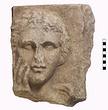
Work continued west of the Stoa Poikile in the area of the early Roman temple which was added to the Sanctuary of Aphrodite Ourania in the Augustan period. South of the sanctuary, at the edge of the Panathenaic Way, two complete stelai, used as cover slabs over a small drain, were discovered.
|
| Preliminary Report on the 2001 Excavation Season ... John McK. Camp II ... Excavations were carried out at the northwest of the Agora in sections ΒΖ and ΒΕ, and in the area of the Eleusinion in section ΕΛ.
In Section ΒΖ, the investigation of the settlement of the 11th century ... 11 Jun-3 Aug 2001 ... Excavations were carried out at the northwest of the Agora in sections ΒΖ and ΒΕ, and in the area of the Eleusinion in section ΕΛ.
... The lowest floor levels of the buildings were excavated down into layers of the 7th to 9th centuries, exposing the Byzantine walls to their full depth and the upper parts of the late Roman walls beneath. ... In section ΕΛ, the area just south of and uphill from the Eleusinion was excavated, along the east face of the late Roman fortification wall. |
|
|