|
|
| Section E; N; H; 1952. Section E; Mycenaean Graves. Section N; General Stratification. Section N; Early Deposits. Section N; Early Roman Period. Section N; Gymnasium Apse. Section N; Sixth Century A.D ... 1952 Excavations Ε, Η, Ν ... Section E; N; H; 1952 ... Section H; Monument Bases ... Section H; Archaic Altar |
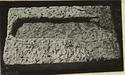
| Complete. Corner block from the plinth of a large monument. Finished on two adjacent sides with a cyma reversa. In top a shallow bedding, apparently for a colossal left foot.
Hard gray poros.
(Consider ... 2 September 1964 |
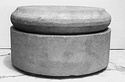
| A small fragment of the torus missing; minor chips; otherwise intact.
The base consists of a lower member, on which rests a torus, cut from the same block. The middle section of the torus is worked horizontally ... 11 August 1949 |
| Inscribed fragments of base.
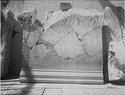
Six joining and several (uninscribed) non-joining fragments of a large base, the top smoothed, and the two sides; back and bottom broken.
Finished along the top (front and ... 17 November 1936 |
| Illustrations. Illustrations; Figure. Plan; Distribution of Finds Relevant to the Eleusinian Cult. Plan of Akropolis and Adjacent Areas. Section A-A'. Plan; 6th Century B.C. Restored. Temple; Actual-State ... Agora 31 ix ... Section A-A' ... Section Key ... Section H-H'; Fill around Temple; East |
http://agathe.gr/democracy/tyranny.html Tyranny As happened in many other Greek states, a tyrant arose in Athens in the 6th century B.C. His name was Peisistratos, and after several unsuccessful attempts he seized power in 546 B.C. and ruled ... Fragment Of an inscription, about 425 B.C. H.: 0.15 m. W.: 0.195 m. ... Attributed to the Gela Painter. H.: 0.265 m. Athens, Agora Museum P 24106. ... Inscribed bases from the shrine survive and have been found near the Olympieion, so it is assumed that the altar was in that area. |
|
|

.png.icon.jpg)