[Agora Webpage] Birth of Democracy: Sokrates

http://agathe.gr/democracy/sokrates.html

Sokrates The philosopher Sokrates was one of many Athenians critical of the people and their control over affairs of state. His probing public debates with fellow citizens led to his trial for impiety ... Sokrates The philosopher Sokrates was one of many Athenians critical of the people and their control over affairs of state. ... After his trial in 399 B.C., recorded in Plato's Apology, Sokrates was executed in this manner. ... Only one statue of Sokrates is recorded in ancient literature.

icon

[Agora Image] 2004.01.1185 (HAT 78-32)

Sokrates drinking hemlock ... comparative material ... 1978 ... Sokrates drinking hemlock.

icon

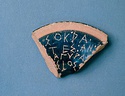
[Agora Image] 2000.02.0030 (Slide Sheet: 17:19)

Ostrakon of Sokrates Anagyrasios ... Horizontal (normal) ... 1 Jun 2000 ... Ostrakon of Sokrates Anagyrasios.

icon

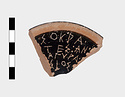
[Agora Image] 2012.74.0944 (84-11-21)

Ostrakon of Sokrates Anagyrasios ... AMS Horizontal (normal) ... 1984 ... Ostrakon of Sokrates Anagyrasios

icon

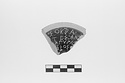
[Agora Image] 2012.02.7489

Ostrakon of Sokrates Anagyrasios ... Angelique Sideris ... Museum object. Stoa Gallery-Case No. 30. Horizontal (normal) ... 21 Mar 2012 ... Ostrakon of Sokrates Anagyrasios.

icon

[Agora Image] 2000.02.0741 (Slide Sheet: 44:18)

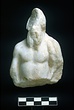
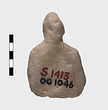
Marble statuette. Sokrates(?). Pentelic marble. Front view ... Cf. 2007.10.0088 Horizontal (normal) ... 1 Jun 2000 ... Marble statuette. Sokrates(?). Pentelic marble.

icon

[Agora Image] 2000.02.0742 (Slide Sheet: 44:19)

Marble statuette. Sokrates(?). Pentelic marble. Front view ... Horizontal (normal) ... 1 Jun 2000 ... Marble statuette. Sokrates(?). Pentelic marble.

icon

[Agora Image] 2012.02.4523

Upper part of marble statuette, poosibly Sokrates ... Angelique Sideris ... Museum object. Stoa Gallery-Case No. 4. Horizontal (normal) ... 2 Mar 2012 ... Upper part of marble statuette, poosibly Sokrates.

icon

[Agora Image] 2012.02.4524

Upper part of marble statuette, poosibly Sokrates ... Angelique Sideris ... Museum object. Stoa Gallery-Case No. 4. Horizontal (normal) ... 2 Mar 2012 ... Upper part of marble statuette, poosibly Sokrates.

icon

[Agora Image] 2012.02.4525

Upper part of marble statuette, poosibly Sokrates ... Angelique Sideris ... Museum object. Stoa Gallery-Case No. 4. Horizontal (normal) ... 2 Mar 2012 ... Upper part of marble statuette, poosibly Sokrates.

icon

[Agora Image] 2012.02.4522

Upper part of marble statuette, possibly of Sokrates ... Angelique Sideris ... Museum object. Stoa Gallery-Case No. 4. Horizontal (normal) ... 2 Mar 2012 ... Upper part of marble statuette, possibly of Sokrates.

icon

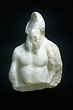
[Agora Image] 2007.10.0088 (LCT-141)

Fragmentary marble statuette possibly of Sokrates, 4th century B.C ... Craig Mauzy ... Horizontal (normal) ... Fragmentary marble statuette possibly of Sokrates, 4th century B.C.

icon

[Agora Image] 2004.01.1189 (HAT 81-33)

Marble statuette from the State Prison possibly representing Sokrates ... Horizontal (normal) ... 1981 ... Marble statuette from the State Prison possibly representing Sokrates.

[Agora Object] SS 6846: Stamped Amphora Handle: Parmeniskos Group

Large part of rim preserved. Sokrates group. Cistern. Ποσεί (δ)ι̣ππος̣ 181, Leica ... 22 February 1937 ... Large part of rim preserved. Sokrates group.

icon

[Agora Object] P 20325: Ostrakon of Sokrates Anagyrasios

Fragment from the base of a thick-stemmed black glaze kylix. The upper edge of the vertical face of the foot, and the resting surface, reserved. Complete ostrakon. Incised underneath: Σοκρά/τες: Αν/αγυρά/σιος ... 12 August 1949 ... Ostrakon of Sokrates Anagyrasios

[Agora Object] SS 273: Stamped Amphora Handle: Parmeniskos Group

Broken before curve; resembles Knidian. Rather micaceous, burnt brown at surface. Left end of the impression broken away; lower part chipped away. "Sokrates Group". Εὐγε[ί(των)] Leica ... 15 March 1932 ... Left end of the impression broken away; lower part chipped away. "Sokrates Group".

[Agora Object] SS 298: Stamped Amphora Handle: Parmeniskos Group

Broad, curves down close to neck. Coarse, greyish-red clay, traces of light slip, yellow at surface. Impression set close to neck; doubled; worn. "Sokrates Group". Dim: W 0.04* Stp: doubled* Φορ̣μ̣ί̣ ... 31 March 1932 ... Impression set close to neck; doubled; worn. "Sokrates Group".

[Agora Object] SS 275: Stamped Amphora Handle: Parmeniskos Group

Broad; broken before curve. Rather coarse, micaceous clay; pinkish-buff, grey at core. Right end of the impression broken away; doubled. "Sokrates Group". Dim: W 0.044 ca* Stp: doubled* Near surface, ... 15 March 1932 ... Right end of the impression broken away; doubled. "Sokrates Group".

icon

[Agora Object] T 313: Male Head

Bearded, bald head. Chips missing from brow, beard, left cheek, and back of head. No trace of attachment ot body. Handmade, but skilfully deeply modelled with engraving tool. No certain traces of paint ... 1 June 1932 ... ADDENDA: Head of Silen or Sokrates. Eyeballs modelled.

icon

[Agora Publication Page] Agora 25, s. 119, p. 101

Sokrates Anagyrasios. Hesperia 19, 1950, p. 337, pl. 105 c. Semple Lectures II, p. 245, fig. 9. PA 13102. APF, p. 497. FGH 324 F 38. Spintharos Eu[ ]. PA 12855. PA 5369. Phalanthos Spintharou. Melanthios ... Agora 25 101 P 20325 P 4736 ... Sokrates Anagyrasios

[Agora Webpage] AgoraPicBk 16 2003: Royal Stoa

http://agathe.gr/guide/royal_stoa.html

Royal Stoa On the west side, lying just south of the Panathenaic Way, are the remains of the Royal Stoa (Stoa Basileios), one of the earliest and most important of the public buildings of Athens (Figs ... Here, inscribed copies of the full law code of Athens were on display, the annual oath of office was administered to all those about to serve the democracy (Fig. 63), and Sokrates was indicted for impiety in 399 B.C. ... Actual state plan of the Royal Stoa. [Sokrates speaks]: "I must now present myself at the Stoa Basileios to answer the indictment of Meletos, which he has brought against me."

[Agora Webpage] AgoraPicBk 16 2003: Boundary Stones and House of Simon the Cobbler

http://agathe.gr/guide/boundary_stones_and_house_of_simon_the_cobbler.html

Boundary Stones and House of Simon the Cobbler Inscribed marble posts were used to mark the entrances to the Agora wherever a street led into the open square. Two have been found in situ, inscribed with ... Diogenes Laertius records that Sokrates, when he wished to meet with those pupils too young to enter the Agora, would meet them at the shop of Simon the cobbler, which lay near the square. The evidence is circumstantial, but we may well have here the remains of one of Sokrates’ informal classrooms.

icon

[Agora Publication Page] Agora 25, s. 31, p. 13

Aristeides Lysimachou Alopekethen. Hippokrates Alkmeonidou Alopekethen. Kallixenos Aristonymou Xypetaion. Megakles Hippokratous Alopekethen. Themistokles Neokleous Phrearrios. Hipparchos Charmou (Kollyteus) ... Agora 25 13 ... Sokrates Anagyrasios

icon

[Agora Publication Page] Agora 25, s. 24, p. 6

Candidates of the 480's. Kallias Kratiou (Alopekethen). Phalanthos Spintharou. Kallixenos Aristonymou Xypetaion. Phileas Derketou. Kleiboulos Nikodemou. Spintharos Eu[ ]. Kritias Leaidou. Teisandros Isagorou ... Agora 25 6 ... Sokrates Anagyrasios

icon

[Agora Publication Page] Agora 25, s. 25, p. 7

The Ostraka. Definition and Identification. Group E 1. Aristeides Lysimachou Alopekethen. Megakles Hippokratous Alopekethen. Themistokles Neokleous Phrearrios. Charias Ph[ ]dou. Onomastos Konthyleus. Kleiboulos ... Agora 25 7 ... Sokrates Anagyrasios

icon

[Agora Publication Page] Agora 26, s. 111, p. 85

Dio 47.39.2. Seneca, Suasoriae 1.6-7. Sokrates of Rhodes, apud Athenaios 4.148 B-C. Zonaras 10.23. Raubitschek 1946, pp. 146-150. Cerfaux and Tondriau, pp. 300-301. IG II² 1034, lines 22-23. Raubitschek ... Agora 26 85 ... Sokrates of Rhodes, apud Athenaios 4.148 B-C

[Agora Webpage] AgoraPicBk 16 2003: Southwest Area

http://agathe.gr/guide/southwest_area.html

Southwest Area - Industry and Houses Leaving the area of the boundary stone, one can head southwest up a valley leading toward the Pnyx, meeting place of the Athenian assembly. Here are the complex remains ... It has been suggested that this might be the State Prison (desmoterion), where Sokrates and others convicted of political crimes were executed.

icon

[Agora Publication Page] Agora 25, s. 10, p. x

Either Hippokrates. Hyperbolos Antiphanous Perithoides. Kallias Didymiou. Kallias Kratiou (Alopekethen). Kallixenos Aristonymou Xypetaion. Kimon Miltiadou (Lakiades). Kleiboulos Nikodemou. Kleophon Kleippidou ... Agora 25 x ... Sokrates Anagyrasios

[Agora Webpage] Birth of Democracy: State Religion

http://agathe.gr/democracy/state_religion.html

State Religion: The Archon Basileus There was no attempt in Classical Athens to separate church and state. Altars and shrines were intermingled with the public areas and buildings of the city. A single ... The stoa was the setting for events that led to the trial and death of Sokrates in 399 B.C. ... Preliminary arguments were held in the Royal Stoa, as we learn from Plato, quoting Sokrates: "Now I must present myself at the Stoa of the Basileus to answer the indictment which Meletos has brought against me" (Theatetos 201D) Photograph of the Lithos, or Oath Stone, late 6th century B.C.

icon

[Agora Publication Page] Agora 11, s. 203, p. 184

Peleus and Thetis. Repairs to sculpture in antiquity. Peplos in archaistic sculpture. Perirrhanteria in the form of archaistic korai. Retrograde inscriptions. Persephone. Re-use of sculpture in antiquity ... Agora 11 184 ... Sokrates

[Agora Webpage] Birth of Democracy: Women

http://agathe.gr/democracy/women.html

The Unenfranchised I - Women Numerous people resident in Athens and Attica had little part in the political life of the state. Most glaring by modern standards was the exclusion of women, although a similar ... After all, Sokrates sometimes visited her, bringing along his pupils, and his cose friends took their wives to listen to her -- although she ran an establishment which was neither orderly nor respectable, seeing that she educated a group of young female companions to become courtesans.

[Agora Webpage] Overview: The Archaeological Site

http://agathe.gr/overview/the_archaeological_site.html

The Athenian Agora The Agora of Athens was the center of the ancient city: a large, open square where the citizens could assemble for a wide variety of purposes. On any given day the space might be used ... It is during this “Classical” period that the Agora and its buildings were frequented by statesmen such as Themistokles, Perikles, and Demosthenes, by the poets Aeschylos, Sophokles, Euripides, and Aristophanes, by the writers Thucydides and Herodotos, by artists such as Pheidias and Polygnotos, and by philosophers such as Sokrates, Plato, and Aristotle.