icon

[Agora Report] 1953 Κ

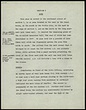
Section Κ 1953 ... Eugene Vanderpool ... Excavations was carried out in the building fill in the area south of the Middle Stoa, and in the area between the South Stoa and the Fountain House. Work was also done to the porch of the Fountain House ... 23 Feb-30 Jul 1953 ... Excavations was carried out in the building fill in the area south of the Middle Stoa, and in the area between the South Stoa and the Fountain House. Work was also done to the porch of the Fountain House. A Late Roman cistern was cleared and three wells were dug.

icon

[Agora Report] 2022 Excavations

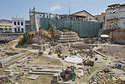
AGORA 2022 - Preliminary Report ... John McK. Camp II ... The initial plan to excavate under the modern building at 14 St. Philip Street had to be postponed due to delayed demolition. Instead, excavations were carried out around and inside the Stoa Poikile. In ... 14 Jun-5 Aug 2022 ... In ΒΘ West, Byzantine and Roman levels inside the western part of Stoa Poikoile were removed. A reused Ionic column base was found, and more of the lowest step of the façade of the stoa was revealed. ... In collaboration with the A’ Ephoreia, an exhibition with drawings of Athens in the early nineteenth century was mounted on the upper floor of the Stoa of Attalos.

icon

[Agora Report] 2021 Excavations

Athenian Agora Excavation Summary for 2021 ... John McK. Camp II ... Excavations continued in sections ΒΖ and ΒΘ in and under the Classical Commercial Building, the Painted Stoa, and the orthostate enclosure suggested to be the Leokoreion. In section ΒΖ the goal was to ... 14 Jun-6 Aug 2021 ... In Section ΒΘ West, two trenches were opened to examine part of the floor of the Stoa Poikile beneath the late Byzantine houses. In the western trench, fragments of a Roman inscription were found. In the area further east, rubble walls of the late Roman period and other disturbances have destroyed most of the original stoa floor.

icon

[Agora Report] 2004 Excavations

Preliminary Report on the 2004 Excavation Season ... John McK. Camp II ... All the work during the season 2004 was concentrated on the northwest corner of the Agora north of the Panathenaic Way. In BZ North, the last remains of Byzantine fills and walls were removed and Hellenistic, ... 7 Jun-16 Jul 2004 ... In BZ North, the last remains of Byzantine fills and walls were removed and Hellenistic, early Roman and late Roman fills were explored. ... In the building, further cleaning took place, revealing more of an early Roman structure. ... In Section ΒΗ, excavation of the Byzantine remains behind the Painted Stoa continued.

icon

[Agora Report] 1991 Excavations

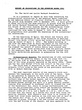
Report on Excavations in the Athenian Agora 1991 ... T. Leslie Shear, Jr ... This is a report on the archaeological field work conducted in the Athenian Agora during the period from December 1990 to December 1991. The actual excavation period was preceded by the demolition of a ... 10 Jun-9 Aug 1991 ... It became clear that the Stoa Poikile was laid out to follow the coarse of the river. ... Work continued west of the Stoa Poikile in the area of the early Roman temple which was added to the Sanctuary of Aphrodite Ourania in the Augustan period. ... The third mayor area excavated was just north of the Stoa Poikile.

[Agora Report] 1951 Excavations

Excavation in the Athenian Agora: 1951 ... Homer A. Thompson ... A report on the 1951 excavations presented at the Open Meeting of the ASCSA, March 20, 1952. Field work was concentrated in the market place proper, and large areas in the west, north central and southeastern ... 9 Apr-31 Aug 1951 ... A report on the 1951 excavations presented at the Open Meeting of the ASCSA, March 20, 1952. Field work was concentrated in the market place proper, and large areas in the west, north central and southeastern parts were cleared down to the early Roman level. New topographical discoveries were made, among them a temple of the early Roman period, and new information was gained regarding previously known monuments such as the Peribolos of the Twelve Gods, the Temple of Ares and the Middle Stoa. ... A number of chamber tombs and individual graves from the 16th to the 10th centuries B.C. were explored.

icon

[Agora Report] 1951 Ζ

Section Ζ 1951 ... Homer A. Thompson ... The remaining pieces of the so-called Byzantine wall were removed, as well as a late Roman wall. Excavations in front of the Civic Offices revealed a hard road surface from the 3rd century A.D. More than ... 21 May-13 Jun 1951 ... The remaining pieces of the so-called Byzantine wall were removed, as well as a late Roman wall. Excavations in front of the Civic Offices revealed a hard road surface from the 3rd century A.D. ... The northwest corner of the Middle Stoa was further examined.

icon

[Agora Report] 2018 Excavations

Summary Report - Agora 2018 ... John McK. Camp II ... Excavations were carried out in Sections ΒΘ, ΒΖ and Ω. In Section ΒΘ the investigations continued in the area in front of and above the Stoa Poikile. In ΒΘ East, built into a late structure, a large inscribed ... 11 Jun-3 Aug 2018 ... In Section ΒΘ the investigations continued in the area in front of and above the Stoa Poikile. ... Also, the foundations of the southwest corner of the Stoa Poikile, which had been backfilled, were exposed. ... As part of clearing and restoration by the ephoreia in Section Ω, excavations took place around a large Roman house of the 4th century A.D., mostly in the area of a mosaic from the 2nd century A.D.

icon

[Agora Report] 2011 Excavations

Preliminary Report on the 2011 Excavation Season ... John McK. Camp II ... Excavations were carried out in three sections, two of them overlying the Painted Stoa (ΒΗ and ΒΘ) and one in the Panathenaic Way (ΒΓ). In Section ΒΓ, excavations were concentrated on the Panathenaic Way ... 13 Jun-5 Aug 2011 ... Excavations were carried out in three sections, two of them overlying the Painted Stoa (ΒΗ and ΒΘ) and one in the Panathenaic Way (ΒΓ). ... It seems that the well was part of the latest face of the use of the Stoa in the late Roman period when inner walls were built to create rooms probably used as shops. ... The building walls contain reused blocks, one of which comes from the Painted Stoa.

icon

[Agora Report] 2019 Excavations

Agora 2019 - Summary Report ... John McK. Camp II ... Excavations were carried out in four sections: in Section ΝΝ in the southwest corner of the archaeological site, and in the northwest corner of the Agora in Sections ΒΖ, ΒΘ East and ΒΘ West. Section ΝΝ ... 10 Jun-2 Aug 2019 ... In some parts of the area the bottom of the Byzantine house walls were reached to just a few centimetres above the floor level of the stoa. In section ΒΘ East excavations continued in front of the Painted Stoa. The Roman basin set into the western corner of an enclosure, the possible Leokorion, was cleared.

icon

[Agora Report] 2010 Excavations

Preliminary Report on the 2010 Excavation Season ... John McK. Camp II ... Excavations took place in five sections: ΒΗ, ΒΘ, ΒΖ, Γ and Δ. In Section ΒΗ, excavation continued and late fills overlying the Stoa Poikile were cleared. A good cross-section of the stoa foundations was ... 15 Jun-6 Aug 2010 ... A good cross-section of the stoa foundations was exposed. Also recovered were fragments of a terracotta aqueduct running along the back wall of the Stoa. ... A Hellenistic cistern was recovered in the area behind and north of the stoa. Fragments of painted wall plaster were found within it.

icon

[Agora Report] 2025 Excavations

Excavations in the Athenian Agora, 2025: Preliminary Report ... John K. Papadopoulos Debby Sneed ... The 2025 excavation is the third excavation season in the ΒΚ section, divided into three trenches: ΒΚ North, ΒΚ South, and ΒΚ West, and covers the central part of the Stoa Poikile. The excavation practices ... 9 Jun-1 Aug 2025 ... The 2025 excavation is the third excavation season in the ΒΚ section, divided into three trenches: ΒΚ North, ΒΚ South, and ΒΚ West, and covers the central part of the Stoa Poikile. ... Noteworthy was the discovery of an in situ block of the toichobate of Stoa Poikile, during the excavation of an Ottoman or later Pit in ΒΚ West. ... The study of pottery revealed that only Byzantine, Ottoman, and Early Modern pottery came from closed stratified deposits, whereas Greek and Roman period pottery came from disturbed contexts.

icon

[Agora Report] 1992 Excavations

Report on Excavations in the Athenian Agora 1992 ... T. Leslie Shear, Jr ... This is a report on the archaeological excavations in the Athenian Agora during 1992. The investigations continued in two areas: on the south side of Hastings Street and along the north side of Hadrian ... 8 Jun-7 Aug 1992 ... The investigations continued in two areas: on the south side of Hastings Street and along the north side of Hadrian Street. In ancient times the latter area lay at the northwest corner of the Agora; the former lay north of the market square along the street leading out of the Agora. ... Three large pithoi were found in one of the rooms. A well, first used in the Roman period and then reused in the Byzantine period ,was dug and produced a large number of finds, amongst them a herm head from the Classical period.

icon

[Agora Report] 2008 Excavations

Preliminary Report on the 2008 Excavation Season ... John McK. Camp II ... Excavations took place in three sections, two north of Hadrian Street (ΒΗ and ΒΘ) and one in the old area south of the Tholos (Γ). In Section ΒΗ, layers in, over and behind the building identified as the ... 10 Jun-1 Aug 2008 ... Excavations took place in three sections, two north of Hadrian Street (ΒΗ and ΒΘ) and one in the old area south of the Tholos (Γ). ... A rubble wall may represent a late blocking of the interior colonnade, relatively common in the late Roman period. ... In Section Γ, the exploration of some small buildings of the Classical period continued.

icon

[Agora Report] 2007 Excavations

Preliminary Report on the 2007 Excavation Season ... John McK. Camp II ... Excavation continued this year in the sections ΒΖ, ΒΗ and Γ. In Section ΒΖ South, two areas were investigated: the north-south road and the areas west of the road. In the road, hard-packed gravel surfaces ... 13 Jun-3 Aug 2007 ... In Section BH, the last of the 10th/11th century walls and other Byzantine installations were cleared and excavation continued into late Roman fills. More of the back wall of the presumed Stoa Poikile was found. The new parts consist of two adjacent orthostate blocks from the outer face of the back wall of the building and a limestone unfluted column shaft in the interior Ionic column of the stoa.