|
|
Well A
Mostly uniform dumped fill. use level probably late. The well head (A 2753) had evidently been broken up and thrown in as soon as the well went out of use. Dumped filling, second quarter of 7th ... 7th century B.C ... Well A |
Cistern System #1f: Shaft at 1/ΝΘ = Well A. Scanty dumped filling. Coins:
19 February 1936 #2-#3
20 February 1936 #16-#20
21 February 1936 #5-#7
22 February 1936 #1 ... Mid-4th to 3rd c. B.C ... Cistern System #1f: Shaft at 1/ΝΘ = Well A. Scanty dumped filling. |
Well A (depth 10.20m, diameter 1.04m, water level 4m) outside the SW corner of the market square, to the east of the north-south road.
At the bottom of the well were scanty remains probably from a period ... Ca. 425-375 B.C ... Well A |
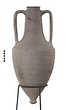
Well shaft cut through a cistern channel which was then packed with three amphorae (P 3123, P 3125, P 4201) of 1st or at latest early 2nd c. A.D. (These three amphorae could be considered with F 15:2) ... 3rd-4th c. A.D ... Well shaft cut through a cistern channel which was then packed with three amphorae (P 3123, P 3125, P 4201) of 1st or at latest early 2nd c. ... The excavator believed the well had never been tiled and that lower fill was POU. It seems more likely that tiles were robbed in late 4th c., one 1st c. amphora of packing fell in and then a 4th c. dump was dropped in, capped by tile fragments; later a 5th c. dump on top.
|
Double Well by E. Entrance to Square Building (Well A) (formely a O 8:1) Coin
21 April 1951 #1 (disintegrated) Carefull there is two O 8:1, the actual one is a filling around rubble wall at 35/ KE.
Estimated ... 750 to early 7th century B.C ... Double Well by E. Entrance to Square Building (Well A) (formely a O 8:1) ... Carefull there is two O 8:1, the actual one is a filling around rubble wall at 35/ KE.
|
| Hole (Well) and adjoining water channel with 4th c. pottery, probably a dumped fill.
At a depth of about -5.70m we started yielding some very crude potsherds, clearly not made on the wheel (maybe Prehistoric) ... Prehistoric-Roman ... Hole (Well) and adjoining water channel with 4th c. pottery, probably a dumped fill.
At a depth of about -5.70m we started yielding some very crude potsherds, clearly not made on the wheel (maybe Prehistoric) p. 2367 ... B 1199 has been placed with A 16:1. |
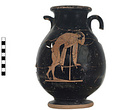
| A well in the industrial area of the Areopagus, about 7.00m. west of the West Bath, to a depth of 14.60m. This well was the direct successor to A 17:1, replacing it when it collapsed. The use filling at ... Second quarter 6th. c ... A well in the industrial area of the Areopagus, about 7.00m. west of the West Bath, to a depth of 14.60m. This well was the direct successor to A 17:1, replacing it when it collapsed. The use filling at the very bottom contained the black figured amphora P 18348 (Hesp. 17 (1948), p. 184, pl. 65, 1) and a well head (P 18853, Hesp. 18 (1949), p. 125, no. 8). |
Well K: PG, ELS ... Protogeometric |
Well a in west part of Odeion Cavea, probably unfinished. The dumped fill mostly potters' refuse including test pieces.
Well D. Diameter ca. 0.90m ... Early Protogeometric ... Well a in west part of Odeion Cavea, probably unfinished. The dumped fill mostly potters' refuse including test pieces.
Well D. Diameter ca. 0.90m |
| Extract from notebook ΠΘ XIX, pp. 3644-3646. Well at 105/ΝΗ (report on sorting of pottery, July 19, 1951 - H.S. Robinson).
"Not a useful well" HSR.
Well dug to 1.50m., vi/9/36; dug from 1.50m. to bottom ... Early Roman; use fillings of 2nd. c. B.C. and 1st. and 4th. c. A.D.; dumped filling of late 4th. c. (HSR)
Fill I: 2nd. c. B.C.
Fill II-V: to second half of 4th. c. A.D.
Fill VI: mixed to Byzantine ... Extract from notebook ΠΘ XIX, pp. 3644-3646. Well at 105/ΝΗ (report on sorting of pottery, July 19, 1951 - H.S. Robinson).
"Not a useful well" HSR.
Well dug to 1.50m., vi/9/36; dug from 1.50m. to bottom (22.80m.), iv/9/37 - iv/23/37. |
E.L. Smithson: Group H: Collapsed well west of the Great Drain.
First described as 105-107/Protogeometric Pit ... Protogeometric |
Note of 20-III-52 (deposit nb): Have looked up notebook pp. 1101 ff. The fill of this well was certainly Roman, also some part of the fill behind the tiles - but is that only a part tunneled as a passage ... 2nd-3rd c. A.D ... The fill of this well was certainly Roman, also some part of the fill behind the tiles - but is that only a part tunneled as a passage from another cistern, which was stopped up by late jars when the late people found the shaft of 86/ΞΕ? ... Note that there are pairs, and apparently there were large parts of the bodies of the jars saved which were thrown out or disappeared during the war. Well dug at some expense, due to water; abandoned [at 13.00m.] without being finished because of difficulty of digging ... Nb. p. 1110: Apparently all the pottery from the well lost its tickets during the war, was not recognized and was thrown out - or otherwise disappeared. |
Byzantine Well at 66/ΛΑ.
Semi-curbed well at the west wall of the Byzantine room.
From the mouth of the well, a few brown glazed sherds ... Byzantine ... Byzantine Well at 66/ΛΑ.
Semi-curbed well at the west wall of the Byzantine room.
From the mouth of the well, a few brown glazed sherds. |
| A well on the lower slope of the Hill of the Nymphs, (diam. 1.20m -water level -7m), to 7.90m. The scanty use filling at the bottom contained water jars and pitchers as well as the inventoried objects; ... Second quarter of 6th. c. B.C ... A well on the lower slope of the Hill of the Nymphs, (diam. 1.20m -water level -7m), to 7.90m. The scanty use filling at the bottom contained water jars and pitchers as well as the inventoried objects; above it was about 5.00m. of collapsed bedrock with no pottery whatsoever. The dumped filling, mixed with the broken bedrock above a depth of 2.40m., appears to be of the same date as the use filling, and yielded most of the inventoried objects - black figured and black glazed, as well as coarse ware, lamps, figurines, and loom weights; to be especially noted are a child's commode (P 18010, Hesp. 17 (1948), pp. 154-155), and an inscribed well head (P 18276, Hesp. 18 (1949), p. 125, no. 7). |
Big well at 61/ΙΖ.
A well on the lower northeast slope of the Areopagus. Diameter 2m ... Ca. 520-475 and shortly after ... Big well at 61/ΙΖ.
A well on the lower northeast slope of the Areopagus. |
Geometric Well under Rubble Wall of Predecessor.
Classical pit above a Geometric well with a small amount of pottery from the late 6th to the middle of the 4th c. B.C. Estimated Grid ... Late 8th century B.C ... Geometric Well under Rubble Wall of Predecessor.
Classical pit above a Geometric well with a small amount of pottery from the late 6th to the middle of the 4th c. |
A well, apparently unfinished, with footholds in east and west sides ... 2nd c. A.D ... A well, apparently unfinished, with footholds in east and west sides. |
Well at 30/ΛΒ; the shaft possibly never used as a well; dumped filling with a small amount of fragmentary pottery ... Ca 500 B.C ... Well at 30/ΛΒ; the shaft possibly never used as a well; dumped filling with a small amount of fragmentary pottery. |
Pit (Well?) under Building A, Room 2. Coins:
9 May 1949 #1-#2
11 May 1949 #4
12 May 1949 #3 (not a coin, bronze fragment in lotted metal tins ΠΠ 295). Estimated Grid
Remains of coloring matter found with ... Hellenistic-Early Roman ... Pit or Well Under Building A, Room 2 |
Dumped filling in the upper part of a well, to a depth of 6.65m. (the excavation could not be completed and the use filling was not reached). Homogeneous fill dumped from nearby. Coins:
1 June 1936 #1 ... Ca. 425-400 B.C ... Dumped filling in the upper part of a well, to a depth of 6.65m. |
This is associated with Building A. It had a circular marble well-head with a rectangular well slab beneath. The construction throughout was of well tiles. It produced little to a depth of -8.60m. Between ... 4th c. A.D ... This is associated with Building A. It had a circular marble well-head with a rectangular well slab beneath. The construction throughout was of well tiles. It produced little to a depth of -8.60m. |
Shaft (= well + caves) at 116-118/ΚΕ-ΚΣΤ Coins:
6 May 1939 #16-#21
8 May 1939 #35-#37
9 May 1939 #1
24 April 1940 #6 ... 2nd. quarter - mid-5th. c. A.D. |
Coins:
23 April 1937 #1-#16 d22.80m. (bottom)-22.25m.d ... 2nd. c. B.C. POU |
Coins:
22 April 1937 #1-#5 Containers 7-5 ... Second half of 1st. c. A.D. POU |
Coins:
9 April 1937 #1-#2
10 April 1937 #1-#2
12 April 1937 #1 Fill III (ca. 21.30m., cont. 4) period of disuse, to end 3rd. c. A.D.
Fill IV (20.20-21.00m., cont. 1-3) another period of use, 4th. c.
Fill ... To second half of 4th. c. A.D. |
Coins:
9 June 1936 #2-#4
Coins from the dump:
18 May 1937 #1-#15
4 June 1937 #1, #3-#4
10 June 1937 #3-#5 d1.50m. to top.d. Mixed to Byzantine. |
Nb page 5044: Great shapeless pit with a well (62/Ξ) at its bottom which we were unable to dig because it was too dangerous. Fill in the pit was of sand and white ash. The finds and pottery 4th. and perhaps ... Late 4th.-early 3rd. c ... Nb page 5044: Great shapeless pit with a well (62/Ξ) at its bottom which we were unable to dig because it was too dangerous. |
A well lined with a very well built stone wall, carefully made and fitted to the curve of the well cutting, with footholds running down its N and S faces. This wall, of small stones, runs to 7.30m. from ... 23-29 March 1937 ... A well lined with a very well built stone wall, carefully made and fitted to the curve of the well cutting, with footholds running down its N and S faces. This wall, of small stones, runs to 7.30m. from the well mouth. Below that the well is lines with drums of tiles. At the east side at the surface, a beam cutting was made to hold a beam to support a brick vault over the mouth of the well. |
Cistern System #1c: Shaft (well) at 25/ΞΑ. Began as a manhole but opened up by early-mid Byzantine as a well ... Late 12th c. A.D ... Cistern System #1c: Shaft (well) at 25/ΞΑ. Began as a manhole but opened up by early-mid Byzantine as a well. |
A well in room A of the Archaic House. Well with very irregular outline, cut down in the bedrock some 10m NE of the Tholos. Its filling yielded a handful of plain potsherds and the oinochoe P 13256 of ... Sub-Mycenaean(?) ... A well in room A of the Archaic House. Well with very irregular outline, cut down in the bedrock some 10m NE of the Tholos. Its filling yielded a handful of plain potsherds and the oinochoe P 13256 of an advanced Late Helladic III shape. |
Well. Construction, use and dumped fillings of the Hellenistic period. Tile-lined well with a packing of jars behind the tiles; the well cut through (Fill 4) the passage of a cistern (B 21:25). At 9.00m ... Hellenistic ... Well. Construction, use and dumped fillings of the Hellenistic period. Tile-lined well with a packing of jars behind the tiles; the well cut through (Fill 4) the passage of a cistern (B 21:25). At 9.00m. a threatened collapse of the walls caused abandonment of the excavation work at the point when the use-filling had just been reached. |
A well outside the market square to the southeast, west of the Panathenaic Way; Diameter 1.10m ... 600-550 B.C ... A well outside the market square to the southeast, west of the Panathenaic Way; Diameter 1.10m. |
Well (Hole) at 19/Ι(ΙΑ). Collapsed well creating a hole above; mixed fill in hole, early Byzantine in well proper. Coins:
26 April 1934 #12
27 April 1934 #28
28 April 1934 #38
1 May 1934 #3 ... Early Byz ... Well (Hole) at 19/Ι(ΙΑ). Collapsed well creating a hole above; mixed fill in hole, early Byzantine in well proper. |
Double Well by Entrance to Square Building (Well B)
Wall A (R 9:2) was Late Geometric or transitional well, into one-half of which a bothros had been sunk in Turkish times (16th c. A.D.)-R 9:3.
This bothros ... ca. 17th century A.D ... Double Well by Entrance to Square Building (Well B)
Wall A (R 9:2) was Late Geometric or transitional well, into one-half of which a bothros had been sunk in Turkish times (16th c. ... This bothros was lined on the side of the Geometric well by a wall made of rough stones and pink cement, supported by three small round wooden beams. In dark brown fill, it contained many household utensils (spoons, a wooden bowl fragment, a saucepan and an iron knife), quantities of pottery and a fragment of marble capital Balance of pottery discarded. |
Possibly a short period of use but chiefly a debris filling including a number of fragments from disturbed early burials. Two pot fragments, believed to be from lower body of P 18525, added from Well 3 ... Ca. 575-550 B.C ... Possibly a short period of use but chiefly a debris filling including a number of fragments from disturbed early burials ... Two pot fragments, believed to be from lower body of P 18525, added from Well 3 (tin 72), nb. 1135. |
A deep pit in bedrock over mouth of well. Context archaic, 6th c.
B.C., but with some traces of later disturbance. Found a circle for a well at the bottom, much water, no sherds.
Lay 2.20m south of Well ... 6th c. B.C ... A deep pit in bedrock over mouth of well. ... B.C., but with some traces of later disturbance. Found a circle for a well at the bottom, much water, no sherds.
Lay 2.20m south of Well B (L 17:1). It presumably had been a well, of which the sides collapsed |
A well in the industrial area west of the Areopagus, in part beneath one corner of the northwest room of the West Bath. A waterless shaft (diameter 1.05m) refilled with dug bedrock containing no pottery ... Early 6th. c ... A well in the industrial area west of the Areopagus, in part beneath one corner of the northwest room of the West Bath. A waterless shaft (diameter 1.05m) refilled with dug bedrock containing no pottery. After this filling had settled, an upper filling, a dump accumulated over a considerable period, was thrown in to level the area. |
Homer A. Thompson ... Well at the northwest foot of the Areopagus. Use filling of the Roman period. After the abandonment of the well and the collapse of the well-curb, the upper 2m of the shaft were filled with a dump apparently ... 1st-3rd c. A.D., 5th century ... Well at the northwest foot of the Areopagus. ... After the abandonment of the well and the collapse of the well-curb, the upper 2m of the shaft were filled with a dump apparently dug up from nearby. ... B.C., but containing a little that is alter and also pots apparently from a sacrificial pyre of the early 4th c. |
Called a Middle Helladic Well in the notebook ... Middle Helladic ... Called a Middle Helladic Well in the notebook. |
| Report on sorting of pottery, August 1951, by H.S. Robinson [nb p. 3666].
Cistern discovered and dug to 1.60m., vi/10/36; dug to bottom iv/22/37-v/6/37. Diam. At mouth 0.26m.; neck begins to widen out ... 1st. c. B.C. to post-Herulian ... ; over 5.20m. deep.
Well-plastered, without footholds; at 2.90-3.85m. a passage opens out to the south, curving slightly eastward, for 5.00m., at which point it is blocked by fill from another (cistern?) ... At 1.50m. appears the flow of an overflow channel connecting with the well at 105/ΝΗ. |
Well at 18/ΜΓ, on the lower north slope of the Acropolis, under the course of the later Panathenaic Way, west of the Archaic Building.
Diameter 0.97m. Water level 8m.
At the mouth of the well and to a ... Late 8th to 675 B.C ... Well at 18/ΜΓ, on the lower north slope of the Acropolis, under the course of the later Panathenaic Way, west of the Archaic Building.
... At the mouth of the well and to a depth of 4m, the soft bedrock had collapsed leaving a large irregular pit. The rock from this collapse filled the well-shaft down to a depth of 7m.
below this point lay the water jars from a period of use, to a depth of 8,50m. |
A well on Kolonos Agoraios. The upper dumped filling, a heavy deposit of pottery, was separated from the lower filling of similar character by several meters of plain mud. No use filling. Coins:
8 April ... Ca. 375-325 B.C. with disturbance of 250-225 B.C ... A well on Kolonos Agoraios. The upper dumped filling, a heavy deposit of pottery, was separated from the lower filling of similar character by several meters of plain mud. |
Associated with the Tholos.
Originally a well but after it had been in use for a short time the shaft was partially filled in and the upper part widened to form a large cistern.
The pottery falls into ... 335-250 B.C ... Originally a well but after it had been in use for a short time the shaft was partially filled in and the upper part widened to form a large cistern.
|
| Listed in notebook as at 6/ΛΗ but later found to be at 12/ΛΗ.
Originally B 16:1.
Large cistern distinguished by a short (1.75m) blind tunnel running SW from its floor, and a shallow (ca. 0.80m originally) ... Ca. 150 B.C ... Large cistern distinguished by a short (1.75m) blind tunnel running SW from its floor, and a shallow (ca. 0.80m originally) settling basin just south of the cistern mouth. The lowest part of the cistern as well as the tunnel had been packed with amphoras. |
| Cistern at 79/ΜΗ.
A well dug through at a later date destroyed all cistern filling.
No filling preserved. No typed list ... Probably 3rd cent. B.C ... Cistern at 79/ΜΗ.
A well dug through at a later date destroyed all cistern filling.
|
A small concentration of pottery in lowest 1.80m., possibly a use fill. Three fills above, with little pottery, ranging from Hellenistic to late Roman in date. Coins:
26 February 1934 #4-#6
27 February ... 325-200 B.C ... A small concentration of pottery in lowest 1.80m., possibly a use fill. ... We should check the grid reference of this well, a note (Section Γ, nb. |
Well (diameter shaft 0.95m) with POU and dumped fillings, separated by about 2.00m. of plain mud apparently fallen from the collapsed sides of the well. The fillings are, however, closely contemporary ... Ca. 425-400 B.C ... Well (diameter shaft 0.95m) with POU and dumped fillings, separated by about 2.00m. of plain mud apparently fallen from the collapsed sides of the well. The fillings are, however, closely contemporary.
Well with curbing wall built of small stones; it was preserved from -7m to bottom, with a diameter of 0.82m. Upper part of well a chaos of rock falls and caves.
|
| Initially uncovered with a diameter of c. 1.05m. Its south side extends under the south wall of the Classical structure and so clearly predates it. The highest preserved portion of the well shaft (at the ... 22 July-9 August 1994
26 June 1995
3-7 July 1995 ... Initially uncovered with a diameter of c. 1.05m. ... There is no well head, but a small portion of light clay bordering the preserved top of the shaft on the east side might indicate the contemporary ground level. The well is cut through a compact stratum of fill at the top of its the north side; elsewhere it is cut into the gray bedrock. |
| Well A, early 5th c. B.C. Near the Agora Boundary Stone, northwest corner of Middle Stoa; diameter at top 0.92m, widening to 1.15m and more below. Shaft neatly faced with stones to a depth of 0.70m below ... Ca. 520-480 B.C ... Well A, early 5th c. ... Shaft neatly faced with stones to a depth of 0.70m below well cut in bedrock to about 1m from the bottom, where it narrows from ca. 1.15m to ca. 0.70m. ... Period of Use and Upper dumped fills dated to ca. 520-480 B.C. in Agora XXX.
A 2296, A 2345, T 3270 and T 3271 from the dump and without subdivisions. |
| Anne McCabe ... Adjacent to the SW face of Byzantine Wall 14. The circular cutting, 0.90m in diameter, appeared at 53.504m under a layer of loose rubble (Lot 481). Wall of the well roughly built, consisting at the top ... 11-19 July 2006
24 June-21 July 2009 ... The circular cutting, 0.90m in diameter, appeared at 53.504m under a layer of loose rubble (Lot 481). ... Lower down, from 52.621m, large segments of terracotta well lining tiles are interspersed with other building materials. ... Most are broken; a complete segment measures 0.39 by 0.65m. |
Well at 75/ΚΖ (75/ΚΗ, 76/ΚΣΤ-ΚΖ). A dumped filling; an accumulation for the most part of the late 6th and early 5th centuries.
Tiled well; of the lining only a single set of tiles, of unusual make, remained ... Ca. 450-425 B.C ... Well at 75/ΚΖ (75/ΚΗ, 76/ΚΣΤ-ΚΖ). A dumped filling; an accumulation for the most part of the late 6th and early 5th centuries.
Tiled well; of the lining only a single set of tiles, of unusual make, remained in place; other series had presumably existed above |
| At the northwest foot of Areopagus. Square stone-curbed well with no clear evidence for a period of use; appears to be a single dump ... Ca. 500 B.C ... Square stone-curbed well with no clear evidence for a period of use; appears to be a single dump. |
Outside the market square, near the southeast corner, on the south edge of the east-west road, where it passes to the south of the Mint.
There is no doubt that the pottery from the well is "stratified" ... Early 1st to 6th c. and of 8th c. A.D ... There is no doubt that the pottery from the well is "stratified" in the sense that a very definite sequence could be observed from the late 6th c. pottery near the top down to pottery of the 1st c. A.D. in the lowest containers (some Byzantine pottery ... probably represents a brief reuse of the well after a long period of disuse). |
Well at 115/ΜΘ.
Careful stone curbing around the upper walls, the presence of footholds in the sides, an adequate water supply and the fragments of a terracotta well-head in the filling indicate that the ... 600-550 B.C ... Well at 115/ΜΘ.
Careful stone curbing around the upper walls, the presence of footholds in the sides, an adequate water supply and the fragments of a terracotta well-head in the filling indicate that the well served as a water source, but only a few fragments of water jars give any direct evidence of a period of use. Single dumped filling containing a small amount of pottery. |
Back fill in an unfinished well, originally dug only to a depth of 3.80m. Apparently dug in the 3rd. c. B.C. and refilled at once; the filling contained a scattering of 5th. and 4th. c. fragments as well ... To early 3rd century ... Back fill in an unfinished well, originally dug only to a depth of 3.80m. ... B.C. and refilled at once; the filling contained a scattering of 5th. and 4th. c. fragments as well as early Hellenistic; context irrelevant for the classical period. A supplementary filling in the upper 0.50m. is dated to the late 2nd. c. |
A well (diameter 1m) in the industrial area west of the Areopagus, in the area later occupied by House C. Water level 1.50-2.m Dumped filling of broken bedrock with considerable fragmentary pottery in ... Ca. 500-480 B.C ... A well (diameter 1m) in the industrial area west of the Areopagus, in the area later occupied by House C. Water level 1.50-2.m Dumped filling of broken bedrock with considerable fragmentary pottery in the upper meter and a half. No evidence of period of use and no distinction in date in the filling. |
Well at 19/Λ.
The bottom of this well contained a considerable quantity of dug bedrock which had fallen in before the well came into use; over this was a fill with oinochoae representing the POU. The presence ... 340-325 B.C ... Well at 19/Λ.
The bottom of this well contained a considerable quantity of dug bedrock which had fallen in before the well came into use; over this was a fill with oinochoae representing the POU. The presence in this fill of kernoi and a kernos-nold suggests that the users of this well may have been the same people as those responsible for the debris in the nearby coroplasts' dump (S 19:3). |
Archaic Well at 10/ΚΒ, directly west of the north end of the Stoa of Attalos.
Well, not cleared. a small amount of pottery gathered from the top of the shaft ... 600-550 B.C ... Archaic Well at 10/ΚΒ, directly west of the north end of the Stoa of Attalos.
Well, not cleared. a small amount of pottery gathered from the top of the shaft. |
Well at 69/ΚΔ (Well G: PG, ELS).
Diameter 0.75m. Fairly but not perfectly evenly cut; no foot-holds in sides. Very little water gathered. The well produced a small amount of pottery, the bulk of it coming ... Protogeometric ... Well at 69/ΚΔ (Well G: PG, ELS).
... Very little water gathered. The well produced a small amount of pottery, the bulk of it coming from the last 1.50m |
Tiled well cleared only to a depth of 6.60m. where fallen tiles and broken bedrock made further work impossible. So far as dug, a dumped filling as late as the 6th c. A.D. Coins:
16 May 1949 #2
18 May ... As late as 6th c. A.D ... Tiled well cleared only to a depth of 6.60m. where fallen tiles and broken bedrock made further work impossible. So far as dug, a dumped filling as late as the 6th c. |
Fillings in a stone-curbed well in the industrial area west of the Areopagus. Diameter (shaft)1.45m. Water level -5.20m. Drain at mouth 0.58m., increasing to a regular 74m. Coin:
24 July 1947 #5 Subdivisions: ... 350-325 B.C./3rd c. B.C ... Fillings in a stone-curbed well in the industrial area west of the Areopagus. ... Drain at mouth 0.58m., increasing to a regular 74m. |
Unfinished well, south of the annex to the Poros Building, west of the Areopagus. The shaft was apparently never used as a well. The lower dumped filling contained a quantity of clean red clay, as if from ... Ca. 350-325 B.C ... Unfinished well, south of the annex to the Poros Building, west of the Areopagus. The shaft was apparently never used as a well. The lower dumped filling contained a quantity of clean red clay, as if from an industrial establishment; also some marble chips and a scattering of pottery fragments. The single lamp is of a type which comes into use in the mid-4th c. |
Tiled well near the SW corner of the market square between the Southwest Fountain House and the Great Drain, three fills noted: lower fill of earth and stones with a few fragments only of coarse pottery ... 4th-2nd c. B.C.
100-70 B.C ... Tiled well near the SW corner of the market square between the Southwest Fountain House and the Great Drain, three fills noted: lower fill of earth and stones with a few fragments only of coarse pottery (none inventoried, containers 66-71); middle filling a heavy deposit primarily of table ware, apparently a gradual accumulation; upper supplementary fill. Although carefully constructed this shaft seems never to have served as a well but only as a rubbish dump for neighboring establishments.
... Long-petal bowls found at all depths, suggesting fill was dumped rather that accumulated over a period of time. |
Well at west side of Theseion Plataea, partly cleared to a depth of ca. 5.30m. Dumped filling, apparently the debris from a sculptor's workshop, as indicated by both the quantity of marble chips in the ... Second quarter 4th. c. B.C ... Well at west side of Theseion Plataea, partly cleared to a depth of ca. 5.30m. Dumped filling, apparently the debris from a sculptor's workshop, as indicated by both the quantity of marble chips in the filling and a number of unfinished small sculptures. |
POU = 10.00-11.30m.
"The well is important because it gives us a terminus post quem for Building D." (nbp. 3346)
Shallow well, producing little water or trouble, but a great quantity of coarse late Roman ... Ca. A.D. 300-370 and Ca. A.D. 400 ... POU = 10.00-11.30m.
"The well is important because it gives us a terminus post quem for Building D." (nbp. 3346)
Shallow well, producing little water or trouble, but a great quantity of coarse late Roman pottery, with Type XXVIII lamps. |
A very homogeneous dumped filling and no period of use. Apparently a failure as a well.
T 263-T 289 resorted and reduced August 1967. Cf. BI 157 "from behind the curbing of the well by Stoa pier 3." Estimated ... Ca. 470-460 B.C ... A very homogeneous dumped filling and no period of use. Apparently a failure as a well.
... BI 157 "from behind the curbing of the well by Stoa pier 3." |
Well 8 (in Tholos), put out of use by a fall of the rock walls and replaced by well G 11:3. Scanty use filling at and near the bottom, separated by a mass of fallen rock from a debris filling in the upper ... Ca. 550-500 B.C. and 480 B.C ... Well 8 (in Tholos), put out of use by a fall of the rock walls and replaced by well G 11:3. Scanty use filling at and near the bottom, separated by a mass of fallen rock from a debris filling in the upper part of the well and around its mouth ... Cf. from fill over well mouth: P 5278, P 5279. |
Well at 112/Ν.
Shallow well with a short period of use. The scattering of fragments in the upper dumped filling is consistently earlier. Lot Τ 12 (all sherds saved) and Lot Τ 13a (Dirt Pile) ... 520-500 B.C ... Well at 112/Ν.
Shallow well with a short period of use. |
| Well below Stoa Gutter opposite Pier 1.
Heavy dumped filling remarkable among Agora well-deposits both for the high quality and the good conditions of pottery of all sorts.
It represents the stock of a ... Ca. 520-490 B.C ... Well below Stoa Gutter opposite Pier 1.
Heavy dumped filling remarkable among Agora well-deposits both for the high quality and the good conditions of pottery of all sorts.
... Short period of use, the shaft was abandoned as a well and used as a dumping place for a vast mass of broken pottery. |
A well behind the Stoa of Zeus. Noted as the finding place of the bronze head of Nike, B 30.
Two Rhodian stamped amphora handles. Fragments of only two bowls ... 260-210 B.C ... A well behind the Stoa of Zeus. |
Found in 13/06/1935.
Dumped filling in an unfinished well originally dug only to a depth of 5.50m. Probably a post-Persian cleanup, perhaps in one of the public buildings near the SW corner of the square ... Ca. 520-490 B.C ... Dumped filling in an unfinished well originally dug only to a depth of 5.50m. Probably a post-Persian cleanup, perhaps in one of the public buildings near the SW corner of the square. |
Modern fill to 21.00m. at which depth a human skeleton weighed down with iron. ER fill from 21.00-28.00m. (bottom). A POU fill with a possible break around 25.00m ... 1st to mid-2nd c. A.D. |
| A well in the courtyard (Room 8) of a Byzantine House of Period II. The well was covered by a large squared poros wellhead and a marble puteal (apparently neither inventoried). Within the well shaft, the ... 14 July-9 August 1989
2-13 July 1990 ... A well in the courtyard (Room 8) of a Byzantine House of Period II. The well was covered by a large squared poros wellhead and a marble puteal (apparently neither inventoried). ... Finds not from well fill but from Byzantine fill around well:
A 4801, J 195, S 3414, SS 14948, ST 866, Coin 31 July 1990 #254, container ΒΖ 198. |
| Well at 89-90/ΙΗ-ΙΘ (diameter at top 1.10m), between the southeast corner over the mouth of of the Odeion and the Panathenaic Way. The well lay a thin layer of dug bedrock containing a few Hellenistic ... 650-625 B.C ... The well lay a thin layer of dug bedrock containing a few Hellenistic and earlier sherds. Fill in the well proper was a heavy dark fill. Toward the bottom of the well its consistency changed to a thick sticky mud which was very difficult to remove.
|
A well with POU 7th-8th c. A.D. and 10th c. dump. Coins:
19 May 1933 #14
20 May 1933 #3
22 May 1933 #1-#2
23 May 1933 #2
24 May 1933 #1
30 May 1933 #1 Subdivisions:
.1=Upper fill
.2=Lower fill ... 19 May-7 June 1933 ... A well with POU 7th-8th c. |
Diameter 0.80m. Water level -2m. Tiled well; height of tiles 0.67m. well in court (Room 3) of House N.
Late Hellenistic destruction fill (Pergamene etc) to -7m;
Sand without a well deposit (lamp Type ... 1st c. B.C. to 1st c. A.D ... Water level -2m. Tiled well; height of tiles 0.67m. well in court (Room 3) of House N.
Late Hellenistic destruction fill (Pergamene etc) to -7m;
Sand without a well deposit (lamp Type XII) at bottom. |
A well in House T, Room 2W (Publ. House D), industrial area west of the Areopagus. Lower filling of dug bedrock including a small amount of pottery of the Geometric period. Gravelly filling in collapsed ... 3rd. quarter of 8th. c. B.C ... A well in House T, Room 2W (Publ. ... Lower filling of dug bedrock including a small amount of pottery of the Geometric period. Gravelly filling in collapsed upper part of well shaft containing a few vases and fragments of the early 5th. c.; the filling in the well antedates the building of the house, shortly before the mid-century. |
A small square well at 37/ΚΑ (about 0.60x0.70m), on the north slope of the Areopagus. Curbed with rough stones.
Filling of a small shallow well which contained nothing from the POU and since no water was ... Ca. 350-320 B.C ... A small square well at 37/ΚΑ (about 0.60x0.70m), on the north slope of the Areopagus. ... Filling of a small shallow well which contained nothing from the POU and since no water was encountered, may have served only as a storage or rubbish pit.
|
| A tiled well with two periods of use, Byzantine and Late Roman.
Some coarse Byzantine pottery from the upper part. from the lower part, pre-Herulian pottery, lamps and figurines. Also ΑΡ 221 (A 1202) the ... 3rd c. A.D. (before 267 A.D.)
11th-12th c. A.D ... A tiled well with two periods of use, Byzantine and Late Roman.
... Also ΑΡ 221 (A 1202) the block from a raking cornice used to cover one side of the well (re-use period unknown).
|
Well (diameter 0.91m, water level -7m) in House H, Room 10 (and pit over). Plain shaft cut in stereo; pit at mouth of well,reused as drainage pit at start of tile drain running west.
Scanty use filling ... Ca. 425-400 B.C ... Well (diameter 0.91m, water level -7m) in House H, Room 10 (and pit over). ... Scanty use filling at bottom; above this, a broken bedrock fill and above that a dumped filling. The upper part of the well was lined with tiles in the second half of the 4th. c. for use as a collecting basin for a water system, a channel of which entered the well shaft. |
Well cut through the floor of a cistern. Apparently a dumped fill in an unused well. Coins:
16 March 1934 #15 (illegible)
17 March 1934 #2
19 March 1934 #1-#4
20 March 1934 #1-#3
22 March 1934 #1
23 March ... 1st-early 2nd c. A.D ... Well cut through the floor of a cistern. Apparently a dumped fill in an unused well. |
Well at 21/Ε (beneath Library of Pantainos).
The clearing of the well was abandoned because of a cave-in of the rock walls. Heavy dumped filling, the proportion of fine black table ware high ... Ca. 440-425 B.C ... Well at 21/Ε (beneath Library of Pantainos).
The clearing of the well was abandoned because of a cave-in of the rock walls. |
A shallow tiled well or reservoir set inside the South Stoa against its back wall. Its location in relation to the wall of the Stoa, and the fact that a lead pipe set through the latest floor of the Stoa ... 5th - 6th c. A.D ... A shallow tiled well or reservoir set inside the South Stoa against its back wall. Its location in relation to the wall of the Stoa, and the fact that a lead pipe set through the latest floor of the Stoa leads to it, shows that it was built while the Stoa was still in use, that is before 267 A.D. |
| Well I: PG, ELS. The collapsed well north of the Middle Stoa Terrace. This pit, or shallow well, into which a Turkish storage pit lined with stones was set, produced purely Proto-Geometric pottery and ... Protogeometric ... Well I: PG, ELS. The collapsed well north of the Middle Stoa Terrace. This pit, or shallow well, into which a Turkish storage pit lined with stones was set, produced purely Proto-Geometric pottery and one Mycenaean figurine ... From the disturbed filling overlying mouth of well, P 26312. |
Construction and upper fills. Well at 116/ΣΤ, cut less than one meter from a shallower and older well at 115/ΣΤ [D 15:1]. ... a fall of loose fill occurred from the earlier into the later well ...
Filling ... 2nd c. A.D. plus 6th c. A.D ... Construction and upper fills. Well at 116/ΣΤ, cut less than one meter from a shallower and older well at 115/ΣΤ [D 15:1]. ... a fall of loose fill occurred from the earlier into the later well ...
|
Well L: PG, ELS. Includes a displaced grave (K 12:2 bis). The pottery appears less consistent than that in the pit at 70/ΜΕ. Depth of well 6.25m. below the top of wall B. PD 2780 ... Protogeometric ... Well L: PG, ELS. Includes a displaced grave (K 12:2 bis). ... Depth of well 6.25m. below the top of wall B. |
Well at 19/ΚΔ, beneath the west colonnade of the Square Market Building in the northeast corner of the Agora. Diameter ca. 1.25m. Water level ca. -3.50m. The construction of the well was rather careless, ... Ca. 580-560 B.C ... Well at 19/ΚΔ, beneath the west colonnade of the Square Market Building in the northeast corner of the Agora. ... The concentration of the more complete vases near the bottom, suggested however that the shaft had served as a water supply. In the mouth of the well was a small amount of supplementary fill (425-400 B.C.) ... T 1653 and P 12680 suggest that the well-diggers may have cut through a child's burial of Mycenaean times.
|
Well 2: archaic. Diameter, top ca. 1.00; bottom ca. 0.90m.
Water level:ca -7.00m In the use filling, along with the plain water pots was a black-figured neck amphora assigned to the Edinburgh painter ... Last quarter of the 6th c. B.C ... Well 2: archaic. Diameter, top ca. 1.00; bottom ca. 0.90m.
... Dumped filling consisting largely of mudbrick, broken rooftiles and other debris, along with a pithos-top well head.
An upper filling was not a dump, but a washed-in filling, containing a scattering of figured fragments. |
Well dug through N 18:1 (cistern at 79/ΜΗ) on the lower north slopes of Areopagus; the cistern was the northern chamber of a system; the southern chamber is at 84/ΝΣΤ (N 19:1).
A single dumped deposit ... 3rd-4th c. A.D ... Well dug through N 18:1 (cistern at 79/ΜΗ) on the lower north slopes of Areopagus; the cistern was the northern chamber of a system; the southern chamber is at 84/ΝΣΤ (N 19:1).
A single dumped deposit filled both the well-shaft and the cistern ... It included marbles, a window tile, a millstone, and a well-head as well as pottery and other objects: destruction debris. |
A well about 2.00m. SE of the Tholos precinct wall. The presence of the water-clock strengthens the probability, suggested by its location, that the well served one of the public buildings in the neared ... Ca. 410-390 B.C ... A well about 2.00m. ... The shaft was stopped by a number of large blocks about half way down.
The two fills of the well are so different in character. |
Abandoned digging at 6.25m. due to water level. Tile well could be associated with a bit of late Roman wall to the south, with floor level about one meter above that of pebble floor. Well tiles were not ... 14-22 April 1948 ... Abandoned digging at 6.25m. due to water level. Tile well could be associated with a bit of late Roman wall to the south, with floor level about one meter above that of pebble floor. Well tiles were not in place for the last meter and a half. |
Actually 1 meter into section Δ, the well lies under a filling of primarily Hellenistic date which had been thrown in as underpinning for the support of a 2nd c. A.D. Roman tile-mosaic floor.
POU is 15.80-16.35m ... First half of 1st c. A.D ... Actually 1 meter into section Δ, the well lies under a filling of primarily Hellenistic date which had been thrown in as underpinning for the support of a 2nd c. |
Roman well, stratified.
Finds from the earth (not recorded in a subdivision):
P 7995, P 8036, P 21834, SS 6338, IL 483, IL 486, BI 309, BI 310,
BI 314.
According to the excavator the shaft had been cleaned ... 2nd-4th c. A.D ... Roman well, stratified.
Finds from the earth (not recorded in a subdivision):
P 7995, P 8036, P 21834, SS 6338, IL 483, IL 486, BI 309, BI 310,
BI 314.
... Despite the general paucity of the well fill (only 21 tins of pottery from -7.00m to bottom), a rather large number of amphorae, micaceous water jars and other handled containers were represented among the sherds and some stratification is apparent. The well might for some reason have been used only sparingly or it might have been equipped with a metal bucket which was used in preference to clay jars on most occasions. |
7th c. well below east part of Odeion Cavea Trench K). Use filling negligible; dumped filling of the second half of the 7th c. B.C.
Brann Well H. Diameter 1.10m. Cut into bedrock. During excavation seepage ... 650-600 B.C ... 7th c. well below east part of Odeion Cavea Trench K). ... B.C.
Brann Well H. Diameter 1.10m. ... The bedrock around the mouth of the well had collapsed, forming a crater with a fill of filed stones about two meters thick. |
Well east of Geometric Grave. The upper part collapsed into a pit, cut into by Middle Geometric grave I 18:1 and by a Byzantine wall. Some evidence for period of use; little pottery. At the top a few Geometric ... Early Protogeometric ... Well east of Geometric Grave. The upper part collapsed into a pit, cut into by Middle Geometric grave I 18:1 and by a Byzantine wall. ... At the top a few Geometric sherds, perhaps displaced from I 18:3. |
Well at 20/ΙΔ.
No POU fill. Bottom packed with sherds, including roof-tile fragments. Above this, were six meters with a "fair quantity" of sherds; then the top meter and a half contained a great quantity ... Ca. 420-390 B.C ... Well at 20/ΙΔ.
No POU fill. ... Above this, were six meters with a "fair quantity" of sherds; then the top meter and a half contained a great quantity of sherds. |
|
|