icon

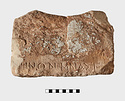
[Agora Image] 2024.02.0001

Inscribed fragment of Herm of Zeno ... Craig Mauzy ... Horizontal (normal) ... 12 Jan 2024 ... Inscribed fragment of Herm of Zeno.

icon

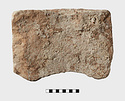
[Agora Image] 2024.02.0002

Inscribed fragment of Herm of Zeno ... Craig Mauzy ... Horizontal (normal) ... 12 Jan 2024 ... Inscribed fragment of Herm of Zeno.

[Agora Coin] N 5914

Zeno ... Coin no. 568; Hoard, coin no. 102. Bust r. Monogram. 503, 1375-1377 ... 474-491 A.D ... Zeno

icon

[Agora Object] I 6010: Marble Fragment

Inscribed fragment of Herm of Zeno. Fragment from the sloping upper part of a portrait herm; left side and inscribed face only preserved. Herm of Zeno, son of Mnaseas, the Stoic philosopher. One line of ... 2nd. century A.D ... Inscribed fragment of Herm of Zeno. Fragment from the sloping upper part of a portrait herm; left side and inscribed face only preserved. Herm of Zeno, son of Mnaseas, the Stoic philosopher.
icon

[Agora Object] P 22351: Medallion with Relief Decoration

Broken all around. Medallion almost complete: within border of dots, the upper part of a bearded figure, right, wearing a himation leaving the right shoulder free; right arm bent at elbow, hand raised ... 16 May 1952 ... P 15175, same head: Zeno?

icon

[Agora Publication Page] Agora 2, s. 73, p. 63

Valentinian III. C., 16. Pearce Add., p. 4, before 24. Pearce NOT; C. NOT. Pearce, p. 78, 140. C., 5. C., 15f. Marcian. Sab., 11. Sab., 11 (54). 12 (1). Leo I. Sab., 14. Sab., 16. Sab., 19 (2). 20 (19) ... Agora 2 63 ... 425-455 A.D ... Zeno

icon

[Agora Publication Page] Agora 2, s. 90, p. 80

Popes at Rome. Pius IV. CNI, XV, p. 499, 144. Venetian Coinage. Doges of Venice. Jacopo Tiepolo. Pap., I, p. 98, 2. Pap., I, p. 99, 6. Ranieri Zeno. Pap., I, p. 106, 1. Giovanni Dandolo. Pap., I, p. 137, ... Agora 2 80 ... 1559-1565 A.D ... Ranieri Zeno

[Agora Webpage] AgoraPicBk 16 2003: Stoa Poikile

http://agathe.gr/guide/stoa_poikile.html

Stoa Poikile Across modern Hadrian Street are the most recent excavations (2003), along the north side of the square. Here have been revealed the remains of another large stoa, identified on the basis ... Among those who plied their trade in the building were the philosophers of Athens, in particular Zeno, who came to Athens from Cyprus in ca. 300 B.C. and so preferred the Painted Stoa as his classroom that he and his followers became known as the Stoics. "Zeno, son of Mnaseas or Demeas of Kition [in Cyprus], a philosopher who began the Stoic school.