|
|
Above well at 48/ΙΕ (J 15:1) ... Early Roman |
Well outside market square to the southeast, west of the Panathenaic Way. Accumulated use filling from first half of 1st c. A.D. to early 3rd c. Top to 14.65m. 4th c. dump; nothing significant catalogued ... POU First half of 1st c.-early 3rd c. A.D. |
Small Pit or Well at 25/ΚΑ with a small quantity of fine and coarse household pottery, much of it whole, or nearly so ... Ca. 450-425 B.C. |
Well at 19/ΚΔ, beneath the west colonnade of the Square Market Building in the northeast corner of the Agora. Diameter ca. 1.25m. Water level ca. -3.50m. The construction of the well was rather careless, ... Ca. 580-560 B.C. |
Debris filling in a pit cut in bedrock at W side of House H, Room 10 ... Ca. 425-400 B.C. |
Well, unfinished?
The shallow depth, small diameter, lack of water and any use fill make it possible that this was not a well, although the character of the cutting is difficult to explain otherwise. The ... Ca. 440-420 B.C. |
Chamber of water system with one blind tunnel and two cisterns connected by tunnel. Pottery consistent throughout, late Hellenistic. Late 2nd c. B.C.
Ten stamped amphora handles. Most of bowls long-petal ... 100-75 B.C. |
Accumulated debris on the west side of the market square.
Related layers added 1999/2000 (JWH), e.g. "Gravelly layer above burning", "Clearing Classical floor", "Lowest level above bedrock", "Below burning", ... First half of 5th c. A.D. |
Investigations in the area around the Tholos, especially to the east and south of the building, between it and the Great Drain, and not otherwise specified as deposits.
This "deposit" has no form. It ... various levels and dates |
A small flask-shaped cistern on the lower southeast slope of Kolonos Agoraios. Lined with hydraulic cement and containing a large quantity of glazed table ware and a fair amount of coarse ware; a homogeneous ... 350-325 B.C. |
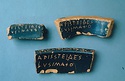
| Pit (6x10) in the valley between the Areopagus and the Hill of the Nymphs. Large cutting in bedrock with 540 ostraka, mainly of the late eighties of the 5th. c. B. C. Much pottery, principally of the early ... Ca. 500-450 B.C. |
|
|