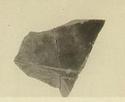
[Agora Object] Agora XXX, no. 276

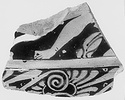
Wall fragment. Max. dim. 0.059. The fragment shows the legs from thighs to calves of a youth to right. At the lower right break is part of another figure (drapery). Preliminary sketch. Dilute glaze: muscles ... Ca. 440 B.C.

[Agora Object] Agora XXX, no. 287

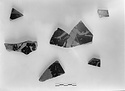
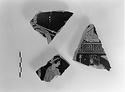
Thirty-two non-joining fragments of rim, wall, and cul. Narrow reserved band on inside of rim, another 0.082 below rim. Glaze pitted on some fragments; has a greenish cast here and there. Max. dim. P 7282 ... Ca. 440 B.C.

icon

[Agora Object] P 7282: Red Figure Calyx Krater Fragments

Nine fragments, not all certainly from the same pot. a) Satyr running right; in front of him, a burning torch held in the hand of another figure. White for flame of torch. b) Woman in Doric chiton moving ... 28 March 1936

[Agora Object] Agora XXX, no. 248

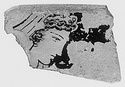
Wall fragment. Max. dim. 0.042. Youth (most of head, start of right shoulder) to left. Preliminary sketch. Relief contour. Dilute glaze: down on cheek; muscles. Forelock seems to be incised. The Pioneer ... Ca. 510-500 B.C.

[Agora Object] Agora XXX, no. 249

Wall fragment with a little of projecting rim. Glaze misfired reddish brown in places on outside; a bit greenish on inside. Max. dim. 0.074. Fight(?). The fragment preserves the raised, bent right arm ... Ca. 510-500 B.C.

[Agora Object] Agora XXX, no. 250

Wall fragment. Glaze grayish on outside (burned[?]). Max. dim. 0.071. Figure (himation, the leg of a pelt) to right. Relief contour. Dilute glaze: pelt ... Late 6th century B.C.

[Agora Object] Agora XXX, no. 251

Wall fragment. Glaze fired greenish in places. Max. dim. 0.106. H. A. Thompson, Hesperia 18, 1949, pl. 45:5; P. E. Corbett, JHS 85, 1965, pl. 1; Langridge, "Eucharides Painter," p. 345, cat. no. E 6. ... Ca. 500-490 B.C.

[Agora Object] Agora XXX, no. 252

Three non-joining fragments: P 22490 of rim and start of wall; P 30996 of rim; P 13366 of wall and cul with stub of handle. Reserved line at top of rim on inside. Max. dim. P 13366: 0.105, P 22490: 0.083, ... Ca. 500-490 B.C.

[Agora Object] Agora XXX, no. 253

Rim fragment. Surface slightly gray (burned[?]). Max. dim. 0.055. Agora XXVII, p. 167, cat. no. 3, pl. 31. On rim below torus, horizontal encircled palmettes in black glaze. For this pattern on the rim, ... Probably early 5th century B.C.

[Agora Object] Agora XXX, no. 254

Two non-joining wall fragments. Max. dim. a) 0.055, b) 0.077. A. Ashmead, Hesperia 35, 1966, pl. 8. Fragment a preserves most of the filleted head of an old man (Phoinix) to left, holding a spear or staff ... Ca. 490 B.C.

[Agora Object] Agora XXX, no. 255

Wall fragment from near rim. Glaze slightly dull on outside. Max. dim. 0.052. H. A. Thompson, Hesperia 16, 1947, pl. 47:2; A. Ashmead, Hesperia 35, 1966, pl. 8:2. Man (most of filleted head) to right ... Ca. 490 B.C.

[Agora Object] Agora XXX, no. 256

Fifteen non-joining fragments of wall, P 18278 b--c and P 19582 a--d of torus rim with zone of ornament below. Glaze mottled here and there; has a greenish cast in places; abraded in part on rim. Max ... Ca. 480 B.C.

[Agora Object] Agora XXX, no. 257

Wall fragment. Glaze mottled on outside. Max. dim. 0.063. A. Ashmead, Hesperia 35, 1966, pl. 10:o (mispoised); A. Bélis, BCH 110, 1986, p. 213, fig. 12 (mispoised). Trumpeter (most of face, a little of ... Ca. 480 B.C.

[Agora Object] Agora XXX, no. 258

Wall fragment. Max. dim. 0.047. Man (hair at back of head, tied up with a fillet, start of beard, left shoulder) to left. Behind him, part of an encircled palmette from the handle configuration. Relief ... Ca. 480 B.C.

[Agora Object] Agora XXX, no. 259

Rim fragment. Glaze misfired reddish on outside; much abraded on rim and on neck. Max. dim. 0.092. Below the torus rim, chain of lyre lotuses and encircled palmettes. For this ornament, only with lyre ... Ca. 480 B.C.

[Agora Object] Agora XXX, no. 260

Fragment of rim and wall. Reserved band just below rim on inside; line 0.05 below that. Max. dim. 0.116. Forelock of wreathed head of a figure standing to left. On rim below torus, zone of upright lotuses ... First quarter of the 5th century B.C.

[Agora Object] Agora XXX, no. 261

Mended with missing pieces restored in plaster and painted, notably most of the rim, all of the foot, much of the wall, part of each handle and the cul. Narrow reserved band on inside 0.035 below rim ... Ca. 470 B.C.

[Agora Object] Agora XXX, no. 262

Wall fragment. Glaze a bit dull on outside. On inside at the very top, start of a line of reserve. Max. dim. 0.069. Woman (upper part except for top of head) to right, dressed in a himation with a woolen ... Ca. 470-460 B.C.

[Agora Object] Agora XXX, no. 263

Wall fragment. Max. dim. 0.028. Warrior, perhaps an Amazon (part of face, a little of the flap of the corslet over the right shoulder), probably standing frontally with head in profile to left. Preliminary ... Ca. 470-460 B.C.

[Agora Object] Agora XXX, no. 264

Wall fragment, slightly flaring. Max. dim. 0.074. Prange, Niobidenmaler, p. 165, cat. no. A 40, pl. 12. The fragment shows part of a woman, perhaps standing frontally, head turned to left (a section of ... Ca. 470-460 B.C.

[Agora Object] Agora XXX, no. 265

Wall fragment. Max. dim. 0.065. Prange, Niobidenmaler, p. 165, cat. no. A 42. Woman (face, a little bit of right shoulder with drapery, fingers) to left. The bit of glaze at the far right at the break ... Ca. 460 B.C.

[Agora Object] Agora XXX, no. 267

Wall fragment. Max. dim. 0.064. Male (right arm except for hand, part of torso) to right, wearing a short chiton with a chlamys over it. In his right hand (now missing) he held two spears (part of the ... Probably second quarter of the 5th century B.C.

[Agora Object] Agora XXX, no. 268

Wall fragment from just below rim strengthened with plaster. Glaze slightly dull on outside. Max. dim. 0.12. Prange, Niobidenmaler, p. 210, cat. no. GN 22. Youth (most of filleted head, right shoulder, ... Ca. 450 B.C.

[Agora Object] Agora XXX, no. 270

Fragment of cul and body. Max. dim. 0.09. On cul, chain of double lotuses and encircled palmettes. The only painter to favor the chain of double lotuses and palmettes on the culs of his calyx-kraters ... Ca. 450 B.C.

[Agora Object] Agora XXX, no. 271

Fragment of cul with start of handle at far right. Glaze much pitted. Max. dim. 0.087. Chain of double lotuses and encircled palmettes. For this pattern on the culs of other calyx-kraters, see 270 ... Ca. 450 B.C.

[Agora Object] Agora XXX, no. 272

Rim and wall fragment. Narrow reserved band on inside just below rim, another 0.045 below rim. P.H. 0.145; est. diam. of rim 0.25. Oakley, Phiale Painter, p. 76, cat. no. 57, pl. 40:c. Satyr (left hand ... Ca. 440-430 B.C.

[Agora Object] Agora XXX, no. 273

Wall fragment. Glaze dull and misfired reddish here and there on inside and outside; slightly abraded. Max. dim. 0.107. H. A. Thompson, Hesperia 17, 1948, pl. 67:4; Matheson, Polygnotos, p. 354, cat. no ... Ca. 440 B.C.

[Agora Object] Agora XXX, no. 274

Body, all of handle B/A, start of the other, foot. Mouth and rim missing. Much of the glaze misfired reddish. Chip in surface between second and third youth on Side B. Narrow reserved band on inside near ... Ca. 440 B.C.

[Agora Object] Agora XXX, no. 275

Wall fragment from just below rim (a little of the thinned glaze appears at the very top). Glaze slightly dull on inside. Max. dim. 0.085. Matheson, Polygnotos, p. 465, cat. no. PGU 95. Chariot to left: ... Ca. 440 B.C.

[Agora Object] Agora XXX, no. 277

Wall fragment. Glaze fired reddish (drawing) and bluish (background). Max. dim. 0.105. Kithara-player (part of neck, his head [now missing] thrown back, body, right arm and hand with plektron, left hand) ... Ca. 440-430 B.C.

[Agora Object] Agora XXX, no. 278

Wall fragment from just below start of rim. Glaze much pitted and flaked. Narrow reserved band on inside near top. Max. dim. 0.062. Woman (head with veil) to right looking downward. Relief contour. Dilute ... Ca. 440-430 B.C.

[Agora Object] Agora XXX, no. 279

Wall fragment. Max. dim. 0.152. G. Gualandi, Arte Antica e Moderna 20, 1962, pl. 111:d; LIMC III, 1986, p. 374, no. 4, s.v. Demonassa II; Matheson, Polygnotos, p. 411, cat. no. KL 27. Youth, probably ... Ca. 430 B.C.

[Agora Object] Agora XXX, no. 280

Mended from many fragments with missing pieces restored in plaster and painted. More than half of rim, much of wall on Side A, both handles, except for stubs of B/A, all of foot lost. Narrow reserved band ... Ca. 430 B.C.

[Agora Object] Agora XXX, no. 281

Wall fragment with start of cul at very bottom. Max. dim. 0.07. Satyr (legs, the right frontal, the left in profile, end of tail), leaning to right (the glaze lines on the inside and the bit of ground ... Probably third quarter of the 5th century B.C.

[Agora Object] Agora XXX, no. 282

Wall fragment. Max. dim. 0.065. Youth (most of head with a bit of wreath or fillet at the break, left side of body, right hand, part of bent left arm) standing frontally, head to right, two spears (shafts) ... Ca. 430-420 B.C.

[Agora Object] Agora XXX, no. 283

Wall fragment with start of cul and all of one handle. Glaze slightly greenish on inside; abraded slightly on handle. P.H. 0.09. A, woman (a little bit of lower drapery) to right, facing a man or youth ... Probably 430-420 B.C.

[Agora Object] Agora XXX, no. 284

Wall fragment, slightly flaring. Glaze cracked a bit on outside. Scratch at lower right. Max. dim. 0.064. Lower part of draped forearm and hand of figure, perhaps a child, either frontal or standing ... Probably late 5th century B.C.

[Agora Object] Agora XXX, no. 285

Fragment of lower part of wall and cul. Max. dim. 0.078. Right leg from knee down, left heel of male to right. Plant on ground; some kind of object behind him. On cul, diagonally addorsed palmettes. Relief ... Probably mid-4th century B.C.

[Agora Object] Agora XXX, no. 286

Three non-joining wall fragments. Reserved band on inside at top of P 110. Max. dim. P 104: 0.103, P 110: 0.087, P 2223: 0.07. Prange, Niobidenmaler, p. 209, cat. no. GN 15, pl. 21 (P 110 is mispoised) ... Ca. 450 B.C.

icon

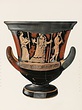
[Agora Object] P 1855: Red Figure Calyx Krater

The greater part of one handle is gone; the rim seems to have been cut away, so neat is the break. Solidly founded ring foot, convex, with the upper part cut back to form a narrow groove; at the junction ... 4 April 1933