|
|
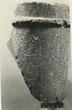
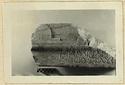
| Inscribed fragment.
Inscribed face and original top preserved; broken elsewhere.
Six letters remain.
Hymettian marble. Found in the wall of the modern house 637α/5 (637a/5), northeast of the Odeion. Leica ... 15 January 1936 |
| Inscribed fragment of columnar grave monument.
About one half of the top preserved; broken at the bottom.
Three lines of the inscription preserved.
Hymettian marble. Found in the wall of the modern house ... 3rd.-2nd. centuries B.C. |
| Inscribed fragment of columnar grave monument.
Top partly preserved; column broken below.
Raised band chiselled away, and some letters purposely obliterated.
Three lines of the inscription preserved.
Hymettian ... 3rd. century B.C. |
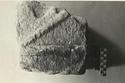
| Inscribed fragment.
Left side and back preserved; block has pediment and akroterion coarsely cut. The pediment is plain.
Three letters remain.
Pentelic marble. Found in the wall of the modern house 645α/5 ... 2nd.-1st. centuries B.C. |
| Inscribed fragment of columnar grave monument.
Fragment of a large circular monument, part of the top preserved.
The letters are in a panel, raised 0.006m. above the other surface of the block and enclosed ... 17 January 1936 |
| Inscribed fragment of grave monument.
Back preserved; moulding above letters, and probably pediment once above that.
Surface badly burned.
Two lines of the inscription preserved.
Pentelic marble. Found ... 2nd.-1st. centuries B.C. |
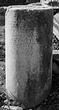
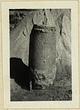
| Inscribed columnar grave monument.
Preserved entire, except for chips.
Bottom roughened for insertion into ground.
Small depression in top, roughly circular.
Two lines of the inscription preserved.
Hymettian ... 16 January 1936 |
| Inscribed fragment.
Inscribed face only preserved.
Belongs with the list of Argives who fell at Tanagra.
Three lines of the inscription preserved.
Pentelic marble.
ADDENDA With I 39.
Cf. I 2006.
Transferred ... 5th. century B.C. |
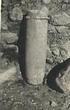
| Inscribed column drum.
The drum is one of a series which have been used in building the wall. Found stands upright in the tower.
Two dowel cuttings in the top. It was uncovered in the earlier excavations ... 17 January 1936 |
| Inscribed columnar grave monument.
Chipped at top. The lower part left rough for insertion into the ground. The column has two inscriptions, the first (a) being earlier, and partly worn away.
On inscription ... 2nd. century B.C.-1st.-2nd. centuries A.D. |
| Inscribed fragment of grave stele.
Rough picked top only preserved. The bottom appears to have been the top of a niche.
Above the inscribed face a moulding projects, ornamented by antefixes in relief ... 17 January 1936 |
|
|