|
|
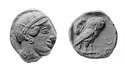
Athens ... Coin no. 1; to 14.25m. Well. Head of Athena r., wearing Corinthian helmet. Η[Θ]-Α
Owl standing l., facing. All in olive wreath. 824, 1105 ... 307 - ca. 300 B.C. |
Uncertain Greek ... Identified in 1934 as type of Svoronos 1923, pl. 106:52-62. Coin no. 2. Well; dump, dry upper earth. Illegible. Illegible. 565, 861, 1105 ... 9 May 1934 |
Krannon ... Heavily damaged.
Identified in 1934 as coin of Larissa. Coin no. 3. Well; dump, dry upper earth. Head of Poseidon r., laureate. [KPA]
Thessalian horseman r. 565, 861, 1105 ... 4th c. B.C. |
Athens ... Coin no. 5. Well dump, muddy lower earth. Head of Athena r., wearing Attic helmet. [Α]/Θ
Two owls standing l. and r., facing. All in olive wreath. 565, 861, 1105 ... Ca. 322/317-307 B.C. |
| Athens ... Possibly imitation, as the low weight and the parallel, inorganic lips of Athena suggest. Coin no. 3.
Casts stored in Lab Case no. 52B. Well dump: dry upper earth; early 3rd c. B.C. Head of Athena r., ... Ca. 450's - 404 B.C. |
Exploration over bedrock inside the Tholos; levels of 6th c. B.C ... 6th c. B.C. |
Well 8 (in Tholos), put out of use by a fall of the rock walls and replaced by well G 11:3. Scanty use filling at and near the bottom, separated by a mass of fallen rock from a debris filling in the upper ... Ca. 550-500 B.C. and 480 B.C. |
| Amphora packing over tiles of the Great Drain ... Horizontal (normal) ... 12 May 1934 |
|
|