|
|
Very little pottery and mainly broken tiles in this well, all mixed from Hellenistic to Early Byzantine (nbp. 1441) ... 25 May-1 June 1939 |
Roman Group L.
Layer I (cont. 59-64) Pre-Herulian second half of 3rd c. (bottom, 15.95-13.90).
Layer II (cont. 42-58) 4th c.-first quarter of 4th c. (11.90-13.90).
Layer III (cont. 17-41) -4th c. (10.00 ... Second half 3rd c.-early 5th c. A.D. |
Bottle-shaped cistern with dumped fillings on NW slopes of Areopagus; appears not to have been finished in antiquity: the walls and floor show no traces of stucco.
Lower filling, ca. 375-340 B.C.
Upper ... Ca. 375-275 B.C. |
Unfinished well, all one fill; solid bedrock at a depth of -2.47m.
It contained masses of broken rooftiles and probably was used as a refuse pit after the sack of Athens by Sulla.
Twenty-three stamped ... Early 1st c. B.C. |
| This filling is the largest deposit of its time found in the Agora. It may be compared with H 6:5 and with N 7:3.
Dug in soft bedrock to a depth of 11.40m; footholds cut on opposite sides of the shaft ... Ca. 490-450 B.C. |
A well on the NW slope of the Areopagus; unfinished well-shaft dug to a depth of only 3.05m., and refilled with broken pottery and other debris. The shaft clearly was begun with the intention of digging ... Ca. 520-480 B.C. |
| Unfinished well-shaft with debris filling (apparently of the Sullan sack), on the lower NW slopes off the Areopagus. Abandoned due to poor quality of bedrock.
Three closely contemporary fills, considered ... End 2nd c. B.C.-second quarter 1st c. B.C. |
It was impossible to return to the digging of this well either in 1939 or 1940 [due to collapse of stereo] (nbp. 1432).
HAT compares pottery to that of Square Building fill. Coins
26 May 1939 #1 ... Second half of 4th c. B.C. |
| Identified as Pyre by SIR.
Debris filling of the middle of the 4th c. B.C. including the remains of a sacrificial pyre.
Objects dispersed in red-clay fill uncovered in removal of modern staircase. A broken ... 4th c. B.C. disturbed |
N-S Cut on 20m. line (area of Road, area of Stoa, area N of Stoa)
various levels and dates over the three areas.
Investigations to the northwest of the market square in the area of the road that bordered ... Protogeometric to Late Roman |
| Pit with burned debris north of the ancient road leading from the Agora to the Dipylon Gate, probably to be associated with the Persian sack [deposit notebook]. Also includes a similar filling lying over ... Ca. 500-470 B.C. |
Dumped filling in a well on the west slope of the Areopagus (apparently separate, no mends between them, but differing little in date) the bottom filling apparently thrown in towards the beginning of the ... Ca. 425-400 B.C. and earlier |
A smaller deposit, but with some good household pottery, and red-figure both Meidian and sub-Meidian ... 17-22 May 1939 |
Heavy deposit of good black and plain wares ... 450-425 B.C |
High proportion of material in unusually complete codition ... 475-450 B.C. and later |
Coins:
15 June 1939 #1 ... 15 June 1939 |
House A destruction debris over floors. All floors (rooms 1-7) dug in 1939. Re-examination of House A in 1967 (nbpp. 648 ff.). Coins:
27 February 1939 #5-#9
7 March 1939: #1
9 March 1939 #4-#6
11 March ... First half 3rd. c. A.D. |
Middle Helladic Pit at NW corner of church of St. Athanasius Estimated Grid ... Middle Helladic |
Basin in rock at NW corner of Church of St. Athanasius. Walls lined with small stones and bricks and covered with plaster or mortar.
Dimensions length 1.99, width 0.37, depth 0.77. Coins:
1 April 1939 ... 3rd c. A.D. |
Also noted as 32-33/Μ. The N wall collapsed. A very shallow deposit of ancient fill over its stuccoed floor. Coins:
10 May 1939 #3-#4 ... Hellenistic, 4th-early 3rd, Roman, 4th c. A.D. |
Filling in the footing trench of the late Roman Fortification.
Includes Layer 1 and Layer 2 of Library Colonnade opposite Room 2. "Note: both these layers are fill thrown into V.W. footing trench." (nb.p ... End 3rd. c. A.D. |
Sculptor's Workshop at 37-40/Β-ΣΤ Coins
20 April 1933 #1-#20
21 April 1933 #37-#41
24 April 1933 #97-#100
1 May 1933 #5-#8
4 May 1933 #2
12 May 1933 #8-#9
15 May 1933 #8
S 343, S 407-S 413, S 390: Fragments ... Ca. 267 A.D. |
Well at 34/ΚΔ.
a) Depth 13.60m. Little pottery (14 tins) and some of that made useless by loss of tickets during war.
b) Top to 13.00m (upper and transitional fills) 4th century. LRP ware and a 4th century ... Late 2nd to middle of 3rd cent; 4th century |
Well at 30/ΛΒ; the shaft possibly never used as a well; dumped filling with a small amount of fragmentary pottery ... Ca 500 B.C. |
A well outside the market square to the southeast, 20m west of the Panathenaic Way; Modern fill in upper 1.65m. with Early Roman dumped fillings below. Coins:
9 May 1939 #37 (dirt pile)
10 May 1939 #53 ... Late 1st c. B.C.-early 1st c. A.D. |
A well outside the market square to the southeast, west of the Panathenaic Way; Diameter 1.10m ... 600-550 B.C. |
Well outside market square to the southeast, west of the Panathenaic Way. Accumulated use filling from first half of 1st c. A.D. to early 3rd c. Top to 14.65m. 4th c. dump; nothing significant catalogued ... POU First half of 1st c.-early 3rd c. A.D. |
Well at 37/Α, on the lower Acropolis slopes, west of the Panathenaic Way ... 600-550 B.C. |
Well at the southeast corner, almost on the line of the east-west street. Upper Fill: Late Roman dumped fill.
Lower Fill: Dark Age: ca. 7th c. A.D.
Coin
30 March 1939 #34 ... 7th-Late 6th century |
Well at 73/Δ Coins:
24 April 1939 #1 (stuck to sherd in bottom container) A box (4B) and three tins of pottery have been kept (T5-T7). The rest discarded ... Byzantine |
Well L: Early Byzantine ... Early Byzantine |
Well 23: Late Mycenaean (Well D:SM) ... Late Mycenaean |
Depth: original at least 3.70m, depth preserved ca. 2.00m.
Diameter: top ca. 0.80x1.15, bottom ca. 0.75m.
Water level ca. -1.50m ... 8-9 March 1939 |
Well 14: Turkish Coins
17 March 1939 #4-#5 Pottery not sorted (March 1940) ... Early Turkish |
Well 12: Archaic.
It lies on a rocky ledge about thirty meters north of the Klepsydra, just east of the Panathenaic street. In spite of its depth, it produced little pottery and its contents were of slight ... 6th c. B.C.? |
Well 17: Neolithic ... Neolithic |
Well 20: Neolithic ... 14-15 April 1939 |
Well 21: Neolithic ... 17-19 April 1939 |
Well C - Passage, belongs with II - Brick Shaft. All dumped fills. No objects catalogued from Well C of section ΟΑ. One object (I 5422) catalogued from modern fill in shaft, one from dump (I 5545). Coins: ... 2nd c. A.D.- Byzantine |
Well 9: Neolithic
Diameter, 1.00-1.10m. Water level ca. -6.90m ... Neolithic |
Well 10: Neolithic.
Diameter, ca. 0.80-0.90m. No water ... Neolithic |
Well 13: Neolithic ... 15 March 1939 |
Washed-in filling at the base of the Acropolis cliffs, some 7m. east of the Klepsydra; the fill was characterized by teh fragments of a series of red-figured oinochoai of special shape, of the late 5th ... Late 3rd c. B.C. |
Pit in bedrock below Balanos' road = gully Coin
20 June 1939 #1
12 April 1939 #2-#4
14 April 1939 #4-#5
20 April 1939 #1-#2 ... Hellenistic |
Well 19: Latest Mycenaean. Near Klepsydra. Diameter mouth 1.25-1.35m., narrowing about a third of the way down and becoming rectangular, 0.90-1.0 to a side. Muddy at m; water collecting rapidly at 8.m ... Late Mycenaean |
Well 22: Neolithic ... Neolithic |
Well 15: Mycenaean. It was situated about 35 meters down the slope northwest of the exit of the Mycenaean Fountain.
Well circular or roughly oval in section.
Diameter max. width to -4.0: ca. 1.50, below ... Late Mycenaean |
Stratified well; very late Roman verging on Byzantine. Coins
19 April 1939 #1-#8
22 April 1939 #1-#2
25 April 1939 #1
15 May 1939 #1 Subdivisions:
.1=0.00-15.25m.
.2=15.25-21.00m.
.3=21.00-22.00m ... 3rd-5th c. A.D.
9th c A.D. |
Containers 1-11 ... 9th c. A.D. |
Includes a transitional layer 15.25-16.50m. Containers 12-42. Coins:
19 April 1939 #1-#8 (#2-#8 from dump) ... 4th-5th c. A.D. POU |
Containers 43-47. Coins:
22 April 1939 #1-#2
25 April 1939 #1
15 May 1939 #1 ... 3rd c. A.D. |
Modern fill to 21.00m. at which depth a human skeleton weighed down with iron. ER fill from 21.00-28.00m. (bottom). A POU fill with a possible break around 25.00m ... 1st to mid-2nd c. A.D. |
Late Roman, perhaps as late as 7th c., but excavator noted small amount of material made close dating impossible throughout. Nbpp. 2448-2449: The fill of this well throughout is mixed and there are numerous ... Early to Late Roman |
Well on the lower west slope of the Areopagus. Tiled well. The tiles were carefully made and clamped together with lead, two clamps at each joint.
Several fills but apparently all 2nd c. Material in lowest ... Late 2nd to early 1st c. B.C. |
| Grave in opisthodomos of Hephaisteion. Grave LIII in notebook.
No mention of bones. Coin
9 March 1939 #16 Neg. KK 361 ... Turkish |
| Grave in opisthodomos of Hephaisteion. Grave LII in notebook.
No mention of bones. Neg. KK 362 ... 16 March 1939 |
| Grave in opisthodomos of Hephaisteion. Grave L in notebook. Coin
9 March 1939 #14-#15 Neg. KK 364
Cf. container K 464 (under Grave L) ... 16 March 1939 |
Grave in south peristyle of Hephaisteion. Grave LVI in notebook.
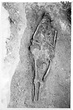
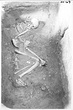
Three skeletons. Photo on p. 1847 (KK 369) is probably Grave LVI and photo on p. 1851 (KK 388) is probably Grave LIV ... 11 March 1939 |
Grave in north peristyle of Hephaisteion. Grave XXXIII in notebook.
Filling: loose earth and bones. Lot 404 (a) Neg. KK 377 ... 6 March 1939 |
Great Drain: fillings in south part of section; Martyrs I, II and III, all layers (essentially no difference in the layers).
Pottery sorted and recorded by H.A. Thompson 12 may 1950: "Having gone through ... Second half of 2nd c. B.C.-Early 1st c. B.C. |
West Road and Drain. (Road, drain and closely related cuts.) Packing in line of ancient road running along the northwest shoulder of the Areopagus. Includes excavation of 1957 titled "Road Area to North", ... Late 6th c. B.C. - Roman |
It seems possible that the well ... was originally associated with the late Roman reconstruction of the Stoa, being later carried up to serve the Byz. houses. [Nbp. 364] Coins:
6 March 1939 #1-#9 ... Late 4th-early 5th century |
Loose filling below earliest Byzantine Floor. Coins:
25 February 1939 #3-#5
27 February 1939 #2-#4 ... To 11th c. A.D. |
"Foundry Pit": N-S Cut on 50m. line (area of Stoa, Layer VII, with slag). A foundry pit in the courtyard of a small metalworking establishment outside the Agora to the northwest.
Both the courtyard and ... Ca. 375-350 B.C. |
Pit near SW corner of Hellenistic Bldg. The object catalogued is one of three TC molds found at the location ... 5th.-4th. c. B.C. |
Grave in south peristyle of Hephaisteion. Grave LXVI in notebook.
Burned layer with bones, skulls. Coins:
13 March 1939 #25
14 March 1939 #9-#10 Neg. KK 394 ... Byzantine |
Grave in north peristyle of Hephaisteion. Grave LVIII in notebook. No mention of bones. Neg. KK 391 ... Byzantine |
Grave in north peristyle of Temple of Hephaisteion. Grave XXXI in notebook. No mention of bones. Coins:
25 February 1939 #4
27 February 1939 #5-#11
6 March 1939 #1 Negs. KK 376, KK 379 ... 25-27 February 1939
6 March 1939 |
| Grave in opisthodomos of Hephaisteion. Grave LI in notebook.
No mention of bones. Neg. KK 363, XIX-8 (dismantling of the walls of the graves( ... 10 March 1939
16 March 1939 |
| Grave in opisthodomos of Hephaisteion. Grave XLIX in notebook.
No mention of bones. Coins:
9 March 1939 #8-#13 Neg. KK 365 ... 9 March 1939
16 March 1939 |
Grave in south peristyle of Hephaisteion. Grave LVII in notebook.
No mention of bones. Coins:
10 March 1939 #2 Neg. KK 389 ... 9-11 March 1939 |
Grave in south peristyle of Hephaisteion. Grave LXI in notebook.
No mention of bones. Coins:
11 March 1939 #12-#14
13 March 1939 #4
14 March 1939 #2-#4 Neg. KK 393 ... 11-13 March 1939
18 March 1939 |
| Grave in south peristyle of Hephaisteion. Grave LXVII in notebook.
Crammed with bones (13 skulls): osteotheke. Coins:
13 March 1939 #26-#27 Neg. XV-86 ... 13-14 March 1939 |
Grave in north peristyle of Hephaisteion. Grave XXXII in notebook.
Loose earth and bones filling. Coins:
25 February 1939 #5-#6
6 March 1939 #2-#4
15 March 1939 #1 Neg. 378 ... 25 February 1939
6 March 1939 |
Grave in north peristyle of Hephaisteion. Grave LIX in notebook.
No mention of bones. Containers 473 and 474 represent filling between graves. Coins:
11 March 1939 #16 Neg. KK 391 ... Byzantine |
Grave in north peristyle of Hephaisteion. Grave LX in notebook.
No mention of bones. Coins:
11 March 1939 #9-#11 Neg. 397 ... Byzantine |
Grave in cella of Hephaisteion. Grave XVIII in notebook. At least three skeletons ... 21 February 1939 |
| Grave in cella of Hephaisteion. Grave XX in notebook. This deposit includes also an infant grave at the corner of Grave XX (cf. pp. 1714, 2141 and catalogued objects B 673 and B 674).
Many bones, skulls ... 22 February 1939 |
Grave in cella of Hephaisteion. Grave XXI in notebook. Disintegrated bones. Coins:
22 February 1939 #2-#3 ... 22 February 1939 |
Grave in cella of Hephaisteion. Grave XVII in notebook. Many tumbled bones. Neg. KK 347 ... 22 February 1939 |
Grave in cella of Temple of Hephaisteion. Grave XLVII in notebook. Rotted bones, head to west (adult). Neg. KK 352 ... 9 March 1939 |
| Grave in cella of Hephaisteion. Grave XIX in notebook. One skeleton. Nails and wood. Two skeletons are mentioned by Angel, AA 82 and AA 83 ... 21 February 1939 |
Grave in cella of Hephaisteion. Grave XLVI in notebook. No mention of bones. Coins:
9 March 1939 #1-#4 ... 8 March 1939 |
Grave in cella of Hephaisteion. Grave XXXV in notebook.
Filling: loose earth and confused bones. Coins:
6 March 1939 #11-#13 ... 8 March 1939 |
Grave in cella of Hephaisteion with cover slab with inscription (I 5885). Grave XXXIV in notebook. One skeleton and two leg bones. The remains of G. Watson were replaced in his original position.
Pottery ... 15 August 1810 |
Grave in cella of Hephaisteion. Grave XXII in notebook.
One skull with messy disintegrated bones ... 22 February 1939 |
| Grave in cella of Hephaisteion. Grave XLV in notebook.
One skeleton. Pottery discarded? Coin
8 March 1939 #22 Neg. XV-69 ... 7 March 1939 |
Grave in cella of Hephaisteion. Grave XXIII in notebook. Disintegrated bones, grave disturbed to bottom. Coins:
23 February 1939 #5 ... 23 February 1939 |
Grave in cella of Hephaisteion. Grave XXIV in notebook. Two skeletons. No sherds. Coins:
23 February 1939 #4 Neg. KK 375 ... 23 February 1939 |
Grave in cella of Hephaisteion. Grave XXIX in notebook. No mention of bones. Coins:
25 February 1939 #1 ... 23 February 1939
8 March 1939 |
Grave in cella of Hephaisteion. Grave XXV in notebook. Smashed bones ... 23-24 February 1939 |
Grave in cella of Hephaisteion. Grave XXVI in notebook. Loose earth with bones. Coins:
14 March 1939 #1 ... 25 February 1939
18 March 1939. |
Grave in cella of Hephaisteion. Grave XXX in notebook.
Filling: loose earth. No mention of bones. Lot 401b ... 8 March 1939 |
Grave in cella of Hephaisteion. Grave XXXA in notebook.
No mention of bones ... 13 March 1939
18 March 1939 |
| Grave in cella of Hephaisteion. Grave XXVII in notebook.
Two skulls and messy bones. Coins:
8 March 1939 #2 Neg. XV-74 (left) ... 8 March 1939
13 March 1939 |
| Grave in cella of Hephaisteion. Grave XXVIII in notebook. No mention of bones. Negs. XV-74 , KK 357 ... 25 February 1939 |
Grave in south peristyle of Hephaisteion. Grave LXV in notebook. Coins:
13 March 1939 #24
14 March 1939 #8 (Vandal, not kept?) Notebook says: wall of LXIV rests on bones.
Neg. KK 396 ... 13-14 March 1939
16 March 1939 |
Grave in south peristyle of Hephaisteion. Grave LXIV in notebook.
No mention of bones. Coins:
13 March 1939 #21-#23
14 March 1939 #7 Neg. KK 395 ... 13-15 March 1939 |
Accumulated fillings in a system of underground drains at west end of section ΔΔ with northward continuation into and across Section Υ.
The filling in the "underground passages" in section ΔΔ appears to ... 3rd c. B.C.
2nd c A.D. |
|
|