icon

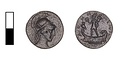
[Coin] N 38381: Greek Coin

Athens ... Χάλκινο Αθηνών 2ου αιώνα μ.Χ. Coin no. 8. Casts. Bust of Athena r., wearing Corinthian helmet. ΑΘΗΝ-ΑΙΝ Themistokles, in military dress and holding trophy with l. hand and wreath with upraised r., standing ... Ca. 120's-140's or later A.D.

icon

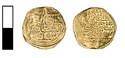
[Coin] N 38427: Murād III, 1574-1595 A.D., gold

Miṣr ... Murād III ... Coin no. 11. GCM 1862 BIS. Turkish fill. C 483 ... 1574-1595 A.D.

icon

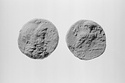
[Coin] N 47169

Athens ... Sv. 23.47--49; Kleiner 1976, pl. 3:52, 53 (Type 7)http://thetis.agora/id/agora/notebookpage/ΟΟ-17-63 Coin no. 2. Great Drain ΛΖ-ΜΣ, gravel. Found with P 33818. Head of Athena r., wearing Attic helmet ... ca. 196--190 B.C.

[Coin] N 47174

Pergamon ... Municipal coinage. Coin no. 9. Great Drain ΛΖ-ΜΣ, gravel. Found with P 33818. Bust of Athena l., wearing aegis and Corinthian helmet. [πEPγAMHNωN] Asklepios stg., facing, with staff. 717, 1064, 3316 ... Ca. 197-133 B.C.

icon

[Coin] N 47190

Lycian League ... Troxell (under 974), p. 191, no. 169; RPC I, 3314. [Masikytes mint] [Ob. Head of Artemis to right Re. MA Stag standing to right] Coin no. 1. Well. [λ-Y] Head of Artemis r., bow and quiver at shoulder ... late 30's--early 20's B.C.

[Coin] N 47528

Lakedaimon ... Grunauer, pp. 127--129, Group XIII Coin no. 14. Dirt pile from well I. Head of Athena in Corinthian helmet r. [Λ-] Owl standing r., in olive wreath. 1552, 1772 ... ca. 48-40 B.C.

icon

[Coin] N 47710

Histiaia ... BMC 138. [(D 17:5)] Histiaia. Obv. Female head right, wearing ivy wreath with hair in knot behind. Rev. Α Ε on either side of tripod. Coin no. 2. Cistern, container 7-8 (dump). Head of Maenad r., wearing ... ca. 2nd--1st century B.C.

[Coin] N 47735

Obv. Head of Athena right in Corinthian helmet. Rev. Owl standing half left in olive wreath; inscription illegible. Coin no. 8. With ashes below disturbed pyre? 2146, 2321, 3286 ... 297-255 B.C. or 339-288 B.C.

icon

[Coin] N 36777: Greek Coin

Athens ... Χάλκινο Αθηνών 3ου αιώνα π.Χ. Coin no. 4. Byzantine House I, pithos. Head of Athena r., wearing Corinthian helmet. Θ/[Α]/Ε Owl standing r., facing; in field r., wreath. C 216, 85-10-15 ... Ca. 270-261 B.C.

[Deposit] D 17:9: Well

An unfinished well in the northwest room of the Poros Building, west of the Areopagus. Dumped filling. Chips from marble-working, variety of plain and figured wares ... Ca. 400-385 B.C.

[Deposit] D 17:10: Well

Well under Poros Building Drain at 62/ΛΣΤ, west of the Areopagus. Digging abandoned at 6.10m due to a collapse of the soft bedrock at the west. Small amount of supplementary filling was added in the upper ... Ca. 520-480 B.C.

[Deposit] D 17:11: Well

Upper fill early Roman. Lower fill latest Hellenistic. No house walls clearly associated with it, and apparently no attempt made to assign it to any particular house. Subdivisions: .1=Upper fill .2=Lower ... Late Hellenistic-Early Roman

[Deposit] D 17:11.1: Well

Containers 1-3. Coins: 27 September 1947 #1-#2 ... Early Roman

[Deposit] D 17:11.2: Well

Containers 6-12 ... Latest Hellenistic

[Deposit] D 17:12: Well

Unfinished well, south of the annex to the Poros Building, west of the Areopagus. The shaft was apparently never used as a well. The lower dumped filling contained a quantity of clean red clay, as if from ... Ca. 350-325 B.C.

icon

[Deposit] D 17:13: Pocket with burning

Pocket with burning at 60/ΚΗ. "Is this perhaps a disturbed pyre burial." [Nbp. 2928]. Identified as pyre by SIR. Near north end of corridor, beside its west wall. Concentration of artifacts, tiny scraps ... 4th c. B.C.

icon

[Deposit] D 17:14: Disturbed Pyre

Disturbed Pyre at 59/ΚΗ (ΚΖ), in the area of the Poros Building west of the Areopagus. Against east wall of room 5 west. concentration of artifacts, ash, carbon and a few bones in stratum, no pit discerned ... 3rd c. B.C.

[Deposit] D 17:15: Rectangular shaft

Rectangular shaft neighboring the well D 17:12. Dug only to a depth of 4.40m. and provided with two galleries or channels extending from it. Apparently never intended as a well. Refilled with the dug bedrock ... 4th c. B.C.

[Deposit] D 17:16: Pithos

Pithos in NW corner (room) of Poros Building. Marble chips ... Mid-4th c.?

[Deposit] D 17:17: Pit

Shallow pit in bedrock. NB fragment found in gravel to south of pit (ΟΟ 399=P18633) ... Second quarter 5th c. B.C.

[Deposit] D 17:18: Drainin Corridor of Poros Building

Drain in corridor of Poros Building. Deposit is from the period of use of the drain. Cf. also containers 140 and 602 ... Late 5th-early 4th c. B.C.

[Deposit] D 18:3: Bronze Casting Pit near Southeast Corner of Poros Building

Casting pit near SE corner of Poros Building, Room C 3. Combined with D 18:4 ... 1st c. B.C.-1st c. A.D.

[Deposit] D 18:5: Well

Unfinished well in corridor of Poros Building ... Third quarter 5th c. B.C.

[Deposit] D 16:1: Cistern A

Cistern (diameter 0.90m) with two channels; the fill of the cistern proper, below the scant upper (Byzantine) deposit, appears to have been dumped all at the same time, to 325-275 B.C. Notebook says "all ... 325-275 B.C.

[Deposit] D 16:5: Well I

Abandoned digging at 6.25m. due to water level. Tile well could be associated with a bit of late Roman wall to the south, with floor level about one meter above that of pebble floor. Well tiles were not ... 14-22 April 1948

[Deposit] D 17:1: Well

Displaced curbing stone had fallen into top of shaft; fill with and around it is presumably second half of 2nd c. A.D. Below tumbled filling at top, shaft was empty to 10.80m. Tiles were missing to ca ... Late 1st-early 2nd c.

[Deposit] D 17:2: Bothros of Agonippos

A rubbish pit at the foot of the northwest slope of the Areopagus. Black figured, plain glazed vases and several lamps. A pair of lekythoi recall both in make and in style the products of the Haimon Painter ... Ca. 480-475 B.C.

[Deposit] D 17:3: Cistern at 65/KH

Cistern at 65/ΚΗ (and Channel). Cistern in the northwest room of the annex to the Poros Building west of the Areopagus. Part of the same system as D 17:4 and D 17:5, the chambers connected by long tunnels ... 300-250 B.C.

[Deposit] D 17:4: Cistern at 70/ΚΕ

Cistern at 70/ΚΕ and channels. Part of same system as D 17:3 and D 17:5. It was set against a corner of the lowest foundation block. Thus one is forced to assume that enough of the wall remained at least ... Ca. 200-150 B.C.

[Deposit] D 17:4.1: Upper fill

Container 1 ... Ca. 150 B.C.

[Deposit] D 17:4.2: Middle fill

Containers 2, 3 ... Late Hellenistic?

[Deposit] D 17:4.3: Lower fill

Containers 4, 5, 6 and channel ... Ca. 225-150 B.C. POU

[Deposit] D 17:5: Cistern

Built against the south wall of the annex to the Poros Building west of the Areopagus. At the west the upper layer of marble chips carried against it, the lowest were cut by it. Part of same system as ... 225-100 B.C.

[Deposit] D 17:5.1: Upper fill

Containers 1-5. Coins: 8 April 1949 #17-#20 ... 150-100 B.C.

[Deposit] D 17:5.2: Lower fill

Containers 6-9. Coins: 9 April 1949 #1-#6 ... 225-150 B.C.?

icon

[Deposit] D 17:6: Filling

Hole at 57/ΛΣΤ = Pottery Dump at 57/ΛΣΤ. May well have accumulated on the spot where it was found, its fragmentary state being attributable to the later rubble wall laid over it. Cf. also P 19982 (ΟΟ ... Ca. 400-375 B.C.

icon

[Deposit] D 17:7: Disturbed Pyre

Pyre /Burial (?) disturbed, in the area of the Poros Building west of the Areopagus. In northeast corner of room 4 west. Concentration of artifacts, tiny slivers of bone, and burning in a layer of fill ... Early 4th c. B.C.

icon

[Deposit] D 17:8: Sacrificial Pyre in Poros Building, Northwest Room

Sacrificial pyre in Poros Building, NW Room (RSY= Pyre 1). Against east wall of room 5 west. artifacts, bone, carbon and ash in pit in floor sequence. the pyre lay below a floor covered with marble dust, ... Middle of 4th c. B.C.

[Deposit] C 17:1: Fills

Great Drain fills, including "packing over elliptical tiles" and "gravel fills". The central drain area covered by the sections below; other sections are with other deposits. Coins: 9 May 1947 #2-#5 16 ... 1st c. A.D.

icon

[Deposit] C 17:2: Pyre North of House G

North of House G (RSY=Pyre 13). Concentration of artifacts, small pieces of bone, and burnt material in stratum, no pit discerned. The pyre is cut by the trench of a wall of a Roman house to north. It ... 290-250 B.C.