|
|
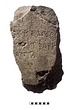
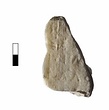
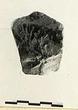
| Fragment of inscription.
Broken on all sides.
Four lines of the inscription preserved.
Pentelic marble. Found in modern packing behind retaining wall, opposite the north wing of the Stoa of Zeus. Leica ... 19 July 1933 |
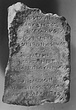
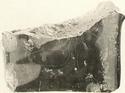
| Fragment of inscribed stele.
Part of right side preserved; otherwise broken.
Inventory of platters given by the prytanies and listed by archons.
Archons: Molon (362/1 B.C.), Nikophemos and Dynniketos (370/369 ... 350 B.C. |
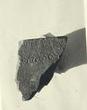
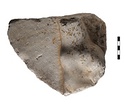
| Inscribed fragment.
Part of the rough picked top preserved; otherwise broken.
One line of the inscription preserved, with seven letters.
Signature of Euboulides.
Hymettian marble. Finished Found in modern ... Ca. 167 B.C. |
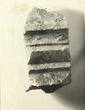
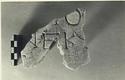
| Inscribed fragment.
Broken on all sides.
Part of a moulding is preserved over the inscription.
Hymettian marble. Found in a marble dump, in the northwestern corner of the Market Square. Leica ... 19 October 1933 |
| Inscribed fragment.
Broken on all sides.
To the right of the piece, one line of the inscription, and a trace of a second.
Pentelic marble. Found in a marble dump, southeast of the Stoa of Zeus. Leica ... 2 January 1934 |
| Inscribed fragment.
Broken on all sides.
Four lines of the inscription preserved.
Pentelic marble. Finished Found in a marble pile, in the northwest corner of the Market Square. Leica ... 12 May 1934 |
| Inscribed fragment.
Lettered face and right side only preserved.
Five lines of the inscription preserved.
Pentelic marble. Found in marble dump, in the northwest corner of the Market Square. Leica ... 23 May 1936 |
| Inscribed fragments.
Inscribed faces only preserved.
On fragment Η' 748 a), four letters remain.
Fragment Η' 751 b), mended from two pieces. Guide lines above and below the letters. Parts of five letters ... a) (Η' 748) 22 February 1936
b) (Η' 751) 25 February 1936
c) (Η' 753) 26 February 1936 |
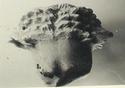
| Lower jaw and muzzle broken away and the whole head torn from the sima. Hair of crown schematically rendered by pyramidal tufts placed on checkerboard arrangement.
Assigned to either the Temple of Ares ... 5 February 1934 |
| From a panathenaic amphora?
Broken all around. The under part of an animal (horse?) with extended right foreleg; against the body an outstretched hand. Incised lines carelessly executed.
Inside covered ... 11 July 1931 |
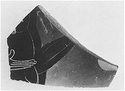
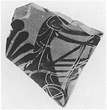
| a) The head of a charioteer and his hands holding the reins; also part of another figure. Accessory purple is used for the hairband of the charioteer and other details.
b) Charioteer in chariot.
Attic ... 11 July 1931 |
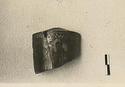
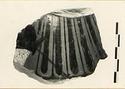
| On the shoulder are double rays; below the shoulder is a band of alternating black and white dots. On the body are parts of three standing figures, the middle of which is a woman.
Careless incision lines; ... 13 July 1931 |
| Small fragment from shoulder.
Head of Athena to right; tongues. Landscaping operations in the excavations; exact provenience unknown. Leica ... January 1955 |
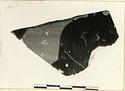
| Broken all around. Unidentified representation from reverse of Panathenaic amphora. Agora excavations. Leica ... 5 February 1962 |
| From the floor of a heavy plate. Head and shoulders of draped figure right. Very poor condition; added white practically disappeared from face and part of clothes. Agora area, context unknown. Leica ... (February 1957) |
| Small wall fragment, from bowl(?). Outside: two concentric grooves. Inside: daisy with looped stem, painted in white and applied clay.
Clay pinkish-buff. Disturbed area. Leica ... 1933 |
| Head of satyr. Broken at top and right side, and beard broken off.
Coarse brick-red clay, unglazed.
Cf. Agora XXXIII, no. 786.
Cf. Hesperia 2 (1933), p. 189, noted. Leica ... 25 June 1931 |
| Handle fragment only preserved. On its top, decoration depicts an archaic bearded head facing left; upper part of head missing.
Accessory red; freely incised. Nb. p. 635, #12. Burnt stratum. 635 Leica ... 10 July 1931 |
A heavy stem with a small opening in its center rises a saucer-like base. Attached to it is a single, vertical loop handle.
Unglazed.
The clay is ash-gray in color, very coarse.
Type XXXVI of Corinth ... 24 June 1931 |
| Full thickness preserved as well as a portion of a relief, broken away on all sides.
High relief, possibly representing a seated dog whose long neck, shoulder and the beginning of his back are preserved ... 26 July 1969 |
|
|