|
|
L 1079 and L 1080 are identified as from a pit at 29/ΝΓ. L 1082 and P 2130 are from a pit at 26-29/ΜΘ-ΝΑ. Probably the same pit as indicated on a note in deposit cardex. The finds are recorded together ... 5th c. |
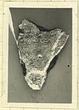
| Inscribed heptagonal base.
Bottom rough picked; top much worn and flaked, with a small round hole, near the inscribed face.
The circumference presents the deceptive appearance of what would have been an ... 1933 |
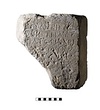
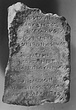
| Inscribed fragment.
Remains of an inscription in two columns, that to the right being a list of names. Parts of fifteen lines of the inscription preserved.
Pentelic marble. Pre-excavation. Found in the ... 1st. century B.C. (?). |
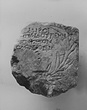
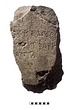
| Inscribed fragment from the right edge of the block, with part of the fine picked right surface preserved.
On the smooth finished face, the right side of a small wreath, open at the top, and the greater ... Middle of 1st. century B.C. |
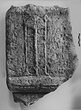
| Upper left side of inscribed stele; on the head a tripod in relief.
The rough picked back, and more finely picked side surfaces are preserved. The top as preserved shows rough-picked scallops along the ... 4th. century B.C. (?). |
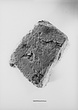
| Inscribed fragment.
Broken all around and behind.
Citation.
Hymettian marble. Found in Byzantine context, below the floor of the room XVIII, of a Byzantine building, east of the Stoa of Zeus. Leica ... Ca. 200 B.C. |
| Fragment of inscription.
Broken on all sides.
Four lines of the inscription preserved.
Pentelic marble. Found in modern packing behind retaining wall, opposite the north wing of the Stoa of Zeus. Leica ... 19 July 1933 |
| Fragment of inscribed stele.
Part of right side preserved; otherwise broken.
Inventory of platters given by the prytanies and listed by archons.
Archons: Molon (362/1 B.C.), Nikophemos and Dynniketos (370/369 ... 350 B.C. |
|
|