|
|
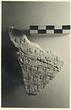
| Right arm hanging down at side and holding a patera.
Pinkish buff clay; traces of white slip on arm, and remains of black glaze on sides of fragment. Leica ... 17 June 1931 |
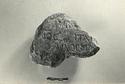
| Inscribed fragment.
Broken at right, above, below and behind.
Some of right edge seems to be preserved. From large block, text within and above wreath. Parts covered in cement.
Pentelic marble. Found in ... 24 March 1972 |
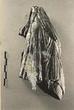
| Inscribed fragment.
Broken all around and at back.
Parts of seven lines of the inscription preserved, then six lines, with name of messanger in a wreath. Then one line, four lines within wreath.
Note that ... Mid. 1st. century A.D. |
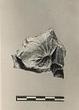
| Inscribed fragment.
Broken all around.
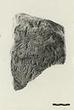
Fragment of inscribed marble having list of names by tribe and deme.
Raised border with one line of the inscription above. Several lines on face below.
Crystalline ... 14 August 1974 |
| Inscribed fragment of stele.
Broken all around.
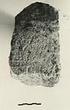
Seven lines of the inscription preserved. Note broken cross bar of "alphas".
Pentelic marble. Found in the wall of the basement of the modern house 645α/10 ... 6 October 1969 |
| Inscribed fragment.
Broken at top, left and bottom.
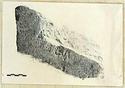
Right side roughly picked with claw chisel, back side very roughly picked with heavy point.
Pentelic marble. Found in marble washing. Leica ... 14 April 1970 |
| Inscribed fragment.
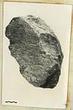
Original surface preserved on front and right.
Pentelic marble. Found built into Byzantine wall. Leica ... 5 July 1970 |
| Inscribed fragment.
Broken all around.
Blue Hymettian marble. Found built into Byzantine wall. Leica ... 5 July 1970 |
| Inscribed fragment.
Inscribed face and right side (toothed, with dressed edge along front) preserved.
Seven lines of the inscription preserved.
Hymettian marble.
ADDENDA Joins with I 5031.
Cf. A 5031 ... 24 April 1936 |
| Fragment of inscribed stone.
Top is preserved, and at left, two sides of rectangular cutting, 0.105m. from inscribed face.
The angle between the top and the inscribed surface is mostly worn away.
One line ... 27 February 1933 |
| Inscribed fragment.
Broken all around and at the back.
There is a curious strip across the back which has been worn or worked smooth.
Traces of five letters remain.
Pentelic marble. Found in modern foundation, ... 27 February 1933 |
| Inscribed fragment.
Part of smooth right side preserved; otherwise broken.
Six lines of the inscription preserved, with one to four letters in each.
Hymettian marble. Found in late context, in the square ... 27 March 1934 |
| Inscribed fragment.
Broken on all sides.
Six lines of the inscription preserved, with one to three letters in each.
Pentelic marble. Found in late context, in the square to the south of the New Bouleuterion ... 29 March 1934 |
| Inscribed fragment.
Broken all around and behind.
Honorary monument or decree (?).
Seven lines of the inscription preserved.
Bluish-white marble. Found in Byzantine context, under the floor of a Byzantine ... 3-5 May 1934 |
| Inscribed fragment.
Inscribed face only preserved.
Four lines of the inscription preserved.
Hymettian marble. Found in east side of Eponymon Street, near the church of Elias and Charalambos. Leica ... 4 July 1947 |
| Inscribed fragment.
Back and smooth right side preserved.
Broken above, below, and to left.
Hymettian marble.
ADDENDA Joins I 5258, and I 6143. Found in marble dump in long late Roman wall, east of the ... January 1950 |
| Broken all around. Chipped about nose and chin, but essentially intact.
Woman's head, with wavy hair down back, from inside mouth of an oinochoe at handle attachment.
Unglazed. Traces of white slip ... 1949 |
| Torso of standing draped female preserved from shoulder to thigh; left shoulder missing, broken behind. She wears a heavy chiton with long ungirt overfold fastened on the right shoulder only. Considerable ... 5 April 1954 |
| Preserved is the left leg and bit of hanging drapery of a kneeling woman.
Fine hard clay, black to brown at surface.
ADDENDA: From a plastic lekythos (?) Pocket in rock-ridge between east and west gullies ... Card: 4th-3rd c. B.C. |
| Female head from plastic vase. Large rosette earrings.
Firm pinkish-buff clay. Traces of black glaze and finished surface behind head show part of vase. Traces of white on face. 4th c. B.C. to early Roman ... 30 April 1957 |
|
|