|
|
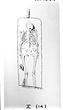
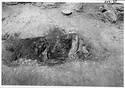
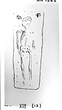
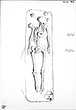
| Grave X in notebook = RSY Grave 14. PD 731-g ... Ca. 525-500 B.C. |
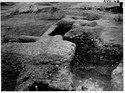
| Sacrificial Pit I in notebook = RSY Grave 20 ... Ca. 510-490 B.C. |
| Grave XIV in notebook = RSY Grave 13. PD 731-f ... Late 6th. c. B.C. |
| Sacrificial Pit II in notebook = RSY Grave 7 ... Ca. 540 B.C. |
| Sacrificial Pit III in notebook = RSY Grave 6.
Small bit of calcined bones (discarded?) ... Ca. 550-530 B.C. |
Sacrificial Pit VI in notebook = RSY Grave 18 See also B 21:23 ... Ca. 525-500 B.C. |
| Grave XXI in notebook = RSY Grave 11. Pottery discarded; late Roman, mostly coarse. PD 731-e ... Ca. 530 B.C. |
| Grave XX in notebook = RSY Grave 16. PD 731-i ... Late 6th. c. B.C. |
| Grave XVII in notebook = RSY Grave 15.
Only lower half of skeleton preserved. Bones discarded? ... Last quarter of the 6th. c. B.C. |
Crescent-shaped cutting in bedrock at 47/ΙΓ; on the north slope of the Areopagus, slightly to the west of the dromos of the Mycenaean Chamber Tomb.
Dimensions of cutting : max. diameter ca. 2.50m.; depth ... Ca. 500-450 B.C.
400-350 B.C. |
| Grave II in notebook = RSY Grave 17. PD 731-j ... Ca. 510-490 B.C. |
| Grave VI in notebook = RSY Grave 10. PD 731-d Ptg. 251 ... Ca. 520-525 B.C. |
Sacrificial Pit V in notebook = RSY Grave 19 ... Last quarter 6th. c. B.C. |
Well at 37/Α, on the lower Acropolis slopes, west of the Panathenaic Way ... 600-550 B.C. |
Well at 30/ΛΒ; the shaft possibly never used as a well; dumped filling with a small amount of fragmentary pottery ... Ca 500 B.C. |
| Pit with burned debris north of the ancient road leading from the Agora to the Dipylon Gate, probably to be associated with the Persian sack [deposit notebook]. Also includes a similar filling lying over ... Ca. 500-470 B.C. |
A well outside the market square to the southeast, west of the Panathenaic Way; Diameter 1.10m ... 600-550 B.C. |
Unfinished cistern at 31/ΚΑ ... Ca. 360-325 B.C. |
Well at 40/Λ, in the "plataia" ca. 600m north of the terrace wall and ca. 10m east of the Valerian wall. Top diameter of 1.00m, bottomm diameter 0.95m
The shallowness of the shaft, and the fallen condition ... 550-500 B.C. |
Exploration of area of small early house walls on the NW slopes of Areopagus. Considerable deposits of late 6th-early 5th c. B.C., but some later (all periods) and some early levels, disturbed.
Objects ... Late 6th-Early 5th c. B.C. |
Well at 19/ΝΒ, on the lower north slope of the Areopagus ... 550-525 B.C. |
Square pit in bedrock southwest of the Hephaisteion. Many marble chips from the construction of the temple of Hephaestus were found here together with a large quantity of pottery and other objects ... Ca. 450 B.C.
Ca. 390-380 B.C. |
Well 8: Archaic. On the northwest slope of the Acropolis.
Depth from surface of rock, -16.10m.
Diameter top ca. 0.90; bottom ca 0.80m. Water level, ca. -9m ... Late 6th - early 5th c. B.C. |
A well on the NW slope of the Areopagus; unfinished well-shaft dug to a depth of only 3.05m., and refilled with broken pottery and other debris. The shaft clearly was begun with the intention of digging ... Ca. 520-480 B.C. |
"Foundry Pit": N-S Cut on 50m. line (area of Stoa, Layer VII, with slag). A foundry pit in the courtyard of a small metalworking establishment outside the Agora to the northwest.
Both the courtyard and ... Ca. 375-350 B.C. |
West Road and Drain. (Road, drain and closely related cuts.) Packing in line of ancient road running along the northwest shoulder of the Areopagus. Includes excavation of 1957 titled "Road Area to North", ... Late 6th c. B.C. - Roman |
"Fauvel Collection"
Collector's dump? Debris in the cellar of a modern house, probably once that of F.S. Fauvel.
The collection included vases of all periods, from Geometric to Turkish; a number of the ... Modern Context |
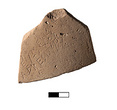
Ostrakon deposit, sand fill in a shallow channel in bedrock at the bottom of the Great Drain in the valley between the Areopagus and the Hill of Nymphs.
This group of ostraka may well come from a single ... Ca. 490-480 B.C. |
Dumped filling in a well on the west slope of the Areopagus (apparently separate, no mends between them, but differing little in date) the bottom filling apparently thrown in towards the beginning of the ... Ca. 425-400 B.C. and earlier |
Well 6: archaic. Diameter 1.20m
Well on the northwest slope of the Acropolis, below the Klepsydra.
There are three fills, all thrown into the unfinished well at the same time (end of 6th- beginning of ... Last quarter of 6th c. B.C. |
| This filling is the largest deposit of its time found in the Agora. It may be compared with H 6:5 and with N 7:3.
Dug in soft bedrock to a depth of 11.40m; footholds cut on opposite sides of the shaft ... Ca. 490-450 B.C. |
Investigations in the area around the Tholos, especially to the east and south of the building, between it and the Great Drain, and not otherwise specified as deposits.
This "deposit" has no form. It ... various levels and dates |
|
|