|
|
Pocket in bedrock, 50/Λ (= Trench, 50-54/Λ), measuring 4.00x0.60m, 0.60-0.90m deep; possibly cutting for wall foundation Coins:
22 April 1932 #1 ... 330-300 B.C. |
4th century sandy fill west of Peribolos of the Twelve Gods, with animal bones, metal waste and much pottery. Estimated Grid ... 350-325 B.C. |
Drain Trench at 62/ΜΗ.
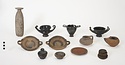
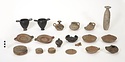
The presence of a number of fairly well preserved vases of good quality suggested to the excavator the possibility that the cutting might once have contained a burial. No skeletal ... 325-300 B.C. |
Small deposit in bedrock. Coins:
20 April 1936 #2-#3 ... 4th c. B.C. to early 3rd c. B.C. |
Abandoned digging at 12.85m. due to collapse of side walls. Well H contents probably thrown in to Well I during cleaning in early Roman times; the pottery from the two wells is similar. Cf. E 14:6 ... 350-250 B.C. |
Rectangular cutting at 58-60/ΚΘ-Λ, probably a plundered wall trench ... 350-290 B.C. |
| (RSY=Pyre 2). Pyre in the industrial area west of the Areopagus, in House B. In northern corner of room. No pit discerned. A deposit of small stones (a marker/) lay 0.30m above the level of the pyre, ... Third quarter of the 4th. century. |
| Pyre in House D, Room 4 (RSY=Pyre 4) in the industrial area west of the Areopagus.
Notebook refers to House N.
Pottery belongs late in third quarter of the 4th. c. BC. Pyre burned near beginning of last ... 350-300 B.C. |
|
|